




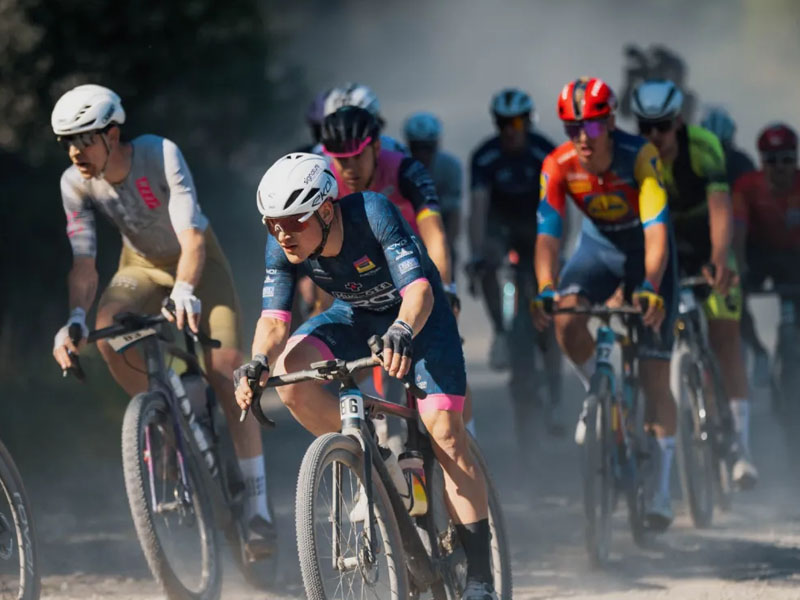
Not long ago, gravel racing was cycling’s counterculture. A loosely organized, slightly chaotic alternative to the polished hierarchies of road racing — where amateurs and pros started together, aid stations served craft beer, and nobody cared too much about your watts per kilogram.
In 2026, that scrappy origin story has collided with serious institutional momentum. Gravel racing is no longer cycling’s scrappy side hustle. The UCI Gravel World Series has expanded to 45 events across 32 countries for its 2026 season, the Life Time Grand Prix offers a $350,000 prize purse, and former WorldTour road professionals are increasingly treating gravel as a serious competitive pursuit rather than a retirement hobby.
But what exactly is driving this growth, and why are more cyclists embracing ultra-endurance gravel challenges?
1. From Grassroots to Global: A Sport That’s Found Its Structure
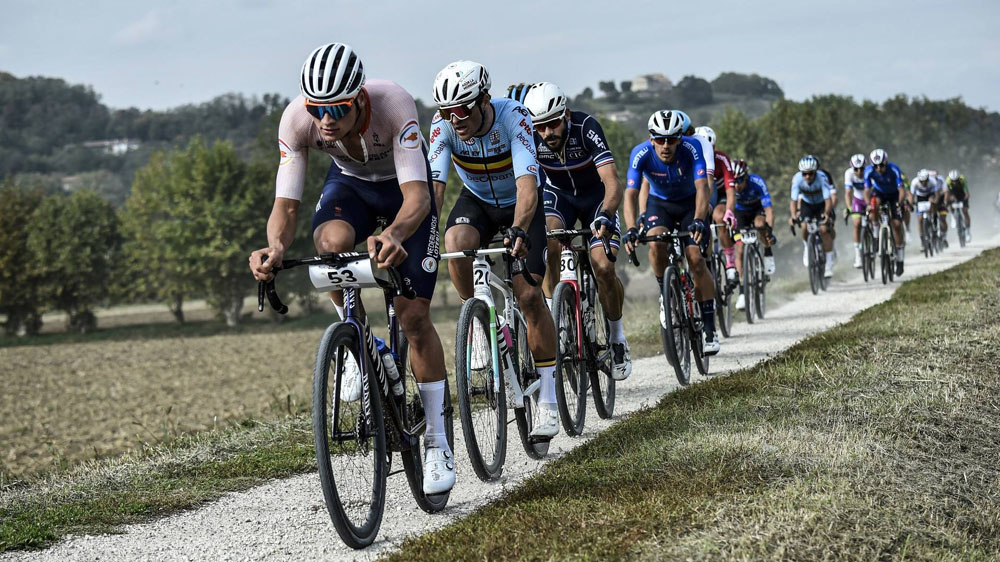
What started as a handful of American “gravel grinders” in the Midwest has become a genuinely global competitive discipline. In 2026, the UCI Gravel World Series spans six continents, with events in the United States, Europe, Africa, Asia, and Oceania, each offering ranking points toward the overall Gravel title, giving the discipline the kind of structural framework that road cycling has had for over a century.
The national and continental calendar is expanding alongside it. The number of national championships in gravel is on the rise, with around 14 countries awarding prizes at national competitions last year. In 2026, Continental Championships are being held for gravel, with Oceania joining African, Nordic, and European regional events.
In 2026, gravel / gravel bike seems to be at a stabilizing point — not slowing, but maturing. The big races remain, local favorites are as strong as ever, and for riders, racers, and fans, the season now offers more than just a chaotic spray of weekend options. Gravel has grown into a world of series and storylines, Gravel Earth, the UCI Gravel World Series, Life Time Grand Prix, and beyond.
2. The Marquee Events That Define the Calendar
No piece on gravel in 2026 is complete without the anchors, the events that draw the biggest fields and set the tone for the entire discipline.
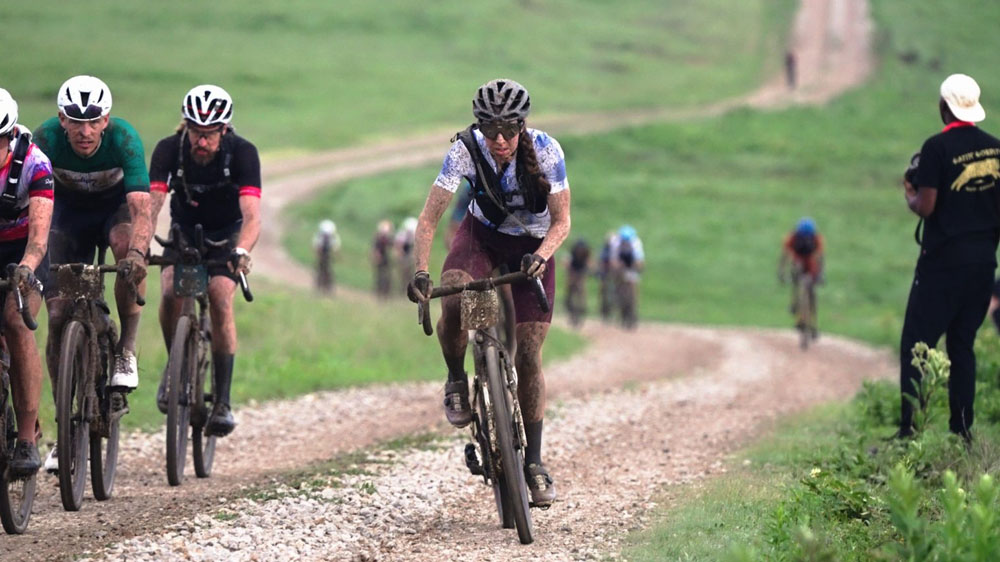
Unbound Gravel remains the undisputed flagship. With five race distances, five thousand participants, major prize money, a huge expo, and the largest field in the country, its influence is unmatched — and it still serves pros, amateurs, and first-timers alike. The 200-mile course through the Flint Hills of Kansas — sharp flint rocks, headwinds, sun-baked roads — remains the benchmark against which all other gravel events are measured.
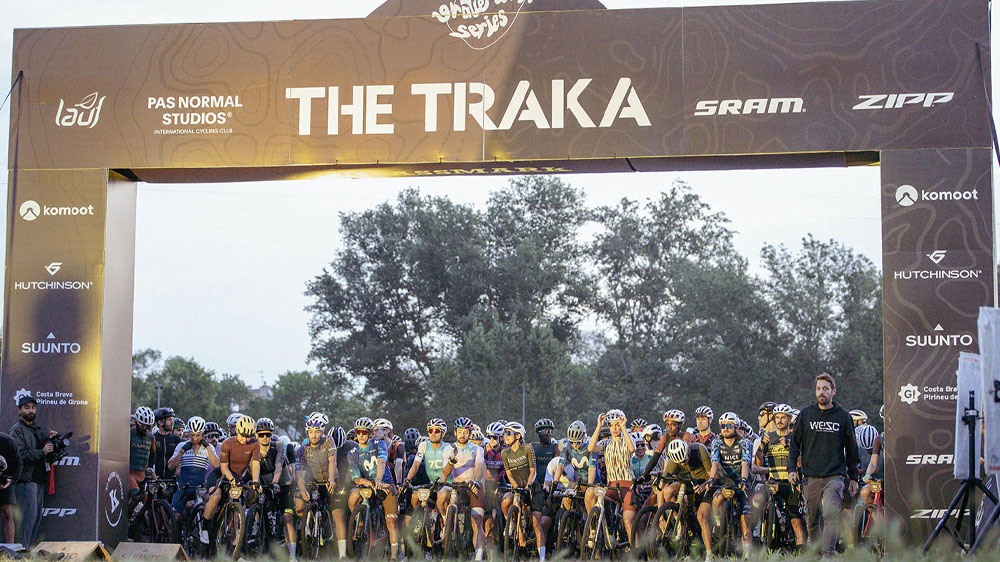
In Europe, the Traka in Girona has emerged as the continent’s equivalent. From April 30 to May 3, Girona becomes the epicentre of gravel, with four route options ranging from 100km to a 560km ultra-distance course with 10,000m of elevation gain — designed for riders of all levels, from first-timers to ultra-distance specialists.
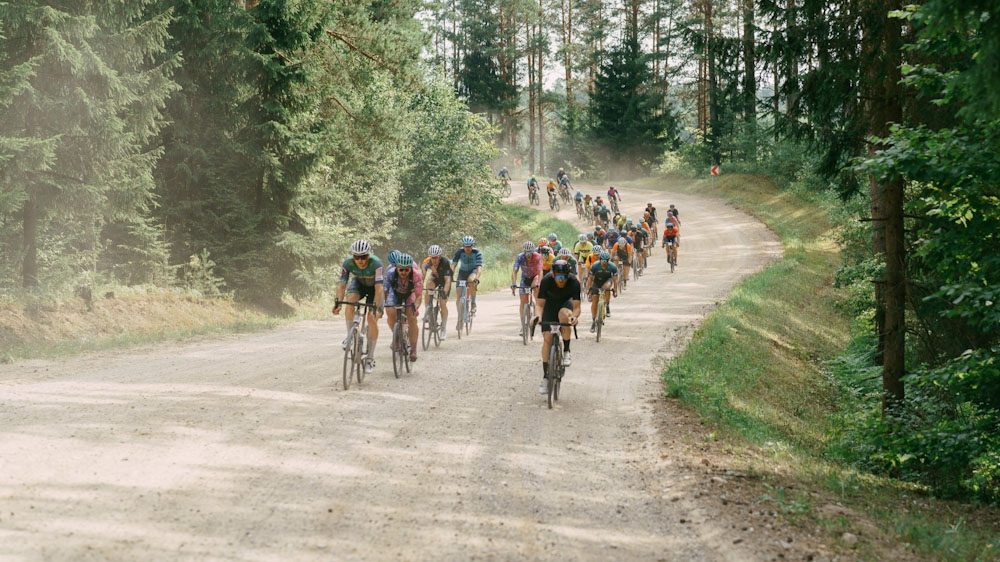
Meanwhile, the Gravel Earth Series continues its expansion. With 11 events in six countries confirmed for 2026 — the majority now owned by The Traka organisation — the top 10 finishers in the Pro category will share equally in a €25,000 prize purse.
3. Ultra Endurance: When “Long” Becomes a Category of Its Own
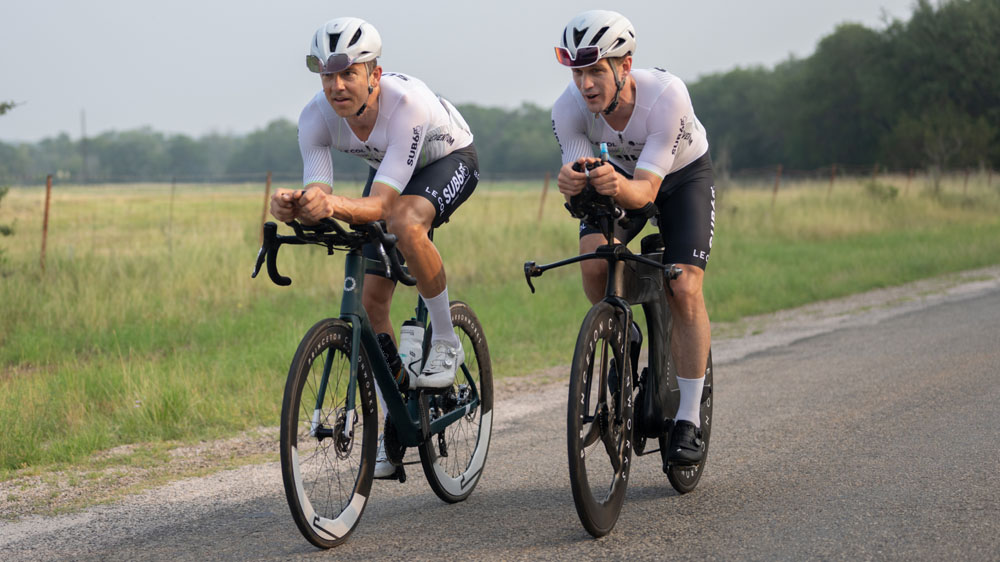
Alongside gravel’s mainstream growth, a parallel movement is pushing the outer edges of what cycling can demand from a human body.
The Race Across America (RAAM) remains the benchmark of pure ultra-endurance. Three thousand miles, coast to coast, nonstop — with fewer than 300 solo cyclists ever having finished, and a 50% solo DNF rate meaning that starting RAAM is an achievement and finishing it is extraordinary.
The Race Across Series is expanding rapidly in 2026. New destinations include Race Across Portugal, debuting in March, a brand-new gravel race called GRAAALPS crossing France, Italy, and Switzerland in July, and Race Across Québec running the 2,500km format for the first time in Canada — all part of a series that saw over 65% first-time participants in 2025, reflecting its growing appeal and accessible nature.
South Africa is also emerging as an ultra-endurance hub. Gravel and off-road stage races are attracting top talent — Cape Epic features two-rider teams racing 700km over eight days in March, while a second edition of Gravel Burn features 800km across seven days in October.
4. The Culture That Makes Gravel Different From Everything Else
Beyond prize money and UCI rankings, gravel bike racing stands out for its inclusive culture. Unlike traditional road racing, elite athletes and recreational riders often share the same start line, with the focus placed on endurance, self-reliance, and the overall riding experience rather than finishing position.
Aid stations, post-race celebrations, and community-driven events create a welcoming atmosphere that appeals to cyclists of all abilities. This rider-first culture has helped gravel cycling attract newcomers, older riders, and adventure seekers looking for memorable experiences, not just competition.
The Rise of Ultra Endurance Cycling
Alongside gravel bike racing, ultra-endurance events have experienced remarkable growth.
Unlike traditional races that may last a few hours, ultra endurance events often challenge riders to cover hundreds of kilometers across multiple days while managing:
- Nutrition
- Navigation
- Sleep deprivation
- Mechanical reliability
- Changing weather conditions
Events such as Unbound XL push riders through more than 350 miles of gravel roads, often requiring overnight riding and self-sufficiency.
This format appeals to cyclists looking for experiences that extend beyond speed and competition. Success is often measured not only by finishing position but also by resilience, preparation, and personal achievement.
A Movement That Grew Up Without Losing Itself
The rise of gravel and ultra-endurance racing in 2026 is not a story of a niche going mainstream and losing its character in the process. It’s a rarer story — a sport that has scaled dramatically while largely holding onto the values that made it attractive in the first place.
The courses are harder. The prize money is bigger. The pros are faster. And yet, somewhere in the middle of the Flint Hills or the Girona gravel roads, an amateur finishing their first 100km gravel bike event is having the same elemental experience that started this whole movement — dirt roads, distance, and the kind of satisfaction that a smooth road simply can’t deliver.
Read also: