




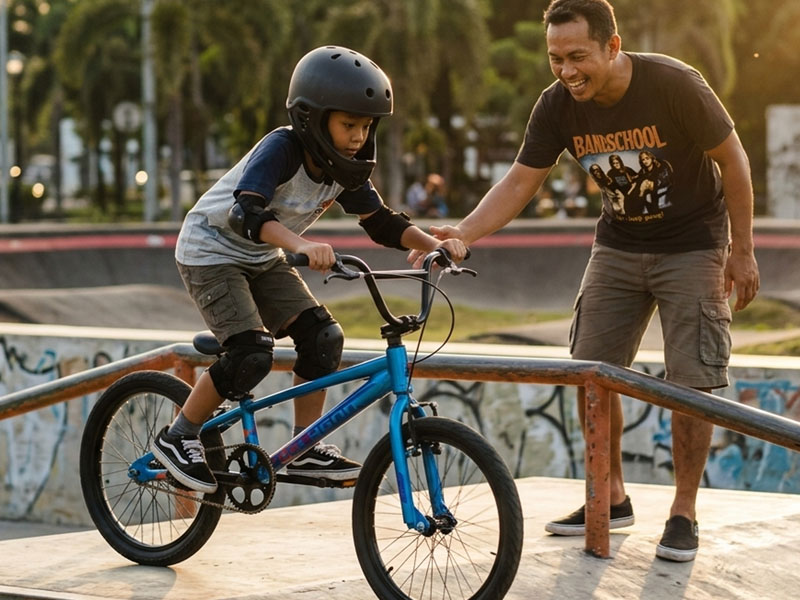
Most children can learn to ride a bicycle for kids independently within a few days to several weeks, depending on their age, confidence level, coordination, and the type of kids bike they use.
Children who start with a balance bike often learn faster because they develop balance before introducing pedaling. In many cases, kids can transition from balancing to independent riding in just a few practice sessions.
However, every child develops at their own pace. Some may confidently ride within a single weekend, while others may need several weeks or months to feel comfortable and safe on two wheels.
1. How Long Does It Actually Take?
The timeline varies significantly from child to child. The table below provides a general guide.
| Child’s Age | Typical Learning Time | Common Learning Stage |
| 2–3 Years | 1–4 weeks | Learning balance on a balance bike |
| 3–5 Years | 1–3 weeks | Developing steering and balance skills |
| 5–7 Years | A few days to 2 weeks | Learning independent riding and braking |
| 7–10 Years | 1 day to 2 weeks | Usually faster due to stronger coordination |
| 10+ Years | Several hours to a few days | Often learns quickly with focused practice |
Important: These timelines represent averages, not benchmarks. Children learn at different speeds, and comparing progress can create unnecessary pressure.
2. The Method Makes a Bigger Difference Than Most Parents Realise
A peer-reviewed study published on PubMed (Mercê et al., 2022) found clear, statistically significant differences in the average age at which children achieved independent riding depending on which approach was used:
When the balance bike approach was used, children learned to ride independently at a mean age of 4.16 years — significantly earlier than those who used training wheels first (mean age 5.97 years) or those who went directly to a traditional bicycle without either method (mean age 7.27 years).
That’s nearly a two-year difference between the balance bike path and the training wheels path — not a marginal improvement, but a meaningful head start.
3. Why Balance Bikes Work: The Science Behind the Shortcut
The advantage of a balance bike comes down to how children learn. By focusing on balance, steering, and braking before pedaling, kids develop the core skills needed to ride independently, often making the transition to a pedal bike faster and easier.
Training wheels take a different approach by supporting the bike while children pedal, delaying the development of balance, the most essential cycling skill. As a result, moving to two wheels can become more challenging.
Weight also matters. Most balance bikes weigh just 6–9 pounds, while comparable pedal bikes weigh around 12–15 pounds. For young children, a lighter kids bike is easier to control, maneuver, and build confidence on during the learning process.
4. The Prime Window: Why Early Childhood Matters?
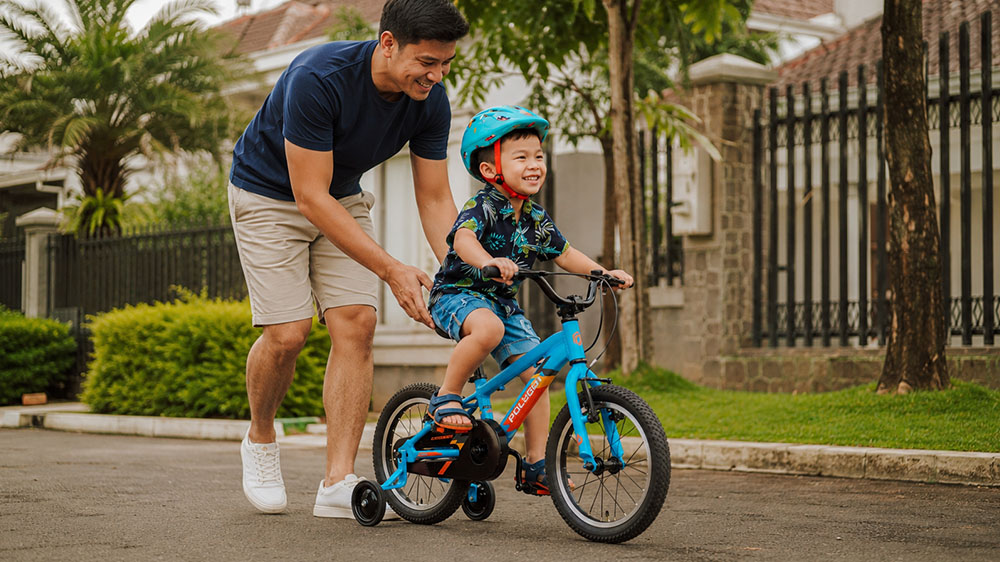
Starting early isn’t just practical, it’s supported by how children develop. Between ages 3 and 7, the brain is especially effective at implicit learning, naturally acquiring motor skills like balancing and pedaling through repeated practice rather than conscious thinking. This learning ability gradually declines after around age 12, which helps explain why younger children often learn to ride more easily.
That said, older kids can absolutely learn to cycle successfully. Even after mastering their first independent ride, children continue refining their cycling skills, coordination, and confidence well into their early teens through regular riding.
5. Session Length and Consistency: Quality Over Duration
One finding that consistently surprises parents: longer sessions are not always better. Short, frequent sessions of 15–30 minutes are more effective than long ones, keeping practice enjoyable and well within a young child’s attention span.
The format matters as much as the duration. Common challenges and practical solutions include:
- Fear of falling → practice on grass to reduce injury risk and psychological barrier
- Poor balance → extra time on balance bikes or gliding exercises before attempting pedaling
- Difficulty steering → figure-eight drills around cones
- Braking too hard → teach gradual lever pressure through low-speed drills
- Loss of momentum → start on a very slight downhill to build confidence through speed
Start Earlier, Smaller, and With Balance First
The data points in a consistent direction: start with a balance bike, start earlier rather than later, keep sessions short and positive, and let your child’s confidence — not a training schedule — set the pace.
A well-sized, appropriately light first kids bike matters too. Polygon’s range of children’s bikes is designed with this progression in mind — from the earliest balance stage through to geared pedal bikes for confident young riders who are ready to go further.
The wobble is temporary. The love of riding lasts a lifetime.