



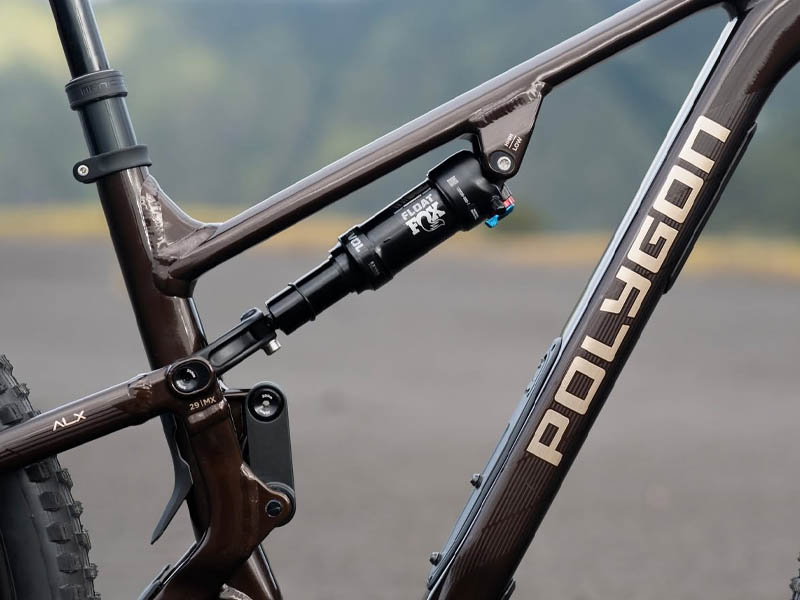
Meet IFS suspension, Polygon’s innovative approach to mountain bike suspension developed and refined through racing. Built around a 6-bar platform, this suspension technology gives riders greater control over how the bike responds to pedaling, braking, and changing trail conditions.
For an MTB bike tackling technical terrain, the result is suspension engineered around traction, stability, and control when the trail gets demanding.
What Is the IFS Suspension?
IFS suspension, or Independent Floating Suspension, is Polygon’s true 6-bar linkage designed to make demanding trails easier to control. This mountain bike suspension technology manages how the bike responds throughout its travel, combining a progressive leverage ratio, small-bump sensitivity, and controlled anti-rise under braking.
For riders, that means better stability at speed, tyres that stay connected to the ground over small bumps, and more composed geometry when braking through corners. In simple terms, IFS is built around one goal: less thinking about what the bike is doing underneath you, and more focus on the ride.
Core Principles of IFS
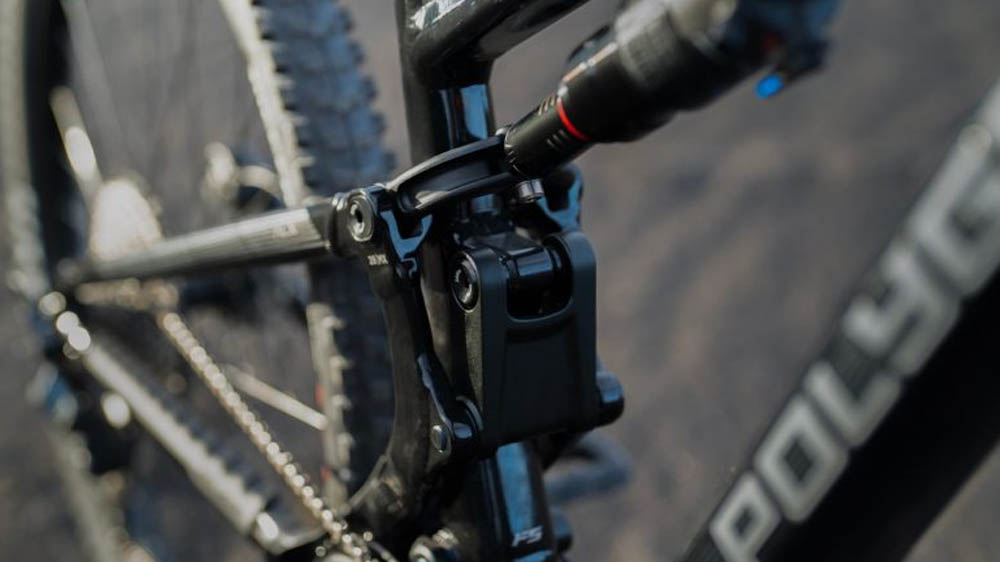
The IFS suspension works around two principles: a floating shock and active isolation. Together, they control how the suspension reacts at different points in its travel, rather than making the shock respond the same way to every hit.
Floating Shock
In a conventional suspension layout, the shock typically works between fixed mounting points on the frame and rear assembly. IFS takes a different approach. Both ends of the rear shock are attached to moving links, so the shock itself moves as the suspension cycles.
This floating arrangement changes how the shock is compressed throughout the wheel’s travel. It also gives IFS more control over the leverage ratio and axle path—two factors that influence how the rear suspension behaves from the first part of the stroke through deeper travel.
Active Isolation
The moving links also determine how force from the rear wheel reaches the shock. Hit a series of smaller bumps and the suspension can respond with the sensitivity needed to keep the rear tyre following the terrain. Push deeper into the travel and the resistance progressively increases.
That progression matters when the hits get bigger. Instead of using up the available travel too quickly, the suspension builds support deeper in the stroke, giving the bike more control against heavy impacts and bottom-outs.
What Does IFS Do for You on the Trail?
A 6-bar layout sounds technical, but what matters is how it changes the ride. IFS focuses on three areas riders can actually notice on the trail:
- Progressive leverage ratio: As the suspension moves deeper into its travel, resistance builds progressively. This gives the bike support for bigger impacts while maintaining stability when carrying speed.
- Small-bump sensitivity: IFS allows the rear suspension to react to smaller bumps instead of letting the tyre skip across them. Keeping the tyre tracking the ground helps maintain traction over rough sections.
- Controlled anti-rise: Heavy braking can affect suspension behaviour and bike geometry, especially through corners. IFS controls anti-rise to reduce that disruption, keeping the bike more composed when braking mid-corner.
The idea behind IFS suspension is simple: let the suspension handle more of what is happening underneath the bike. Small bumps are absorbed without sacrificing support deeper in the travel, while braking has less influence on the bike’s behaviour through corners. Less time fighting the mountain bike, more time choosing your line.
Read also:
Polygon Bikes with IFS Technology
Polygon applies IFS suspension across the Collosus family, with each system adapted to what the mountain bike is built to do.
Collosus N Series

The Collosus N Series uses Polygon’s original 6-bar IFS platform. Developed between the race tape, it decouples braking and pedaling forces while maintaining control over the leverage ratio and axle path. This supports small-bump sensitivity, controlled anti-rise under braking, and consistent leverage progression for stability at speed and impact control.
Collosus T

The Collosus T uses IFS Compact, a twin-link layout inspired by the gravity-focused 6-bar IFS of the Collosus N. Developed from the EDR race circuit, it carries over traction, high-speed stability, and control in a lighter, more pedal-efficient system.
Collosus DH

The Collosus DH uses a 6-bar Independent Floating Suspension that allows independent control over the wheel path and anti-squat relative to the leverage curve. The system combines small-bump sensitivity and traction with controlled anti-rise and consistent leverage progression for high-speed stability and impact control.
From the original IFS on the Collosus N to IFS Compact on the Collosus T and the 6-bar system on the Collosus DH, Polygon adapts its suspension technology to each bike while keeping the same principle: traction, braking control, and suspension progression working together. Less thinking about the bike, more focus on the ride.