



Commonly, cyclists should drink around 500–1,000 ml of water per hour in normal temperatures and at a typical riding intensity. For bikepacking, however, the amount you carry also depends on riding time, weather, and the distance between reliable refill points.
Before loading your gravel bike or adventure bike, check the route ahead and plan your hydration around the longest stretch where access to water may be limited.
General Guidelines for Bikepacking Hydration
Temperature can quickly change how much water you need on the bike. Use these figures as a starting point when estimating your supply:
| Conditions | Water per Hour of Riding |
| Cool, under 15°C | 400–500 ml |
| Mild, 15–25°C | 500–750 ml |
| Hot, 25–32°C | 750 ml–1 L |
| Desert, above 32°C | 1 L or more |
These amounts are guidelines rather than fixed targets. Individual needs vary, so combine the expected temperature with your riding time and the distance between reliable water sources when planning bikepacking hydration.
How Do You Carry Your Hydration Well?
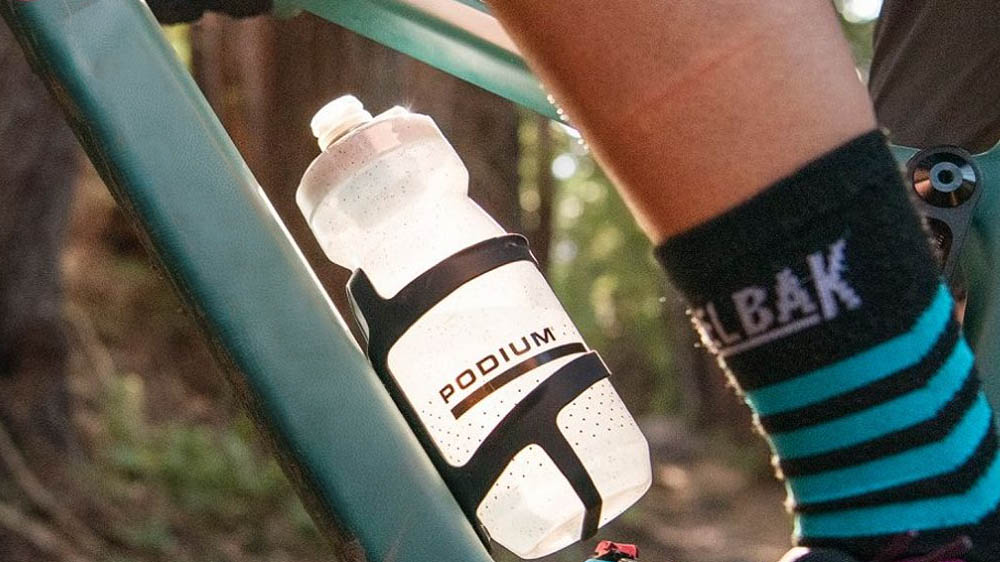
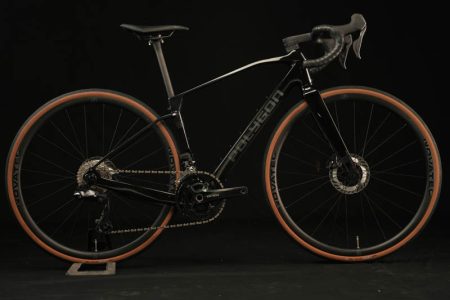
Once you know how much water the route requires, the next question is where to carry it. Start with the bottle cage mounts available on your gravel bike or adventure bike. Depending on the frame, you may have space for bottles inside the main triangle or an additional bottle under the down tube.
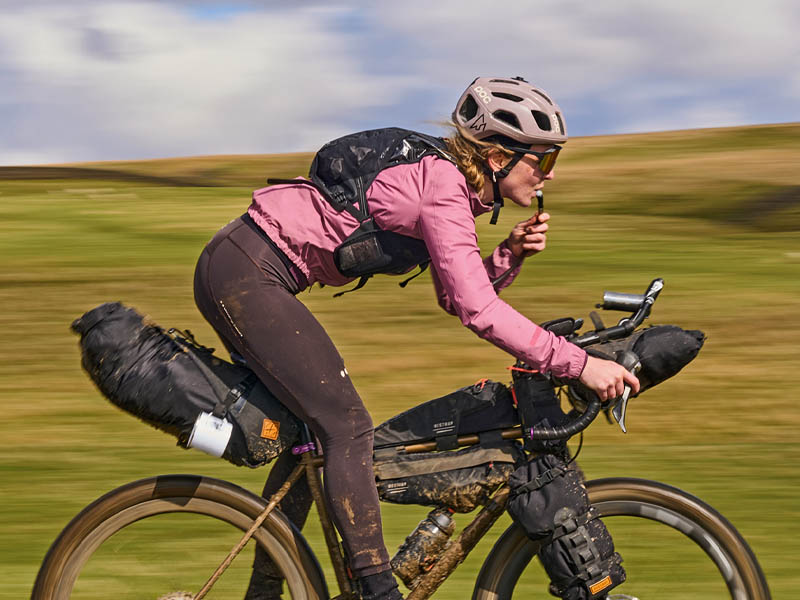
If bottles alone cannot cover the distance between refills, a frame bag gives you another option. Along with other essentials, it can carry extra water or accommodate a hydration bladder while keeping the load within the bike’s frame.
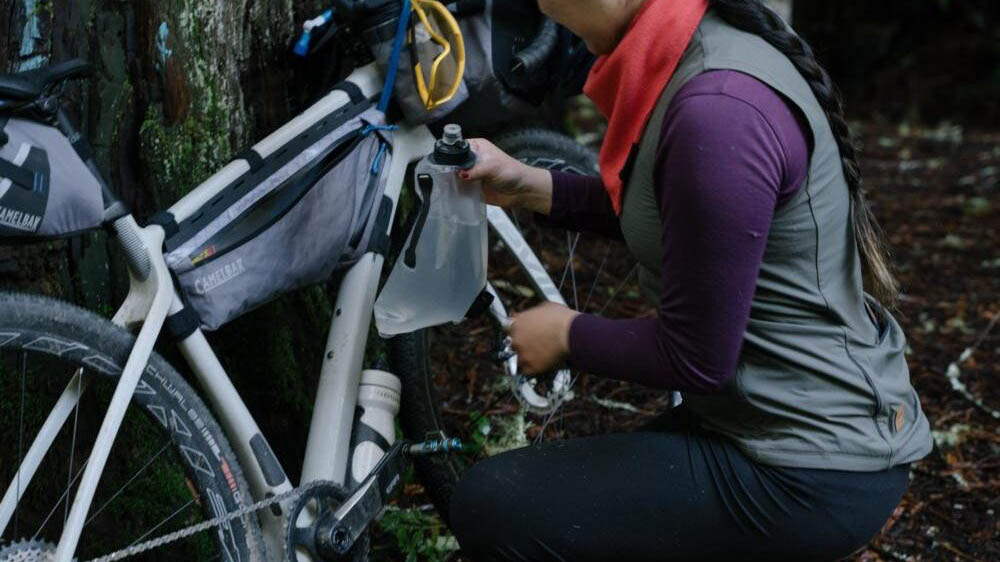
A hydration bag or bladder carried on your back can add capacity without taking up frame space. For longer stretches between water sources, combining bottles with a bladder is often more practical than trying to fit your entire hydration supply into one carrying method.
Why Is Hydration Important for Bikepacking?
A bikepacking route can keep you riding for hours, often through changing temperatures and long stretches without a refill point. Planning your hydration properly helps your body handle those demands and reduces the risk of running short when the next water source is still far away.
- Thermoregulation
Riding generates body heat, and hotter conditions increase the amount of water you may need. This is why the temperature forecast should influence how much you carry, particularly when exposed sections or long climbs are part of the route.
- Supports Endurance and Physical Performance
Bikepacking often involves sustained effort over several hours or even a full day. Having enough water available allows you to maintain your hydration throughout the ride rather than rationing your remaining supply before the next refill point.
- Helps Prevent Fatigue, Cramps, and Heat-Related Illnesses
Running low on water becomes a bigger concern during long, hot, or remote rides. Adequate hydration helps reduce the risk of dehydration-related fatigue, cramps, and heat-related problems. On isolated routes, carrying enough for the conditions is therefore part of ride preparation, not simply a matter of comfort.
Common Water-Carrying Mistakes Bikepackers Make
Having several bottles on your gravel bike does not necessarily mean you have enough water. The amount should come from the demands of the route, not simply the storage available on the bike.
- Planning Based on Bottle Cage Space Instead of Route Requirements
Do not let the number of bottle cages determine your water capacity. Check the longest distance between reliable refill points, estimate how long that section will take at your expected pace, then calculate how much water you need to cover it.
If the required amount exceeds your bottle capacity, add another carrying method rather than reducing your planned supply.
- Overestimating Water Sources
A water source marked on a route is not always guaranteed to be available. Seasonal streams can dry up, while stores or other refill points may be closed when you arrive.
Check important water sources before the ride and avoid relying on uncertain options. On remote bikepacking routes, having a backup plan becomes especially important when the next reliable refill is still hours away.
- Ignoring the Temperature Forecast
A water plan that works in mild weather may not be enough on a hotter day. Check the expected temperature before leaving and adjust your supply if conditions are warmer than originally planned.
This is particularly important when high temperatures coincide with long climbs or extended sections without reliable water access.
Read also:
Plan Your Water Around the Route
For bikepacking, start with the route rather than the bottles on your bike. Work out the riding time, expected temperature, and longest gap between reliable refill points, then choose a combination of bottles, frame storage, or a hydration bladder that can carry what you need. A well-planned water setup means less time worrying about the next refill and more attention on the ride ahead.