










City cycling is the backbone of sustainable urban living, serving as a low-carbon, highly space-efficient mode of transportation. It directly mitigates greenhouse gas emissions, significantly reduces traffic congestion, and reclaims public space for people rather than private vehicles.
This isn’t a niche trend driven by cycling enthusiasts. It’s a structural change in how cities think about movement, space, and the quality of urban life. And at the centre of it is a simple, emission-free vehicle: the city bike.
The Multi-Layered Impact of Urban Cycling
The conversion of short-distance vehicular trips into bike commutes acts as a force multiplier for urban efficiency.
- Environmental Relief: Choosing a bike over a mid-sized car saves roughly 150g to 200g of $CO_2$ per kilometer. On a macro scale, European Cities that invested heavily in cycling networks have achieved an average 10–15% drop in transportation-related greenhouse gas emissions.
- Spatial Efficiency: A single standard parking space can accommodate up to 10 bicycles. In high-density business districts where land values are at a premium, allocating space to bikes dramatically increases a storefront’s or transit hub’s throughput capacity.
- Economic Micro-Boosts: Studies show that cyclists tend to shop locally more frequently than drivers. Because they are not insulated by a windshield and navigating high-speed traffic, they engage directly with neighborhood commercial corridors, driving higher retail vitality per square meter.
The Cities Getting It Right, and What They’ve Proven
The evidence from the world’s leading cycling cities is no longer anecdotal — it’s measurable and repeatable. Utrecht, ranked first in the Copenhagenize Index 2025, has nearly one-third of all trips made by bicycle and is developing a fully car-free district that will house over 12,000 people — backed by a €63 per person annual cycling budget and a philosophy that the goal is no longer to make space for cycling, but to construct the city around cycling.
Copenhagen, in second place, boasts the highest cycling infrastructure density in the world, with 52 kilometres of protected cycle paths for every 100 kilometres of road, and has invested nearly €38 per inhabitant annually in urban cycling over the past five years.
The lesson from both cities is the same: when urban bike infrastructure is continuous, protected, and funded consistently, cycling modal share follows. When cities invest in networks that are continuous, protected, and equitable, cycling grows — and becomes safer.
Why More People Are Choosing City Bikes?
Unlike performance-focused bicycles, a city bike is designed for comfort, convenience, and everyday use.
Typical features include:
- Upright riding position
- Comfortable saddle
- Stable handling
- Practical accessories like racks and fenders
- Easy maintenance
These features make city bikes ideal for commuting, shopping, or casual rides through urban streets.
The momentum is building at the policy level too. The UN Decade of Sustainable Transport begins in 2026, a significant opportunity to align urban cycling work with broader livability goals and ensure cycling remains at the forefront of global urban transport discussions.
It’s Not Just About the Environment: City Cycling Rebuilds Urban Life
The most compelling argument for the urban bike in 2026 isn’t just carbon reduction — it’s what cycling does to the texture of city life itself. The Copenhagenize Index 2025 frames investing in cycling as not just about transportation, but about shaping healthier, more resilient, and more equitable cities — with cycling integrated into urban planning at every level, from zoning laws to traffic calming to public transport networks.
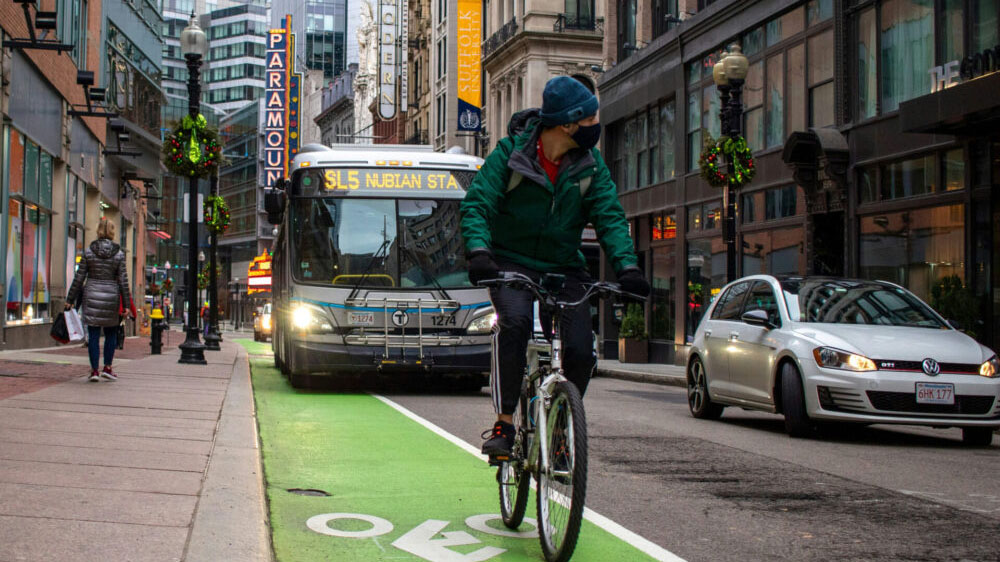
In the United States, 555 cities scored 50 or higher in PeopleForBikes’ 2026 City Ratings — up from just 234 in 2025, reflecting nationwide momentum for safe, connected places to ride.
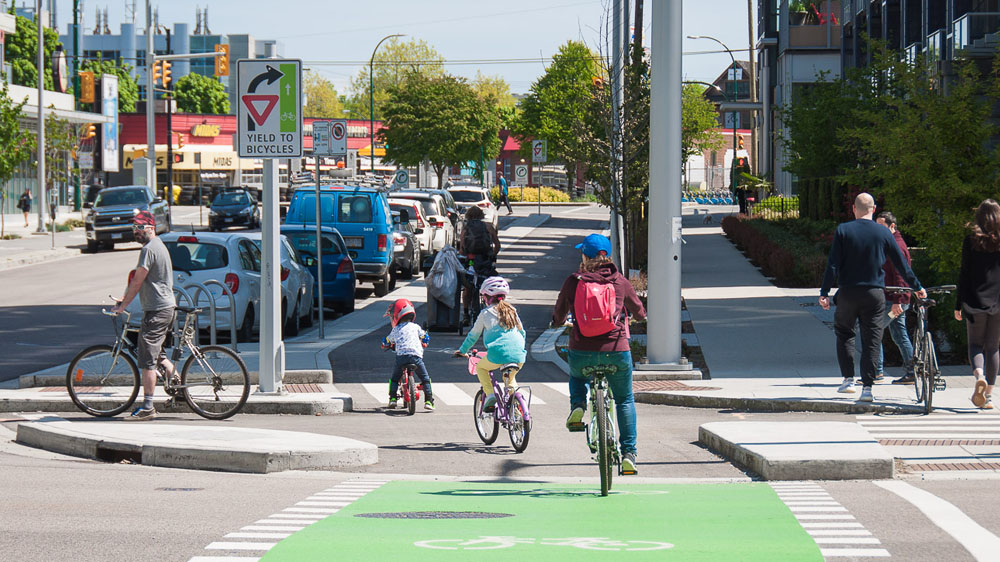
Canada is on a similar trajectory. Montreal, ranked among the top cycling cities in North America on the Copenhagenize Index, has built one of the continent’s most ambitious protected networks through its Réseau Express Vélo (REV), logging 1.3 million trips on its Saint-Denis corridor alone between January and September 2025.
Meanwhile, Edmonton is investing $100 million to develop 100 kilometres of high-quality bike lanes by 2026, and Toronto’s 2025–2027 Cycling Network Plan commits to delivering 100 km of new and upgraded bikeways — signals that Canada’s largest cities are treating the urban bike as infrastructure, not an afterthought.
Bringing It All Together: Your City Bike Is an Infrastructure Decision
Choosing a city bike in 2026 isn’t just a personal transport decision — it’s a vote for the kind of city you want to live in. Every urban commuter who switches from a car to a commuter bike reduces road congestion, frees up parking space, and lowers local emissions in ways that aggregate into measurable urban change.
The world’s best cycling cities didn’t get there by accident. They got there because enough riders chose two wheels — and enough city planners responded.
Polygon’s city bike lineup makes that choice straightforward. The Oosten is built for smooth city roads and short trips, with an upright riding position that feels natural from the first pedal stroke. The Path series goes further — stable geometry and wider tire support make it equally at home on rough pavement, bike lanes, and longer city rides. One for comfort, one for versatility — both built for the city you actually live in.