




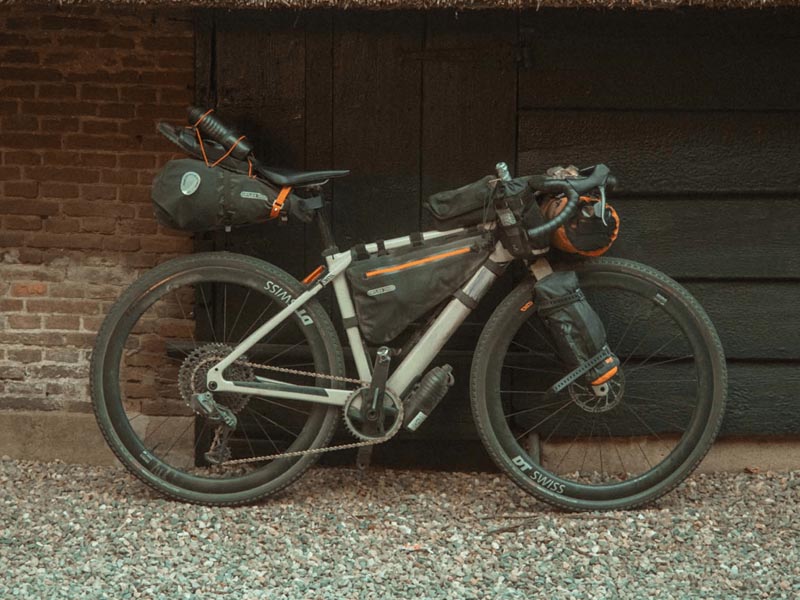
Loading a bikepacking setup isn’t just about fitting gear, but it’s about balance. Keep heavy items like tools, food, and water low and centered in your frame bag to maintain stability. Place lighter, bulkier gear such as clothing or a sleeping bag in seat and handlebar bags.
This approach keeps your bike stable, predictable, and easier to control across mixed terrain. At the core of this setup is one simple principle that guides how weight should be distributed on the bike.
The Golden Rule: Low and Central
The most important principle in bikepacking is simple: keep weight low and close to the center of the bike.
Heavy items like tools, spare parts, dense food, and electronics, should go inside the frame bag, positioned as low as possible near the bottom bracket. This keeps the center of gravity stable and reduces unwanted movement when riding over rough terrain.
Lighter items can be placed further away from the center without affecting handling too much. The further weight moves from the center, the more it impacts balance, especially on a gravel bike or touring bike.
Balance Front and Rear Weight
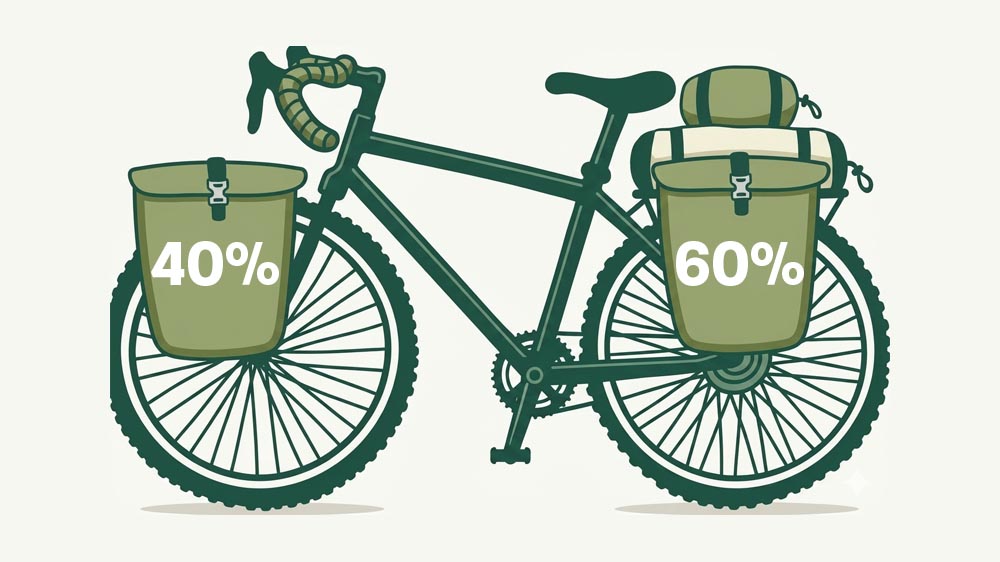
Weight distribution between the front and rear plays a big role in how your bike handles.
A good starting point is roughly 40% front and 60% rear.
Too much weight at the rear can make the bike feel unstable, especially during descents, it may start to “fishtail” or sway. On the other hand, too much weight at the front can make steering feel slow and heavy.
The goal is not perfect numbers, but a balanced feel when riding. If your front wheel feels light when climbing, you likely have too much weight at the back. If steering feels sluggish, the front might be overloaded.
Use the Handlebar Bag for Light Gear
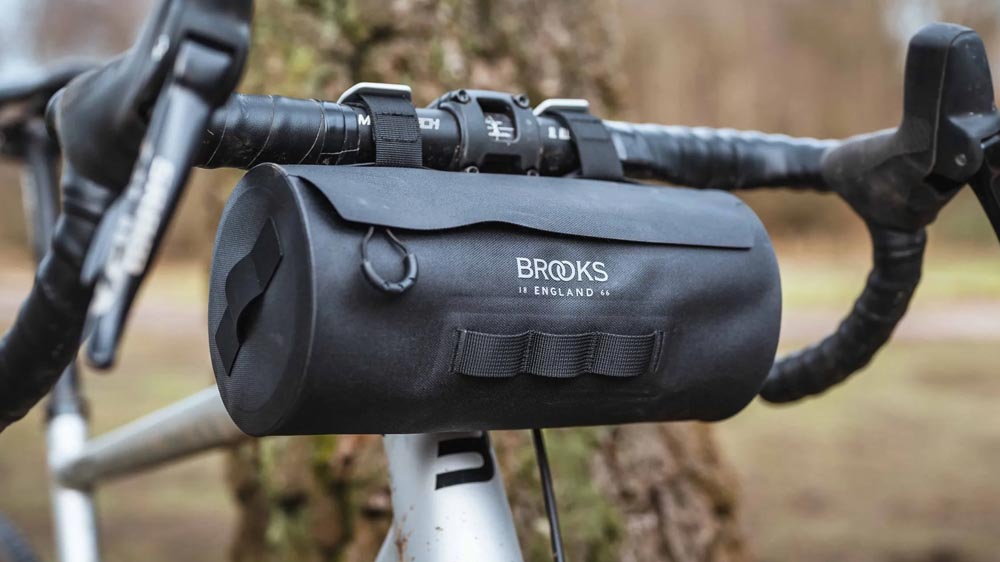
The handlebar bag is one of the most sensitive areas for weight placement. Because it directly affects steering, it should only carry light, bulky items such as:
- Sleeping bag
- Sleeping pad
- Extra clothing
Avoid putting heavy gear here. Even a small increase in weight can noticeably affect steering control, especially on technical terrain. Make sure the bag is tightly secured. A loose handlebar bag can bounce and interfere with handling, particularly on rough trails.
Use the Frame Triangle for Heavy Gear
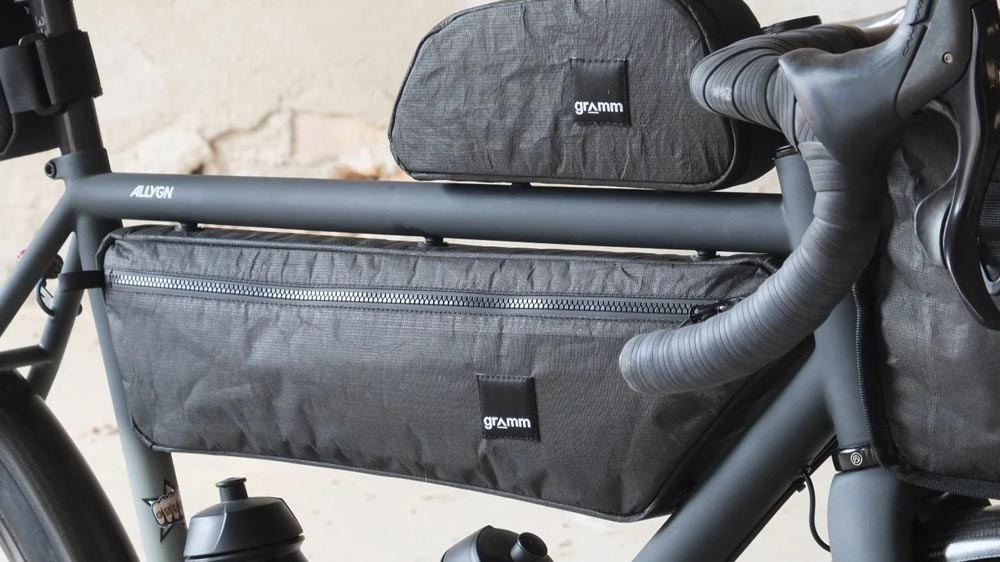
The frame triangle is the most stable and important storage area in any bikepacking setup.
This is where all dense and heavy items should go:
- Tools and spare parts
- Stove and fuel
- Food supplies
- Power banks or electronics
Placing these items centrally keeps your bike grounded and predictable. It also reduces strain on other parts of the bike, like the handlebars and seatpost.
If you only remember one thing: heavy items always go in the frame bag.
Handling Dynamics: Why Weight Placement Matters
How you load your bike directly affects how it rides.
- Too much rear weight → bike feels unstable and sways
- Too much front weight → steering becomes heavy and slow
- High weight placement → increases wobble, especially on descents
Lower weight improves stability. Central weight improves control.
For example, placing water bottles or tools lower on the frame can make a noticeable difference in how planted your bike feels on gravel or uneven terrain.
On climbs, poor weight distribution can cause the front wheel to lift. On descents, it can lead to speed wobble. That’s why smart packing is just as important as your riding skills.
Secure Everything Properly
Even perfect weight distribution won’t help if your gear moves around.
Always secure bags tightly:
- Compress soft items to remove air.
- Use straps firmly, no loose ends.
- Check for movement before riding.
A simple trick: lift your bike and give it a firm shake. If anything rattles or shifts, fix it before heading out. Loose gear doesn’t just affect comfort, it can throw off your balance and control mid-ride.
Recommended Bikepacking Bag Setup
A well-organized system makes packing easier and more consistent.
- Frame Pack (Core weight zone): Heavy items like tools, food, stove, and electronics
- Handlebar Bag (Front): Sleeping bag, shelter, or light clothing
- Seat Pack (Rear): Clothes, sleeping pad, and other light bulky gear
- Top Tube / Stem Bags: Snacks, phone, sunscreen, and items you need while riding
This structure keeps weight balanced while making essential items easy to access.
Pro Tips
Keep your bikepacking setup compact and practical and test your setup on short rides before longer trips. Pay attention to the seat pack to avoid side-to-side sway by placing heavier items near the seatpost and lighter ones at the back.
Also, remember that a gravel bike is more sensitive to weight distribution than a touring bike, so balance matters even more.
In the end, good bikepacking isn’t just about what you bring, but how you carry it. Keeping weight low, centered, and balanced will make your bike more stable, efficient, and enjoyable to ride across any terrain.
Read also: