







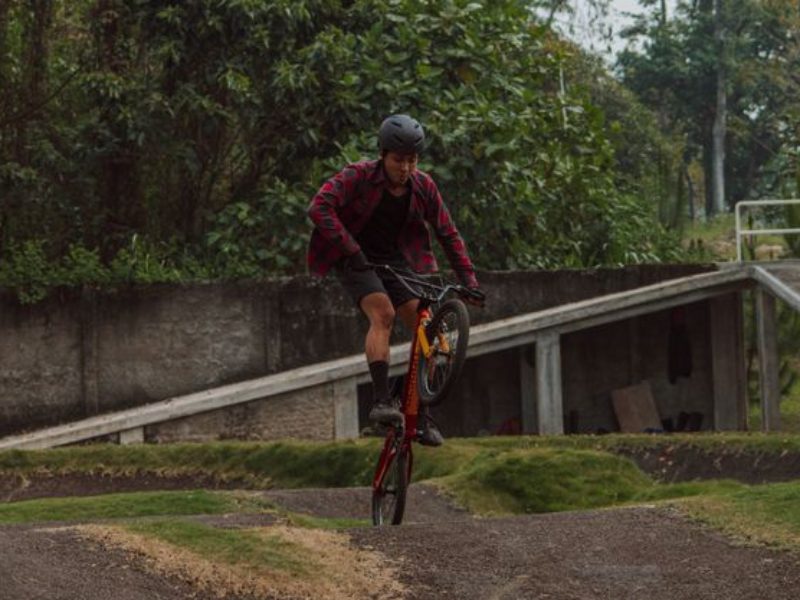
Yes, BMX can be hard to learn at first. But it depends on what you mean by “learn.” If your goal is simply to ride a BMX bike comfortably, it’s not that difficult.
If you want to master tricks, jumps, and technical park lines, then yes, BMX takes time, patience, and resilience. Like any high-skill sport, progress is earned.
At Polygon, we believe BMX isn’t about instant perfection. It’s about progression — one small win at a time.
What Makes BMX Challenging?
Balance & Control
A BMX bicycle is smaller, lighter, and more responsive than a regular bike. The shorter wheelbase and lower saddle height give you agility — but also require better balance.
For beginners, the quick steering can feel unstable. But that same responsiveness is what makes BMX exciting. Once your body adapts, control becomes second nature.
Explosive Power
Unlike long-distance cycling, BMX relies on short bursts of speed. Whether you’re sprinting out of a gate or pumping through rollers at a track, you need explosive leg power.
That intensity can feel overwhelming at first. But it also means sessions are dynamic and rewarding. You’re not grinding miles, you’re building power.
Coordination
In BMX, timing is everything. Bunny hops, manuals, and basic jumps require coordination between your arms, legs, and core.
Many beginners think BMX is about strength. It’s not. It’s about rhythm and repetition. Your brain and body need time to sync — and that’s completely normal.
Mental Confidence, Is Fear the Biggest Barrier?
Let’s be honest: fear plays a big role in BMX.
Dropping into a ramp or attempting your first jump can feel intimidating. The mental barrier is often harder than the physical one. But overcoming small fears builds confidence that carries beyond riding.
That’s where real growth happens.
Why Does BMX Feel “Hard” at First?
 BMX feels hard because it compresses skill development.
On a regular bike, you can sit and recover. On a BMX bike, you stand. You engage your core. You stay active. The feedback is immediate, every small mistake is noticeable.
Beginners often struggle because:
- The bike feels smaller than expected
- There’s no suspension to absorb mistakes
- Tricks don’t work instantly
- Falls happen
But here’s the truth: early discomfort is part of the adaptation process. Your muscles, balance system, and reaction time are learning something completely new.
Hard doesn’t mean impossible. It means you’re growing.
What Should Beginners Know Before Starting BMX?
Physical & Mental Demand
BMX challenges both your body and your mindset.
You’ll activate your core, arms, and legs constantly because you ride standing up. Sessions can feel intense, especially in the beginning. Mentally, you’ll also train patience. Progress in BMX is rarely linear, some days you land everything, some days you don’t.
Start with the Basics
Strong fundamentals accelerate long-term progression.
Before attempting tricks, focus on:
- Smooth standing rides
- Controlled braking
- Basic bunny hops on flat ground
- Pumping transitions without pedaling
A solid foundation builds confidence. And confidence reduces hesitation, which is critical in BMX.
Safety First
Safety is non-negotiable.
A helmet is essential. Gloves improve grip and protect your hands. Knee and elbow pads reduce fear when learning new skills.
Just as important is riding a properly fitted BMX bike. Frame geometry, handlebar width, and crank length influence balance and control. A well-designed BMX bicycle, like those engineered by Polygon, ensures durability and stability while you learn.
When your equipment supports you, progression feels more natural.
Why Should You Try BMX Anyway?
Because BMX builds more than skill.
It builds:
- Resilience
- Explosive strength
- Confidence under pressure
- Creative expression
Few sports combine athleticism and creativity like BMX. Whether you ride street, park, dirt, or race, every session becomes a form of self-expression.
And unlike many sports, progress is deeply personal. You compete with your past self more than anyone else.
That’s powerful.
How Can You Make BMX Easier to Learn?
You can’t remove the challenge, but you can make the process smoother:
- Choose the right bike size. Proper fit improves balance instantly.
- Train consistently, not excessively. Short, focused sessions beat long, exhausting ones.
- Film your practice. Small posture adjustments make big differences.
- Break tricks into parts. Master the setup before the airtime.
- Celebrate micro-progress. A higher hop. A smoother landing. It all counts.
Most importantly: give yourself time.
BMX is not hard because it’s exclusive. It’s hard because it demands engagement. And that’s exactly why it’s rewarding.
So, Is BMX Hard to Learn?
Yes, at first.
But with the right mindset, proper fundamentals, supportive community, and a reliable BMX bicycle, it becomes one of the most fulfilling riding experiences you can have.
At Polygon, we see BMX not as a barrier, but as a gateway to strength, skill, and confidence. Progress starts the moment you decide to ride.
Read also: