




Mountain bike tire pressure is often overlooked, yet it plays a key role in grip, control, and ride comfort. Too much pressure makes the bike feel harsh and reduces traction, while too little can cause instability, rim strikes, or tire damage.
Because rider weight, tire size, bike type, and terrain all affect ideal pressure, there’s no universal setting. Understanding tire pressure is one of the easiest ways to improve performance and confidence on the trail.
Mountain Bike Tire Pressure Table (Range-Based)
There is no single “perfect” number when it comes to mountain bike tire pressure. Instead, most riders work within a safe pressure range, then fine-tune based on riding style, terrain, and body weight. The table below provides a practical starting point commonly used across modern MTB setups.
MTB Tire Pressure by Bike Category
| MTB Type | Front Tire | Rear Tire | Riding Focus |
| XC/Marathon | 21-30 PSI | 23-36 PSI brp bar? | Speed, efficiency,and low rolling resistance |
| Trail/All-Mountain | 18-29 | 21-23 PSI | Balanced grip, comfort, control |
| Enduro | 16-28 PSI | 19-30 PSI | Stability, cornering grip, impact absorption |
| Downhill (DH) | 13-25 PSI | 16–28 PSI | Maximum traction and high-speed control |
As a general rule, rear tire pressure runs slightly higher than the front to handle extra rider weight and braking forces.
Adjusting Mountain Bike Tire Pressure Based on Rider Weight
Rider weight plays a major role in dialing in mountain bike tire pressure. Heavier riders typically need slightly higher pressure to prevent rim strikes, while lighter riders can safely run lower PSI for added grip and comfort.
Rider Weight Adjustment Guide
- Below 60 kg → Reduce pressure by 2 PSI
- 60–75 kg → Use baseline pressure
- 75–90 kg → Add 2 PSI
- Above 90 kg → Add 3–4 PSI
These adjustments apply to both front and rear tires, while still maintaining a higher rear pressure. Beyond bike category and rider weight, several setup details influence the ideal pressure range.
Tire Width
- 2.1–2.25 inch → Add 1–2 PSI
- 2.3–2.4 inch → Baseline
- 2.5–2.6 inch → Reduce 1–2 PSI
Wider tires have more air volume, allowing lower pressure without sacrificing support.
Tubeless vs Tubes
- Tubeless setup → Can safely run 2–4 PSI lower
- Inner tubes → Add 2–3 PSI to reduce pinch-flat risk
Practical Setup Tip
- If the bike feels harsh or skittish, pressure may be too high
- If you feel excessive squirming or rim strikes, pressure is likely too low
Fine-tuning within these ranges helps riders get the most out of their mountain bike without compromising safety or performance.
Factors That Influence Mountain Bike Tire Pressure
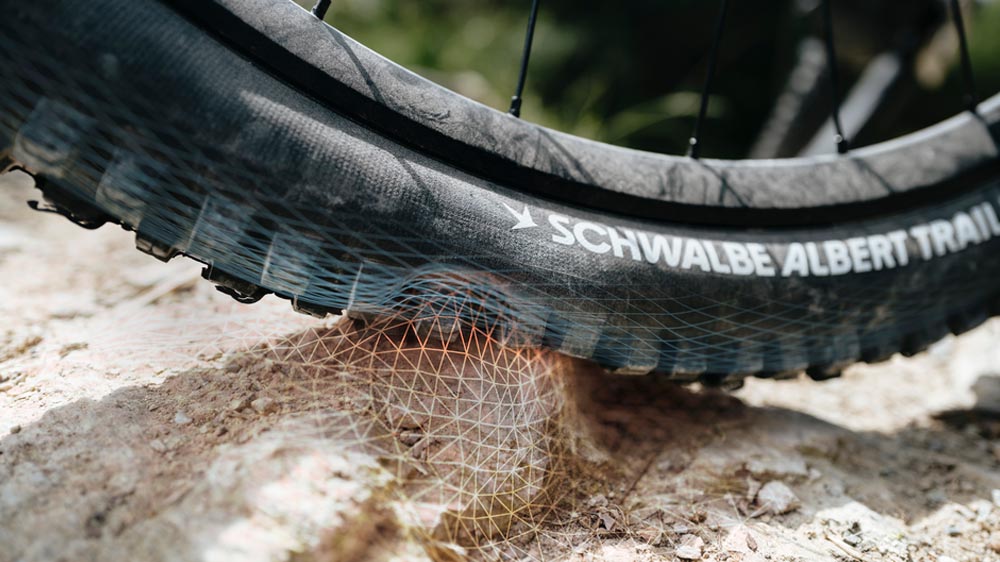 Beyond rider weight and bike category, there are a few real-world variables that experienced riders often consider when dialing in mountain bike tire pressure.
Trail Conditions and Terrain Type
The trail surface has a direct impact on how much pressure a tire needs.
- Hardpack & dry trails: Slightly higher pressure improves rolling efficiency and reduces unnecessary tire deformation.
- Loose gravel, dust, or sandy trails: Lower pressure increases tire contact with the ground, improving traction and control.
- Rocky or root-filled trails: Running slightly lower pressure helps the tire conform to obstacles, reducing bounce and rider fatigue.
This is why pressure that feels perfect on one trail may feel completely wrong on another.
Tire Casing Construction
Not all mountain bike tires behave the same, even at identical pressures.
- Lightweight / XC casings: Usually require slightly higher pressure to prevent excessive flex or rim strikes.
- Reinforced trail or enduro casings: Can run lower pressure thanks to stronger sidewalls that provide better support.
Casing strength directly affects how low a rider can safely go with mountain bike tire pressure.
Wheel Size (27.5” vs 29”)
Wheel size also plays a role in pressure setup.
- 29-inch wheels: Often feel more stable at slightly lower pressure due to larger contact patches.
- 27.5-inch wheels: May benefit from slightly higher pressure to maintain support and responsiveness.
The difference isn’t dramatic, but it’s noticeable for riders who fine-tune their setup.
Tire Inserts (If Used)
Some riders use tire inserts for extra rim protection.
With inserts:
- Lower pressures become safer to run
- Risk of rim damage decreases
- Grip and confidence increase, especially on aggressive terrain
However, inserts don’t eliminate the need for proper pressure, they simply widen the usable range.
Riding Style and Aggressiveness
Two riders of the same weight on the same bike may still prefer different pressures.
- Smooth, controlled riders may run lower PSI for comfort and grip
- Aggressive riders who hit obstacles hard may need slightly higher pressure for support
This personal element is why mountain bike tire pressure is always a starting point, not a fixed rule.
Safety Reminder
Always stay within the pressure range printed on the tire sidewall, and make adjustments gradually (usually in 1 PSI increments) to feel the difference safely.
Benefits of Running the Right MTB Tire Pressure
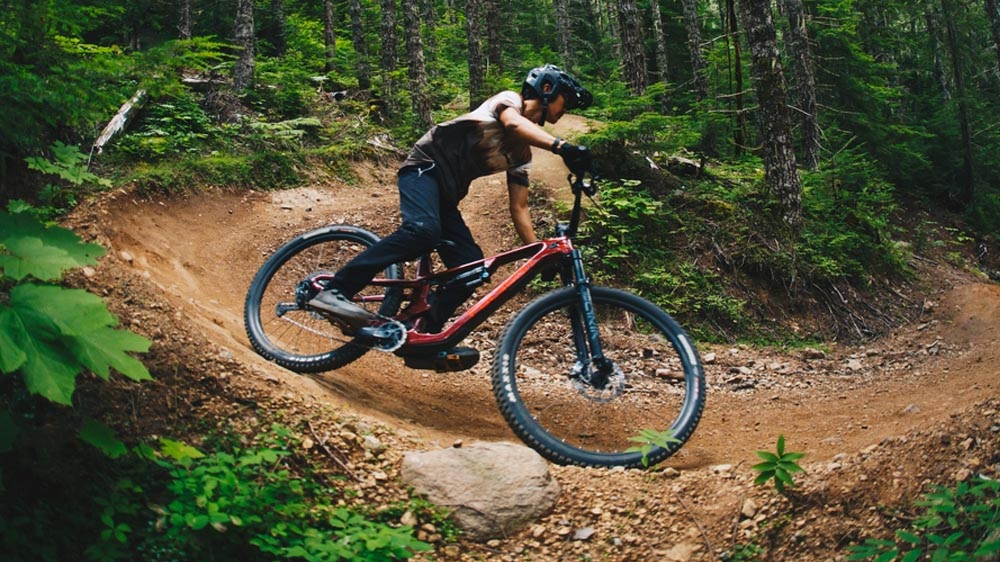 Here’s what riders actually gain when tire pressure is dialed in correctly.
1. Better Grip and Cornering Confidence
Proper tire pressure allows the tread to fully engage with the trail surface. When pressure is too high, the tire skims over rocks and roots, reducing contact and traction. When pressure is within the optimal range, the tire deforms just enough to bite into loose dirt, wet roots, or uneven terrain.
This is especially noticeable:
- In flat or off-camber corners
- On loose-over-hard trails
- When braking on steep descents
The result is more predictable handling and less sudden loss of grip.
2. Improved Comfort and Reduced Rider Fatigue
Tires act as the bike’s first suspension layer. Running pressure that’s too high transfers trail chatter directly to the rider, causing hands, arms, and legs to fatigue faster, especially on long rides or technical terrain.
With correct pressure:
- Small bumps are absorbed by the tire
- The bike feels calmer and more composed
- Long trail rides feel less punishing
This matters just as much for XC riders as it does for enduro or trail riders.
3. More Control on Technical Trails
On rocky gardens, roots, drops, and uneven surfaces, tire pressure directly affects how well the bike tracks the ground. Correct pressure helps the tire conform to obstacles instead of bouncing off them.
This gives:
- Better line-holding through rock sections
- More predictable braking on steep terrain
- Increased stability at speed
Too low, and the tire may feel vague or squirmy. Too high, and it deflects unpredictably.
4. Reduced Risk of Flats and Rim Damage
Counterintuitively, both overly high and overly low pressure increase risk.
- Too high → less absorption, harsher impacts to rim
- Too low → higher chance of pinch flats, rim strikes, or tire burping (tubeless)
Correct pressure balances impact protection with support, especially important for heavier riders or aggressive riding styles.
5. Better Rolling Efficiency Without Sacrificing Traction
Many riders assume higher pressure always rolls faster, but on real MTB trails, that’s rarely true. Over-inflated tires lose efficiency because they bounce and skip over terrain.
Optimal pressure:
- Maintains momentum over rough sections
- Reduces energy loss from excessive vibration
- Feels faster in real trail conditions, not just on smooth ground
This is why XC racers often fine-tune pressure down to fractions of a PSI.
6. More Consistent Ride Feel Across Different Trails
Once riders understand how pressure affects performance, adjusting becomes intuitive. A small PSI change can transform how the bike feels from one trail to another.
Correct baseline pressure makes it easier to:
- Adapt between hardpack and loose trails
- Adjust for wet vs dry conditions
- Tune front and rear tires independently
This consistency builds confidence and improves overall riding skill.
Read also:
Bottom Line: Mountain Bike Tire Pressure Matters
Mountain bike tire pressure is a small adjustment with a big impact. Just a few PSI can change traction, comfort, and control on the trail.
There’s no single “perfect” number. The right mountain bike tire pressure depends on riding discipline, rider weight, tire width and casing, setup (tubeless or tube), and terrain. Using pressure ranges as a starting point, then fine-tuning based on trail feel, is the most effective way to dial it in.
When set correctly, riders gain better grip, smoother handling, less fatigue, and more confidence. Understanding tire pressure matters far more than chasing maximum PSI or copying someone else’s setup.
Discover Polygon Mountain Bikes for Real Trail Riding
Proper tire pressure works best with a mountain bike built for modern trails. Our mountain bikes are designed with rider-focused geometry, trail-ready frames, and compatibility that supports wider tires and tubeless setups.
From XC to trail and enduro, Our mountain bikes make it easier to fine-tune mountain bike tire pressure without sacrificing stability or control. Explore the lineup and find a setup that helps you ride with confidence, on any trail.