




Why Gravel Bike Tire Pressure Matters?
Gravel riding is all about adaptability. One ride can include smooth asphalt, broken pavement, loose gravel, and uneven dirt, all in a single loop. Because of that, gravel bike tire pressure plays a much bigger role than many riders realize. Set it too high, and the bike feels harsh, skittish, and tiring on rough surfaces. Set it too low, and handling becomes vague, inefficient, and prone to flats.
Finding the right gravel bike tire pressure helps balance comfort, grip, control, and efficiency, making the bike feel more confident and enjoyable, especially for beginners.
Gravel Bike Tire Pressure Guide by Tire Width
The table below provides a practical starting point, simplified for everyday gravel bike riders. These are typical ranges, not fixed rules, small adjustments are encouraged based on terrain and rider weight.
| Tire Width | Typical PSI Range | Best Use |
| 32mm | 45–55 PSI | All-road riding, smooth gravel, mixed pavement |
| 35mm | 35–45 PSI | Light gravel, commuting, endurance rides |
| 40mm | 30–40 PSI | General gravel riding, mixed terrain |
| 45mm | 25–38 PSI | Rough gravel, bikepacking, long-distance rides |
| 50mm | 20–33 PSI | Very rough gravel, off-road routes, maximum comfort |
As tire width increases, required pressure drops. Wider tires rely on air volume, not stiffness, to maintain speed and control.
How to Use This Gravel Bike Tire Pressure Table
Think of the table as a baseline, not a final answer.
- Start in the middle of the recommended PSI range
- Lower pressure slightly for rougher terrain or comfort
- Increase pressure slightly for smoother roads or heavier loads
Many experienced riders adjust pressure by just 2–3 PSI, which can make a noticeable difference in ride quality.
Factors That Influence Optimal Gravel Bike Tire Pressure
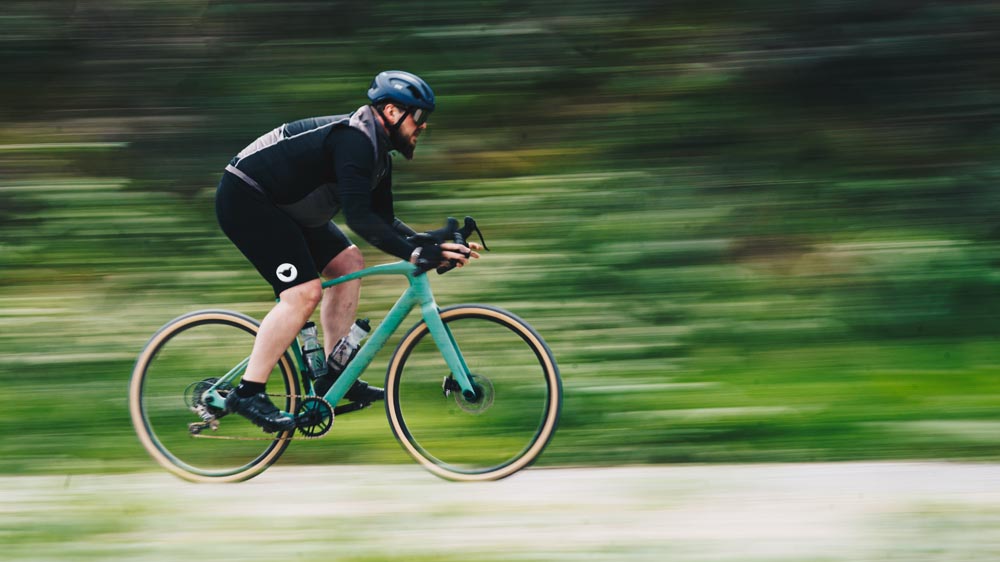 The tire pressure table provides a solid starting point, but gravel riding is rarely one-size-fits-all. Optimal gravel bike tire pressure depends on several real-world factors that affect how the tire interacts with the ground.
Understanding these factors helps riders fine-tune pressure instead of guessing, and explains why two riders on the same bike may use very different PSI.
1. Tire Width and Tire Volume
Tire width is the most direct factor influencing gravel bike tire pressure. Wider tires hold more air volume, which means they can run at lower pressure without collapsing under load. A 45mm or 50mm tire doesn’t need high PSI to stay stable because the larger air chamber supports the rider’s weight more evenly.
This is why the table shows:
- Higher pressure ranges for 32–35mm tires
- Lower pressure ranges for 40–50mm tires
Wider gravel tires don’t feel slow because they’re soft, they feel fast because they smooth out rough terrain and maintain momentum.
2. Rider Weight and Bike Load
Gravel bike tire pressure must support not only the rider, but everything carried on the bike. Heavier riders naturally compress the tire more, requiring slightly higher pressure to maintain proper shape and handling. The same applies when carrying extra gear, such as:
- Bikepacking bags
- Racks and panniers
- Water and tools for long rides
As a general adjustment, riders may add a few PSI within the recommended range to compensate for additional load. Ignoring rider weight often leads to underinflated tires, which can feel unstable or vague when cornering.
3. Terrain and Surface Conditions
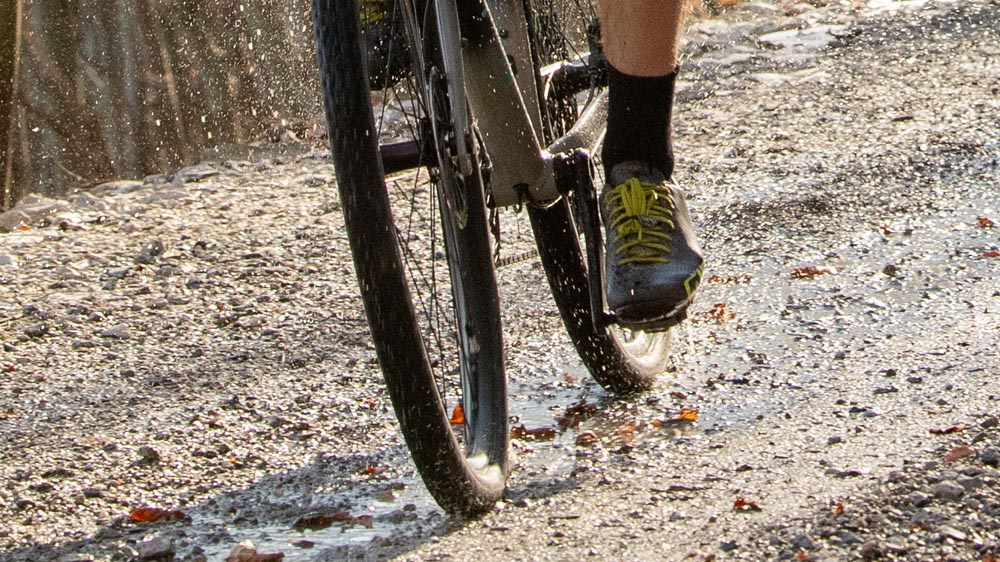 Terrain has a major influence on optimal gravel bike tire pressure, sometimes more than speed or fitness goals. On smoother surfaces, slightly higher pressure reduces rolling resistance and keeps the bike feeling lively. On rough gravel, washboard roads, or loose stones, lower pressure improves grip and control by allowing the tire to deform around obstacles instead of bouncing off them.
This is why experienced gravel riders adjust pressure based on where they’re riding, not just how far or how fast.
4. Tubeless vs Tube Setup
Whether a gravel bike is set up tubeless or with inner tubes changes how low pressure can safely go. Tubeless systems allow riders to run lower gravel bike tire pressure because:
- There is no inner tube to pinch
- The tire can flex more freely
- Small punctures are often sealed automatically
Tubed setups generally require slightly higher pressure to avoid pinch flats, especially on rocky terrain. This difference explains why many pressure recommendations are given as ranges rather than fixed numbers.
5. Front and Rear Tire Balance
Gravel bikes rarely use identical pressure front and rear, and for good reason. The rear tire carries more weight, so it often runs a few PSI higher than the front. The front tire, meanwhile, benefits from slightly lower pressure to improve grip and steering confidence.
This small adjustment can make the bike feel more planted without sacrificing efficiency, especially for riders using wider gravel tires.
6. Riding Style and Experience Level
Finally, personal riding style matters. Aggressive riders who push corners or ride fast on loose gravel may prefer slightly lower pressure for grip. More conservative riders or commuters may favor stability and durability with slightly higher pressure.
For beginners, staying near the middle of the recommended PSI range is usually the safest and most predictable approach.
Benefits of Optimal Gravel Bike Tire Pressure
 1. More Consistent Grip Across Mixed Terrain
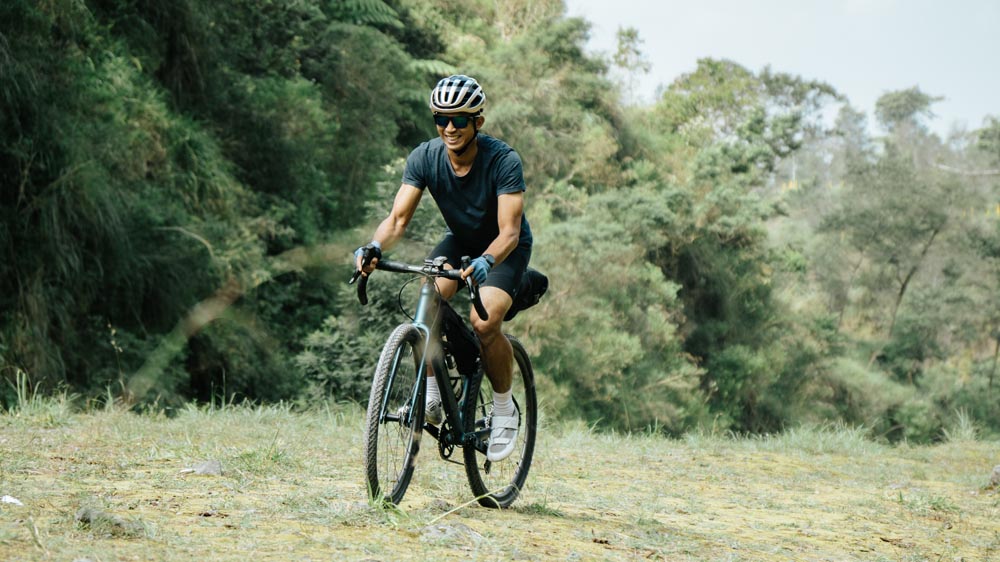
Gravel surfaces are rarely uniform. Loose stones, compact dirt, broken asphalt, and washboard sections can all appear in a single ride. When tire pressure is too high, the tire struggles to maintain contact with these uneven surfaces, leading to unpredictable grip.
Optimal gravel bike tire pressure allows the tire to flex and conform to the terrain. This increases the size and consistency of the contact patch, resulting in more reliable traction when cornering, braking, and climbing. Riders often notice that the bike feels calmer and less nervous, especially on loose gravel where control matters most.
2. Improved Comfort That Reduces Fatigue
Correct gravel bike tire pressure significantly improves ride comfort by absorbing vibrations and small impacts before they reach the rider. Instead of relying on stiff frames or suspension components, gravel bikes use tire volume and pressure as a primary comfort mechanism.
Over longer rides, this reduction in vibration helps minimize hand numbness, arm fatigue, and lower-back strain. The result is a smoother, more controlled ride that allows riders to stay relaxed and focused, rather than fighting the bike on rough surfaces.
3. Better Rolling Efficiency in Real Riding Conditions
Higher tire pressure may feel faster on smooth pavement, but gravel riding rarely offers perfectly smooth surfaces. Excessively hard tires tend to bounce over rough sections, wasting energy and disrupting momentum.
With optimal gravel bike tire pressure, the tire rolls more smoothly over imperfections instead of deflecting off them. This reduces energy loss and helps maintain consistent speed over mixed terrain. As highlighted by Canyon and BikeRadar, riders often achieve better average speeds with slightly lower pressure because the bike moves forward more efficiently in real-world conditions.
4. Greater Stability and Predictable Handling
Tire pressure plays a critical role in how stable a gravel bike feels. When pressure is balanced, steering inputs feel more predictable, and the bike tracks more confidently through uneven sections and descents.
This stability is particularly important for newer gravel riders. A bike that feels predictable encourages smoother riding and builds trust between the rider and the bike, making technical gravel sections feel less intimidating.
5. Reduced Risk of Flats and Equipment Wear
Running gravel bike tires at the correct pressure also protects the bike itself. Overinflated tires increase impact stress on rims and reduce grip, while underinflated tires raise the risk of pinch flats or rim strikes, especially when riding rough gravel or carrying additional load.
Staying within the recommended pressure range helps extend the lifespan of tires and wheels, reducing the likelihood of unexpected mechanical issues during longer rides.
In practice, optimal gravel bike tire pressure transforms gravel riding from a trial-and-error experience into something more intuitive and enjoyable. It allows the bike to perform as intended, across the varied surfaces that define gravel riding.
Curious about how the gravel bike tire pattern influences your overall ride? Dive deep into our article “Best Tire Tread for Gravel Bike Ride” to find some insights!
Discover Polygon Gravel Bikes
Finding the right gravel bike tire pressure works best when paired with a bike designed for real gravel riding.
Polygon gravel bikes are built with:
- Stable, confidence-inspiring geometry
- Generous tire clearance for wider setups
- Frames designed to perform across varying pressures and terrain
This allows riders to fine-tune their gravel bike tire pressure based on surface conditions without compromising handling or comfort. Whether riding smooth all-road routes, mixed gravel loops, or rougher off-road paths, Polygon gravel bikes provide a reliable platform that adapts as your riding evolves.
Read also: