




Changing a gravel bike tire is a basic but important skill every rider should master. Gravel bikes tackle mixed surfaces, from pavement to dirt and rocky trails, which means tires wear differently and can fail unexpectedly.
Knowing how to change your tire not only saves time on the trail but also keeps you riding safely and confidently.
Tools You Need
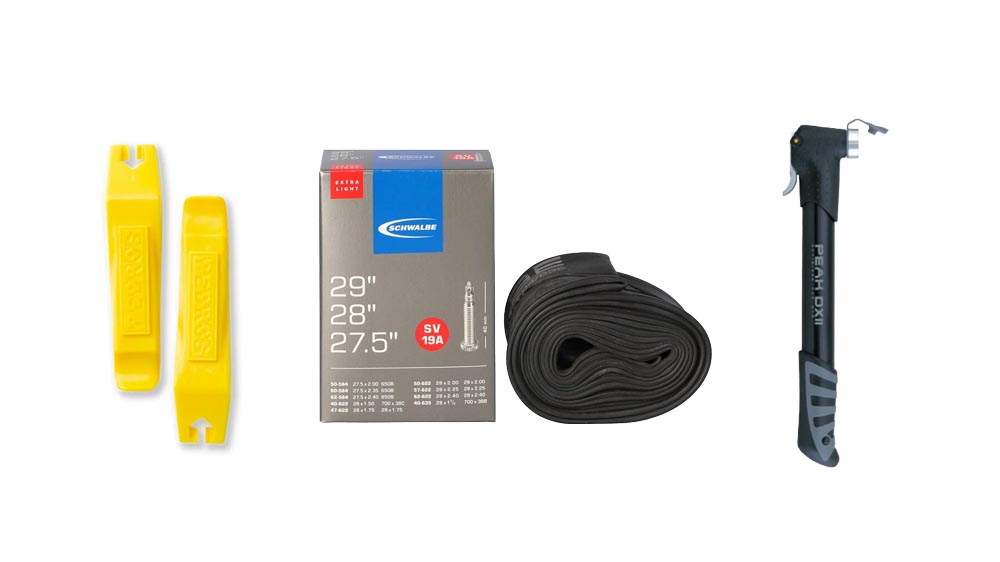 Before you begin, gather these essentials:
- Tire levers to pry the tire off the rim
- Spare inner tube or tubeless repair kit, depending on your setup
- Pump or CO₂ inflator to re-inflate the tire
Having these tools packed on rides prepares you for flats or damage without stress.
Remove the Wheel
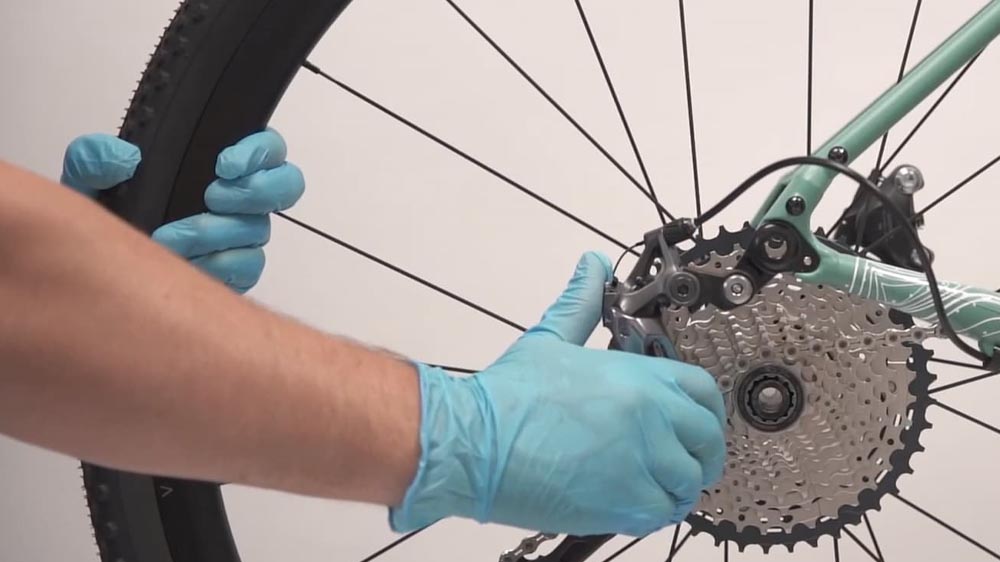
- Shift the chain to the smallest cog. This reduces chain tension and makes it easier to remove the rear wheel without resistance.
- Release the front wheel. Open the quick-release lever or unscrew the thru-axle, then lift the wheel straight out of the fork.
- Remove the rear wheel carefully. Open the quick-release or remove the thru-axle, gently pull the derailleur backward, and lift the wheel out of the frame.
- Stabilize the bike. Make sure the bike is either placed upside down on a flat surface or secured in a repair stand before and during wheel removal.
Take Off & Deflate the Old Tire
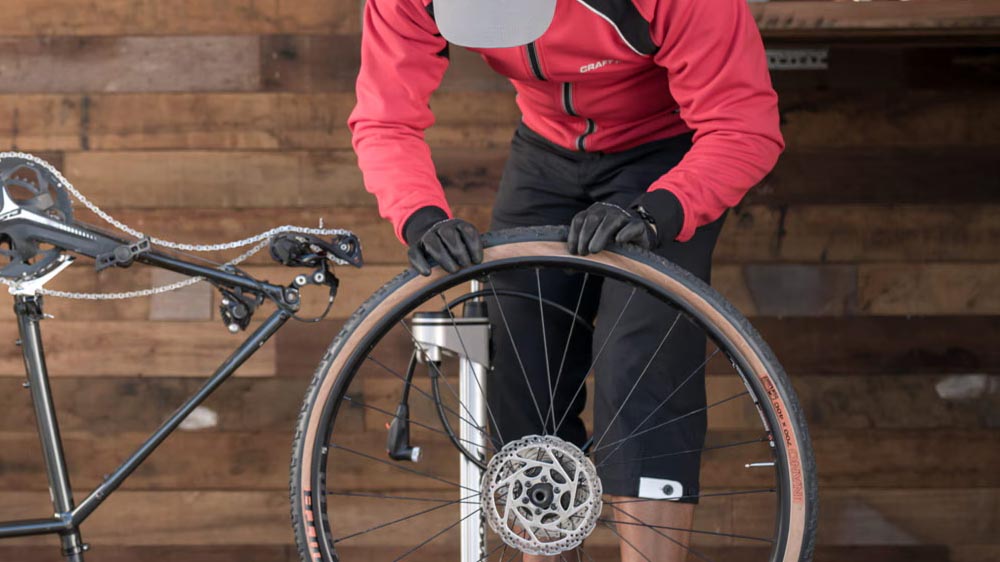
- Deflate the tire completely. Press the valve to release all remaining air. A fully deflated tire is much easier to remove from the rim.
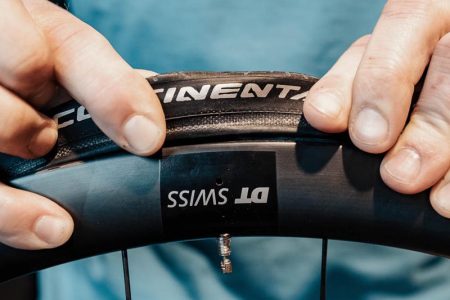
- Insert a tire lever. Slide the lever between the tire bead and the rim edge to begin loosening one side of the tire.
- Pry the bead over the rim. Lift the tire bead up and over the rim, then slide the lever along to free one side completely.
- Remove the inner tube (if applicable). Once one side of the tire is off, pull out the tube carefully.
- For tubeless setups:
- Remove the valve core first to speed up air release.
- Use tire levers gently to avoid damaging the tire bead or rim tape, which are crucial for sealing.
Install the New Tire & Pump It Up
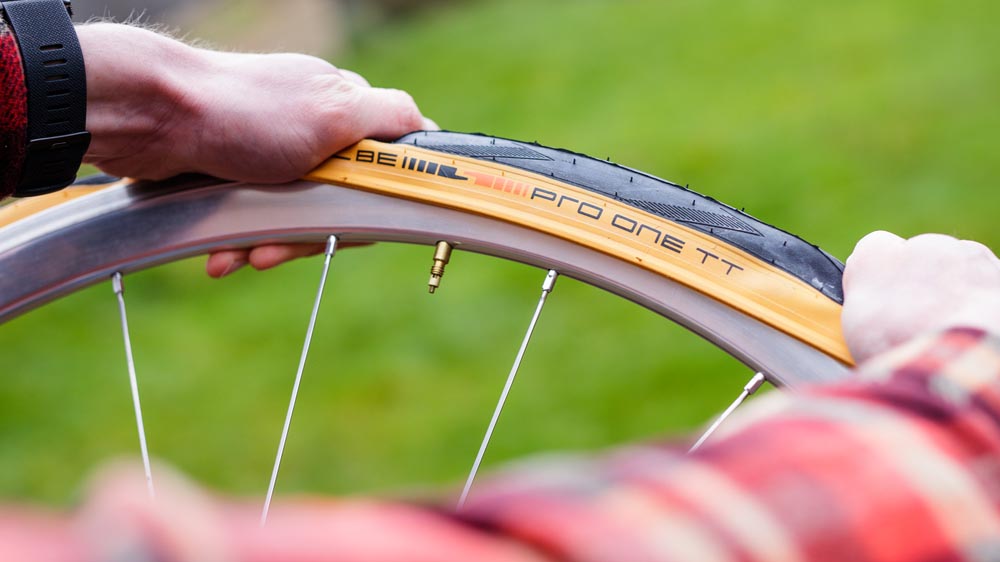
- Check the tire direction. Look for a rotational arrow on the sidewall to ensure correct installation.
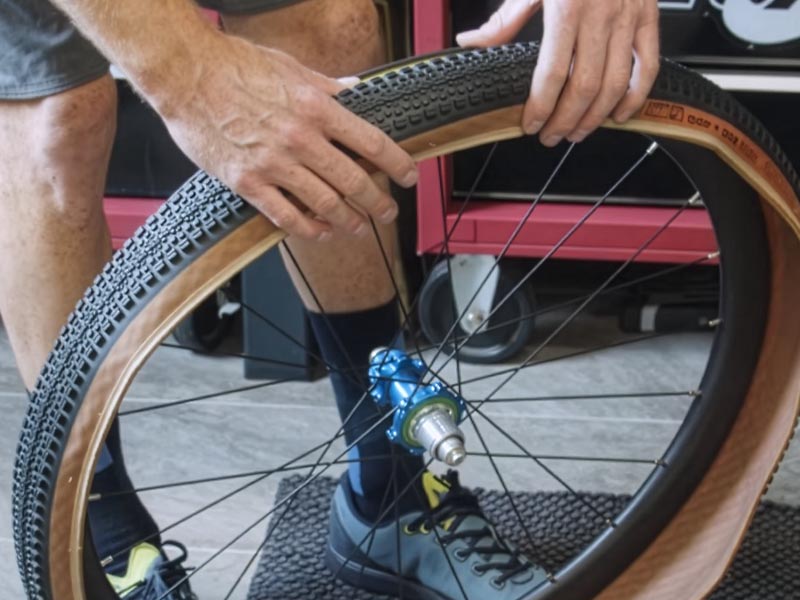
- Mount the first bead. Place one side of the tire onto the rim and work it around evenly.
- Insert the inner tube (if using one). Slightly inflate the tube so it holds its shape, insert the valve through the rim hole, and tuck the tube neatly inside the tire.
- Seat the second bead. Starting opposite the valve, push the second bead onto the rim, working your way around. Use your hands first and only use a lever if necessary.
- Inflate gradually.
- For tubed tires, inflate to the recommended pressure printed on the sidewall, or refer to our gravel bike tire pressure guide.
- For tubeless tires, apply a quick burst of air to help the bead “seat” properly, and listen for a popping sound.
- Check alignment. Ensure the tire bead sits evenly around the rim before reaching the final pressure.
Reinstall the Wheel & Test
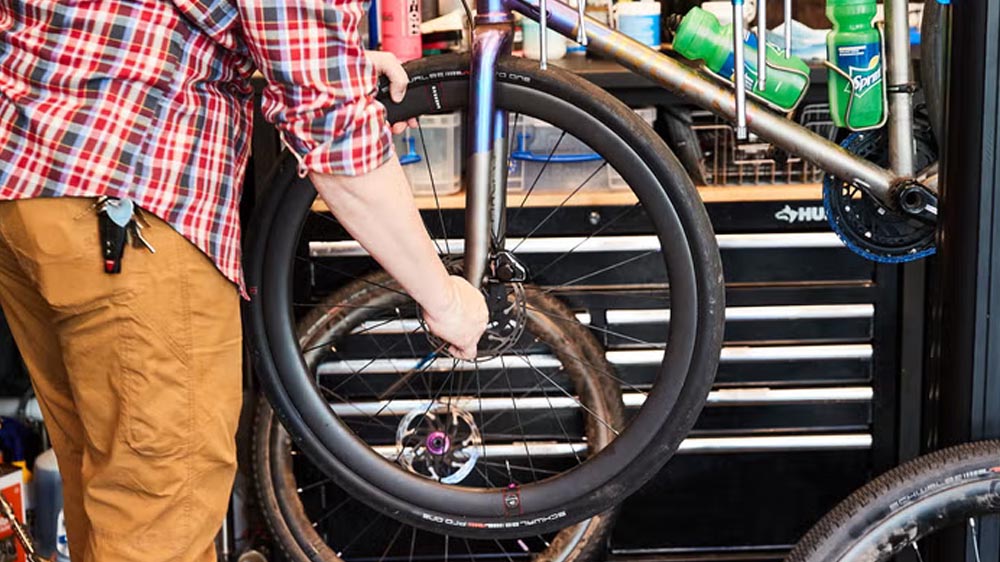
- Place the wheel back into the frame or fork. Align it properly within the dropouts before securing it.
- Tighten the quick-release or thru-axle. Make sure it’s firmly secured but not over-tightened.
- Spin the wheel. Check that it rotates smoothly without rubbing against the brake pads or frame.
- Do a quick test ride. Ride gently at first to confirm the tire feels stable and properly seated.
How Long Do Gravel Bike Tires Last?
Gravel bike tires are built for durability, but they naturally wear over time. Their lifespan depends on terrain, mileage, tire compound, and riding style. Rough gravel and sharp rocks accelerate wear, while smoother surfaces are less demanding.
Softer rubber compounds provide better grip but usually wear out faster, especially with aggressive braking and cornering.
On average, riders get around 1,000–3,000 miles (1,600–4,800 km) from a set of gravel bike tires, though this varies widely. Regularly checking tread depth, sidewalls, and small cuts helps you decide when it’s time for a replacement.
When to Change Gravel Bike Tires?
It’s time to replace your gravel bike tire when the tread becomes smooth and loses grip, or when you notice cuts, sidewall damage, or repeated flats. Cracks caused by aging or UV exposure are also signs that the rubber is deteriorating.
Some riders also change tires to improve performance, such as switching tread patterns for specific terrain. Replacing worn tires before a long ride or event helps prevent flats and keeps your ride safe and confident.
Learning how to change a gravel bike tire is a foundational skill for any gravel rider. With a few simple tools and the right steps, you can handle flats on the go and keep riding without stress. Practice at home first, so on the trail you’re confident and prepared.
Read also: