










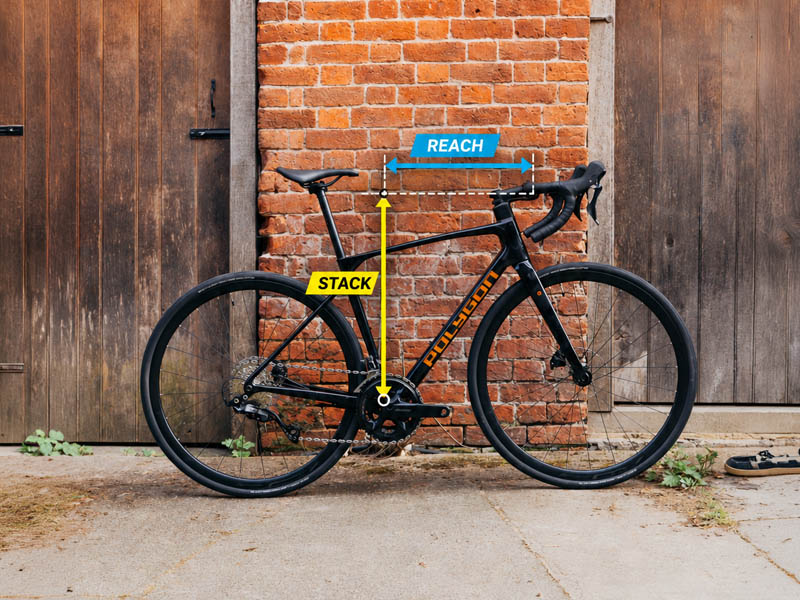
Stack and reach are two of the most important measurements in road bike geometry because they describe a bike’s fit more accurately than traditional frame-size labels. Stack is the vertical distance from the bottom bracket to the top of the head tube, while reach is the horizontal distance from the bottom bracket to the same point.
Together, these measurements help road cyclists understand riding position, compare bikes across brands, and choose a geometry that aligns witroh their comfort and performance goals.
What Are Stack and Reach? A Road Cyclist’s Guide to Bike Geometry
When cyclists talk about modern road bike geometry, stack and reach are often the first numbers fit specialists and manufacturers reference.
Stack is the vertical distance from the center of the bottom bracket to the top-center of the head tube. It indicates how tall the front end of the bike is. Reach is the horizontal distance from the center of the bottom bracket to the same point on the head tube. It indicates how long the bike feels from front to back.
Manufacturers publish these measurements because they provide a standardized way to describe frame dimensions regardless of brand-specific sizing systems. Whether you’re comparing a Canyon, endurance bike, or race-oriented model, stack and reach offer a clearer picture of rider positioning than frame labels alone.
Why Stack and Reach Matter More Than Frame Size?
Many cyclists assume that a “56cm” road bike from one brand will fit exactly like a “56cm” bike from another. In reality, frame sizing varies significantly between manufacturers.
One company’s 56cm race bike may have a lower stack and longer reach than another brand’s 56cm endurance model. Although both frames share the same size label, the rider experience can be completely different.
This is why stack and reach have become the preferred bike fit measurements among manufacturers and experienced cyclists. Instead of relying on seat tube length or generic sizing labels, riders can compare geometry directly.
For example, two road bikes may both be marketed as medium-sized frames:
- Bike A: 560mm stack, 390mm reach
- Bike B: 590mm stack, 375mm reach
Bike A will likely place the rider in a lower, more aggressive position, while Bike B provides a more upright posture. The size label alone cannot reveal these differences.
When using a bike sizing guide or comparing models online, stack and reach provide a much more reliable starting point for evaluating fit.
How Stack Affects Your Riding Position?

Stack has a major influence on your road cycling position because it determines how high the handlebars sit relative to the bottom bracket.
A higher stack creates a more upright riding posture. This is commonly found on endurance road bikes, which prioritize comfort during long hours in the saddle and reduce the amount of forward bend required from the rider.
A lower stack positions the rider closer to the handlebars and creates a more aerodynamic posture. This geometry is commonly found on race bikes designed for speed and performance-focused riding.
Endurance vs Race Geometry
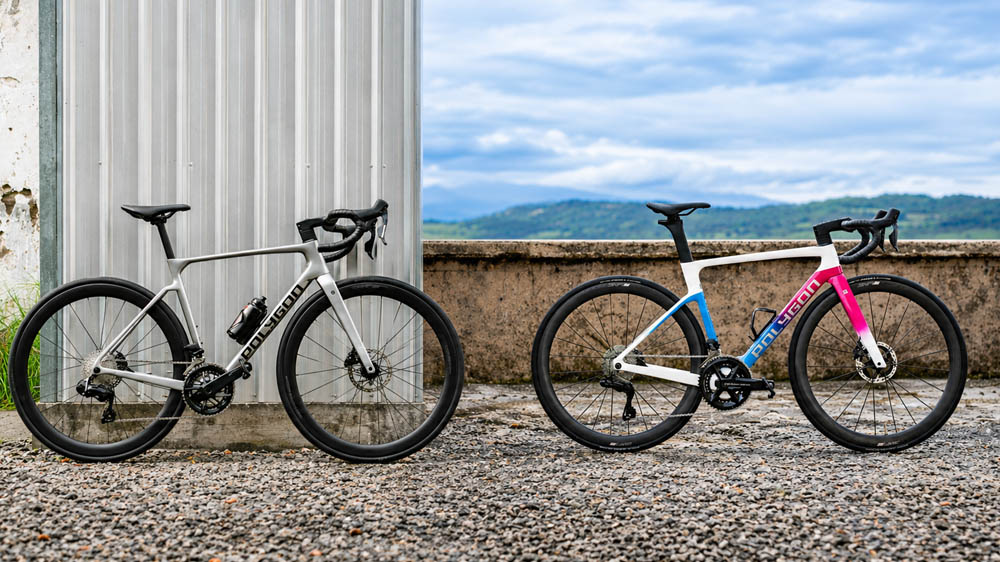
Endurance road bikes generally feature:
- Higher stack
- More upright posture
- Less weight on the hands
Race road bikes generally feature:
- Lower stack
- More aggressive position
- Greater focus on aerodynamics
Neither approach is universally better. The ideal geometry depends on riding goals, flexibility, and personal preferences.
How Reach Affects Handling and Comfort?
Reach determines how far a rider must extend to the handlebars and plays a key role in cockpit length.
- A longer reach stretches the rider farther forward. This can improve aerodynamic positioning and high-speed stability but may feel more aggressive for some riders.
- A shorter reach creates a more compact riding position that many cyclists find easier to maintain during long rides.
Reach also affects handling characteristics. Bikes with longer reach measurements often feel more stable at speed, while shorter-reach bikes can feel more responsive and easier to maneuver.
Because reach impacts both comfort and control, it should always be evaluated together with stack rather than in isolation. A bike with a long reach may still fit comfortably if paired with a taller stack.
How to Compare Two Road Bikes Using Stack and Reach
When comparing road bike geometry charts, focus on stack and reach before looking at frame-size labels.
Follow these steps:
- Compare bikes in equivalent size categories.
- Review stack figures to understand handlebar height.
- Review reach figures to assess cockpit length.
- Identify whether the geometry leans toward endurance or race characteristics.
- Consider potential adjustments through stem length, spacers, and handlebar setup.
Small geometry changes can often be fine-tuned, but stack and reach provide the strongest foundation for comparing frame designs.
For a more complete assessment, combine geometry analysis with a professional bike fit and insights from a dedicated road bike sizing guide.
Read also:
- How Wind Direction Affects Road Cycling Performance
- Integrated Cockpits on Modern Road Bikes
- Road Bike Upgrade Tips for Performance
Final Thoughts
Understanding stack and reach helps cyclists compare road bikes more accurately and make more informed fit decisions. While these measurements don’t guarantee a perfect fit on their own, they provide a valuable framework for evaluating road bike geometry, understanding riding position, and choosing between endurance and race-focused designs.