










To cycle safely, you need to understand these hand signals and how to use them on the road. Whether you’re riding your bike around traffic or cycling with a group, cycling hand signals give you a simple way to communicate without relying on words.
From stopping and turning to slowing down or pointing out a hazard, knowing these signals helps other road users understand your next move.
1. Stop Signal
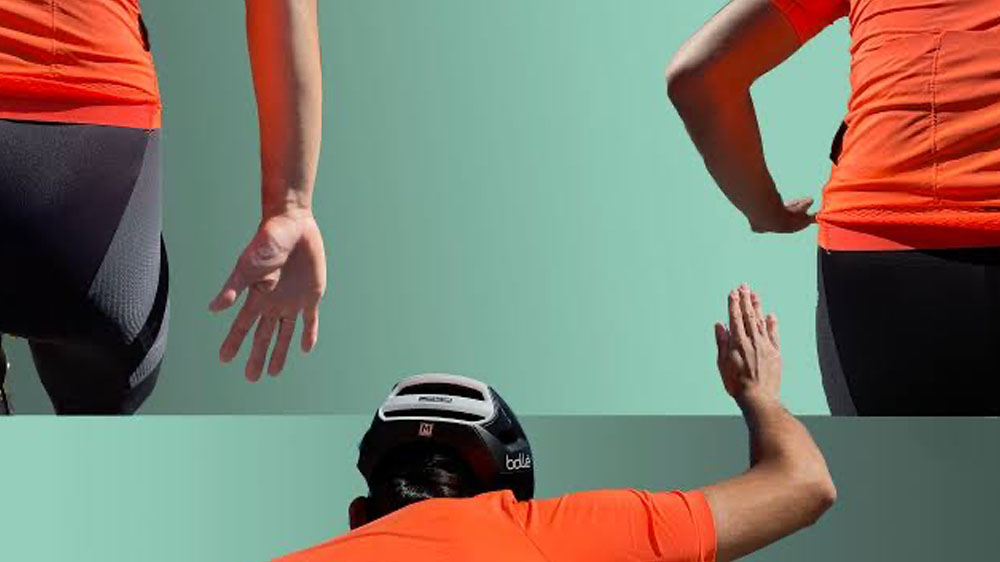
Need to come to a stop? Give the people behind you some warning first. Extend your left arm downward with your palm open and facing backward to show that you are about to stop. This gives other road users a chance to recognize what you are doing before your bike comes to a halt.
Timing also matters. Use the signal well in advance instead of waiting until you have already stopped. This gives people behind you more time to see the gesture and react to the change in your movement.
2. Turn Left Signal
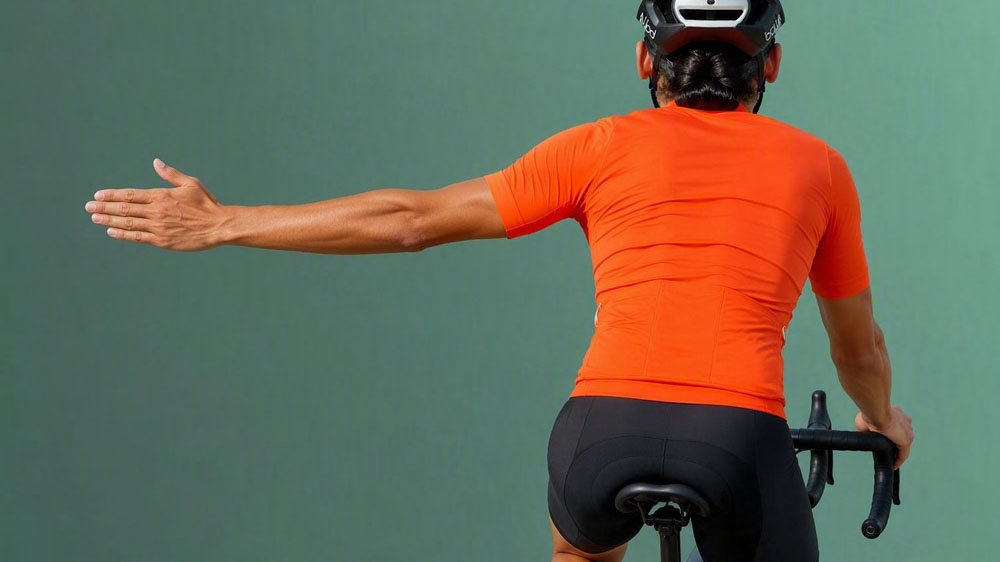
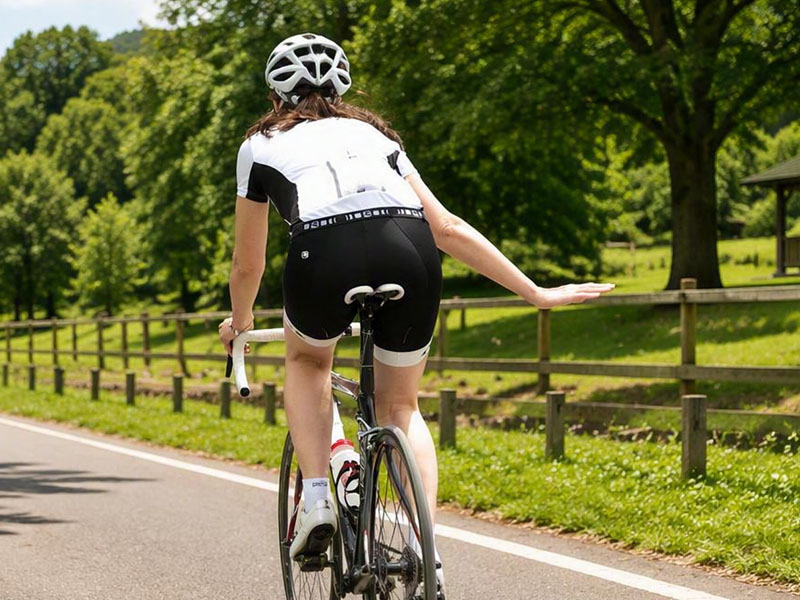
Before making a left turn, fully stretch your left arm out to the side. The gesture shows drivers and other cyclists where you intend to go before you start changing direction.
Signal before you reach the turn, not when you are already turning. Besides giving other road users time to anticipate your movement, signaling early gives you enough time to put your hand back on the bike before changing direction.
3. Turn Right Signal
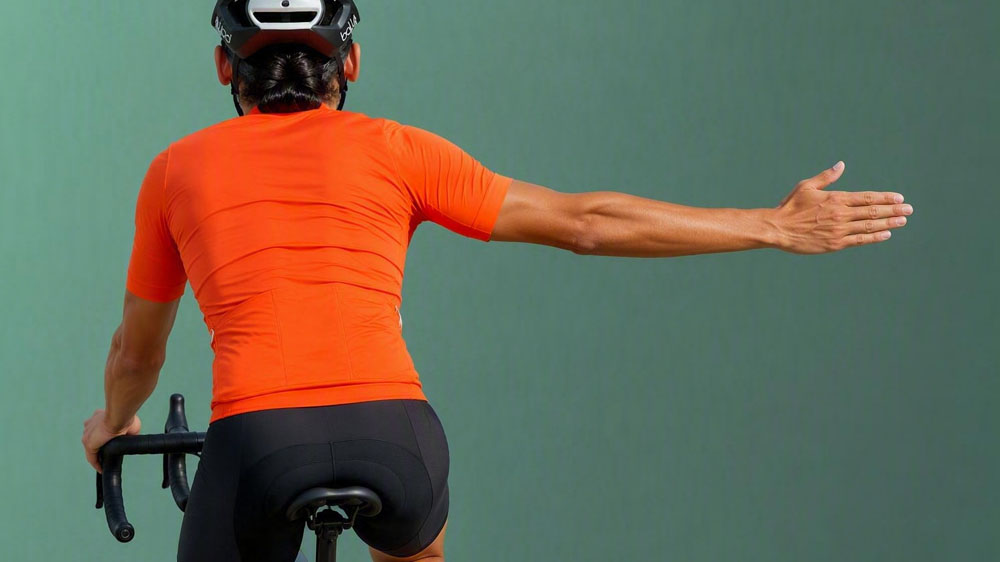
For a right turn, fully stretch your right arm out to the side. This clearly shows other road users which direction you intend to take and gives them time to anticipate your movement.
Another option is to extend your left arm and bend it upward at a 90-degree angle. Whichever method you use, make the gesture before reaching the turn. Once you have communicated your intention, you have time to reposition your hand on the bike before changing direction.
4. Slowing Down Signal
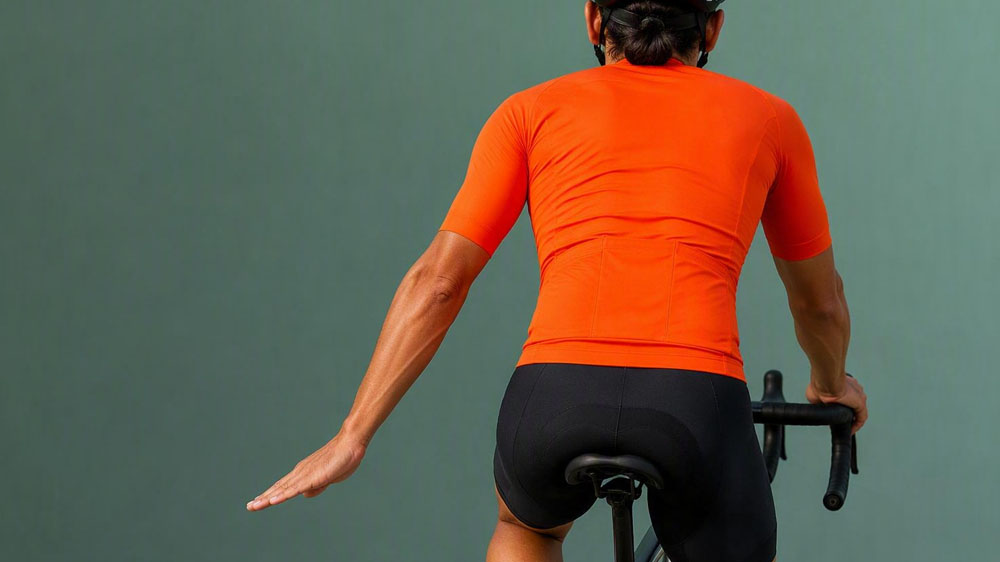
If you are about to reduce your speed, extend your left arm and move your hand in a patting motion. The movement lets people around you know that you are slowing down before the change in pace happens.
This cycling hand signal can be particularly useful in traffic or during group rides. An unexpected reduction in speed could affect cyclists following behind, so signaling beforehand gives them more time to respond.
The slowing-down gesture may also be less familiar than a standard turning signal. Make the patting movement clear and easy to see so the people around you can recognize what you are communicating.
5. Give Way Signal
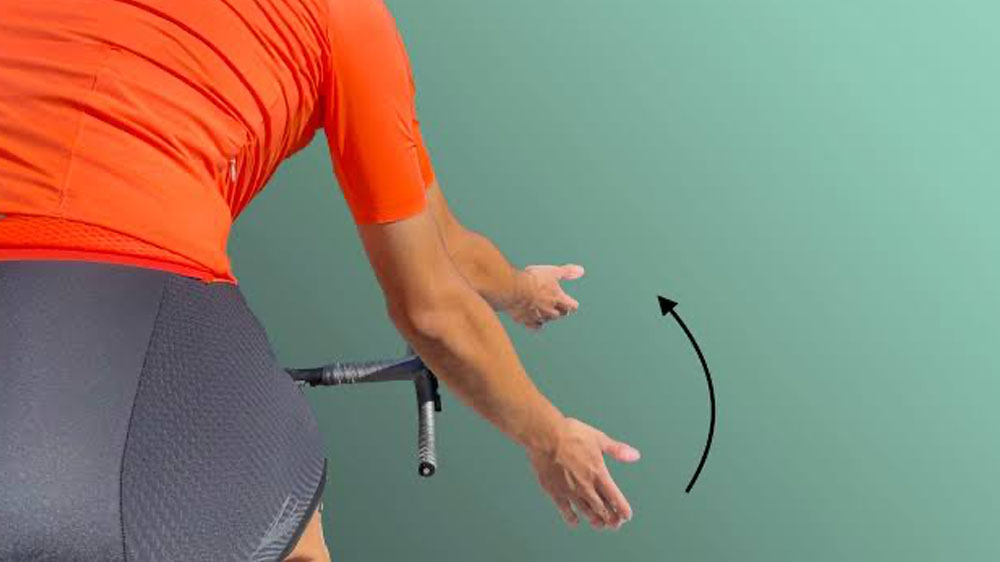
When you need to give way while cycling, extend your hand and fan it forward. Keep the gesture clear and visible so riders around you can recognize the signal and respond accordingly.
The give way signal can be particularly useful when you are riding with other cyclists. During a group ride, riders may need to communicate their movements without relying on verbal instructions. A visible hand gesture provides a simple way to pass that information to the people riding around you.
6. Obstacles on the Road
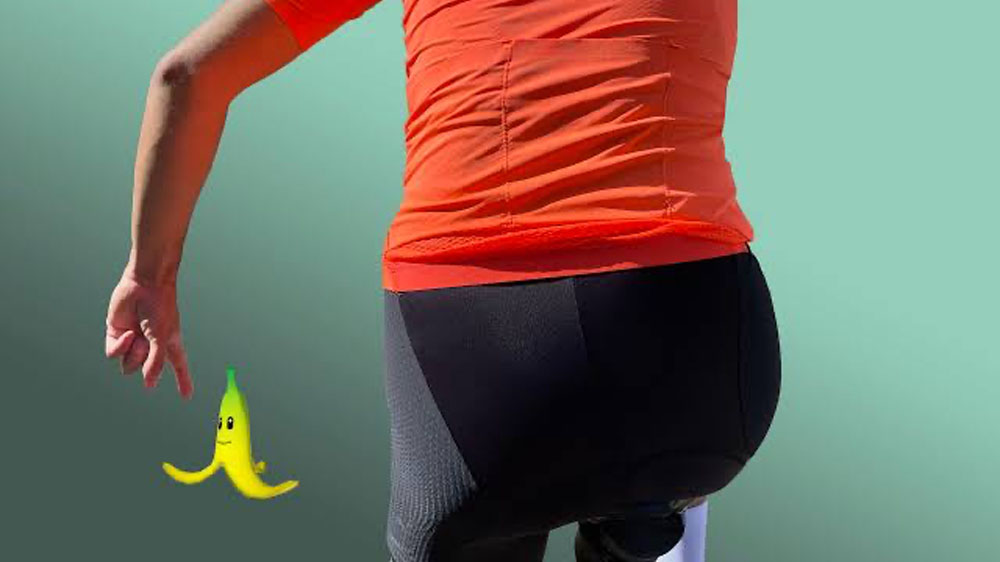
A pothole or loose debris might be easy for you to spot but harder for the cyclist following behind. When you notice an obstacle, point to it with your outstretched index finger to warn the riders behind you.
This signal can be used for hazards such as potholes, loose chippings, large stones, or dirt that could interfere with safe cycling. Rather than simply indicating that there is a problem ahead, pointing toward the obstacle also communicates where the potential hazard is located.
This gives cyclists behind you a clearer warning about what is ahead, especially when the obstacle may not be immediately visible from their position.
Read also:
Why Are Cycling Hand Signals Important?
When you’re on a bike, other road users cannot always know what you plan to do next. Cycling hand signals provide a clear, non-verbal way to communicate your intentions to drivers, pedestrians, and other cyclists.
A hand signal can show when you intend to turn, slow down, or stop, giving others time to respond appropriately. When riding with other cyclists, signals can also communicate when you are giving way or warn the group about an obstacle on the road.
This becomes particularly important in heavy traffic or during group rides, where unclear movements could lead to misunderstandings or collisions. Using the signals consistently makes your movements more predictable, helping the people around you understand what you are about to do before you do it.