





To avoid road bike saddle discomfort, ensure a proper bike fit, including correct saddle height and angle, use high-quality bib shorts without underwear, apply chamois cream to reduce friction, and choose a saddle that matches your sit bone width. These fundamentals help distribute pressure more evenly, reduce irritation, and improve overall riding comfort.
What Causes Saddle Discomfort?
Saddle discomfort on a road bike usually comes from a combination of small setup issues rather than one obvious mistake.
- Improper Bike Fit
A poorly adjusted saddle is one of the most common reasons for discomfort. If the saddle is too high, your hips tend to rock side to side, creating constant friction with every pedal stroke. Over time, this can lead to chafing and a burning “hot spot” feeling that gets worse the longer you ride.
If the saddle is too low, your weight sits too heavily on the saddle instead of being supported by your legs. This increases pressure in one area and often leads to early fatigue. Saddle angle also plays a role; a slight upward tilt can add pressure on sensitive areas, while tilting it too far down makes you slide forward and overload your hands.
- Excessive Pressure on the Sit Bones
Your sit bones are designed to support your weight, but only if the saddle supports them correctly. When pressure isn’t distributed well, discomfort builds quickly, even on shorter rides.
This often happens when posture is off or when you stay in the same position for too long. Instead of feeling supported, the pressure becomes concentrated, making the ride feel harsher than it should.
- Incorrect Saddle Choice
A road bike saddle that doesn’t match your anatomy can cause immediate discomfort. One of the most common mistakes is assuming that a softer saddle is more comfortable. In reality, too much padding can compress under your weight and increase pressure on soft tissue instead of supporting your sit bones.
Width is the most important factor. If the saddle is too narrow, your weight shifts away from the sit bones almost instantly. Shape also matters; some riders feel better on flatter saddles, while others prefer a slight curve, depending on flexibility.
Key Strategies for Comfort
Improving comfort on a road bicycle comes down to combining the right setup with better riding habits.
1. Proper Bike Fit

Start with saddle height. Your leg should have a slight bend at the bottom of the pedal stroke. A simple way to check this is the “heel on pedal” method. Keep the saddle level as a starting point, then make small adjustments if needed.
The fore-aft position also matters, as it affects how your weight is balanced between the saddle, pedals, and handlebars.
2. Correct Saddle Selection

Choosing the right road bike saddle makes a huge difference. The width should match your sit bone distance so your weight is properly supported.
Also consider:
- Saddle shape (flat vs slightly curved)
- Relief channel or cut-out for pressure reduction
These details may seem small, but they directly affect long-ride comfort. If you want to buy your very first road bike saddle, make sure not to skip our guide on how to choose the right road bike saddle.
3. Wear Quality Shorts Properly
Good bib shorts are essential. A high-quality chamois helps reduce friction and spread pressure more evenly across the saddle.
Make sure the fit is snug, with no folds or loose fabric. And one important rule: never wear underwear under bib shorts. It creates extra friction and can quickly lead to irritation.
4. Adjust Saddle Position While Riding
Even with a good setup, staying in one position too long leads to pressure buildup. Experienced riders naturally make small adjustments without thinking about it.
You can:
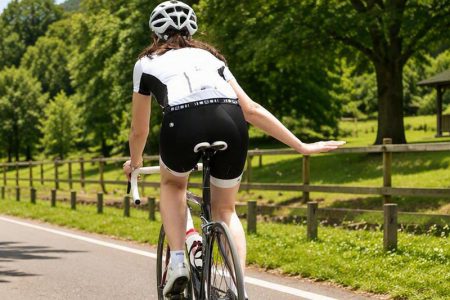
- Stand on the pedals every 10–15 minutes
- Shift between tops, hoods, and drops
- Slightly move your position on the saddle
These small changes improve blood flow and help prevent discomfort from building up over time.
Potential Causes of Pain
Different types of discomfort can tell you what needs to be fixed.
- Saddle soreness: This is the most common issue. At first, it may feel like general tenderness, but it can develop into irritation if the cause isn’t addressed. Soreness is usually linked to friction, pressure buildup, or low-quality gear. The good news is that it improves with better setup and consistent riding.
- Numbness: Numbness usually means there is too much pressure on soft tissue, which can affect blood flow or nerves. If numbness happens regularly, it’s a clear sign that something in your setup needs adjustment.
Saddle soreness and numbness are both signals that your setup needs attention, not something you have to simply tolerate. Most discomfort comes from pressure, friction, or poor support, and these can usually be improved through better saddle choice, proper bike fit, and small position adjustments.
As your setup becomes more balanced, the pressure is distributed more evenly, and your body adapts over time. The result is a ride that feels smoother, more efficient, and far more comfortable, allowing you to focus less on discomfort and more on enjoying the distance and the experience itself.
Read also: