


For decades, the logic of road cycling was simple and seemingly unquestionable: narrower tires, higher pressure, faster road bike.
Today, that knowledge has spread from the lab to the peloton. Fast forward to the most recent Tour de France and you’d struggle to find a tire measuring narrower than 28mm, even if that measurement was printed on the sidewall, as most modern road bike tires are now paired with ever-wider rims for aerodynamic advantages.
So what actually changed? Here’s the science behind one of the biggest shifts in road cycling — and what it means for how you set up your Polygon road bike.
1. Real Roads Are Not a Steel Drum
The key to understanding the wide-tire shift is understanding where old assumptions went wrong. Real roads aren’t smooth test drums. As pressure creeps up, the road bike tire begins to skip across micro-bumps and seams — you feel the buzz in your hands and your power file shows higher effort with no extra speed. That lost energy is called impedance.
Wider casings at appropriately lower pressures keep the tire planted, so the wheel rolls forward rather than chattering over texture. This is the fundamental reason wider tires can be faster on the roads most of us actually ride.
Practical takeaway: If your road surfaces are anything less than velodrome-smooth — and they almost certainly are — you are likely losing more energy to vibration and chatter on a narrow, high-pressure tire than you’d lose to rolling resistance on a wider one.
2. The Contact Patch Geometry You’ve Never Thought About
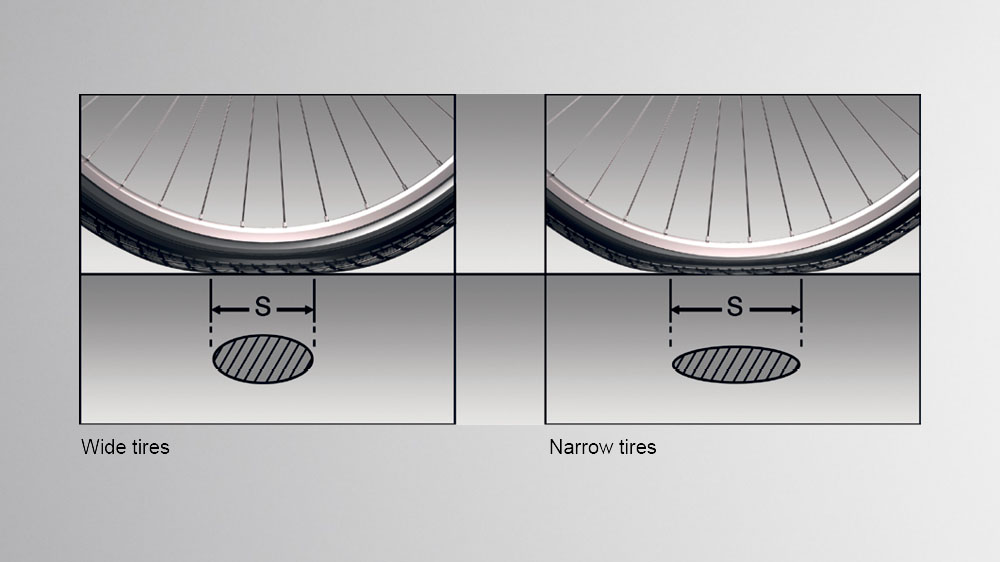
The shape of the contact patch, where tire meets road — matters more than most riders realize. A wider tire has less rolling resistance than a narrow tire because the wider one has a shorter, wider, and thus rounder contact patch that rolls more easily than the longer, slimmer elliptical shape of a narrower road bike tire, which deforms more as it rolls.
Wider road bike tires can also be run at lower pressures, allowing them to absorb bumps from the road without losing as much momentum.
3. Width Alone Isn’t Enough, Your Rim Has to Match
The reason comes down to tire shape. When a wide road bike tire is mounted on a narrow rim, the tire tends to extend outward in a “lightbulb” shape — and because the tire width is substantially greater than the outer rim width, aerodynamic drag increases, which negates improvements in rolling resistance gained by using a wider tire.
This lightbulb shape can also cause lateral movement of the tire during cornering, leading to adverse handling characteristics.
Wider rims improve aerodynamics when paired with matching tire widths, creating a smooth transition between tire and rim — but if the tire is much wider than the rim, it creates turbulence that offsets rolling resistance gains.
4. Tubeless Amplifies Every Advantage
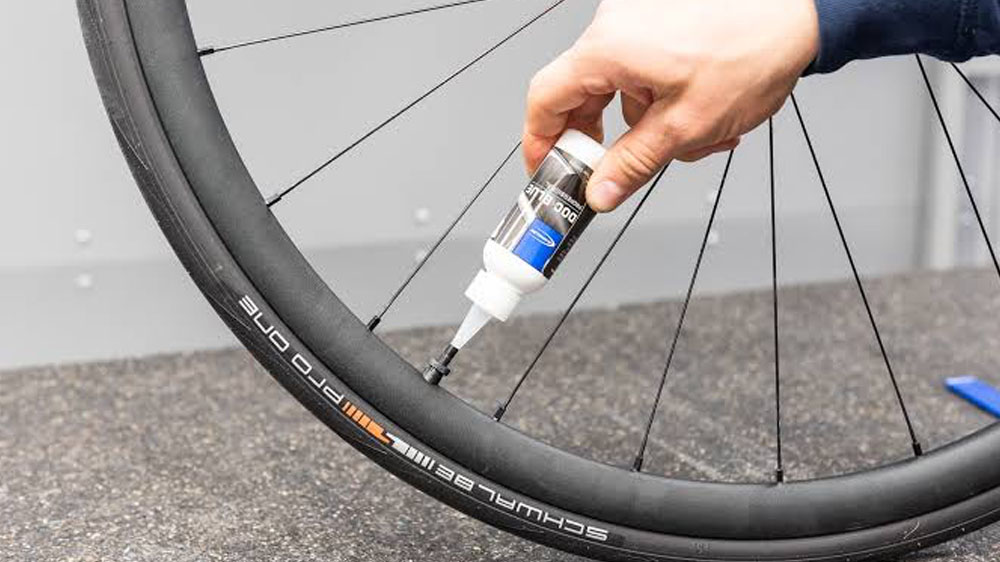
The wide-tire shift and the tubeless shift arrived together, and that’s no coincidence. Independent rolling resistance testing data suggests tubeless is the speed king: tubeless setups consistently outperform tubed equivalents, and construction and compound play a crucial role alongside tire width in determining overall speed.
Tubeless setups often allow slightly lower pressures without a vague feel, leading to steadier grip and fewer micro-corrections that add hidden fatigue over the course of a ride.
Practical takeaway: If you’re running wide tires with inner tubes, you’re only getting half the benefit. Tubeless allows you to safely run the lower pressures that make wide tires perform — without the pinch-flat risk that would otherwise stop you from going there.
Read also: Tubed vs Tubeless Road Bike Tire
5. Comfort Is Speed — Not a Trade-Off Against It
The final misconception worth addressing is that choosing wider tires means sacrificing performance for comfort. The opposite is closer to the truth. Lower vibration reduces fidgeting at the hips and shoulders, which protects breathing and line choice — and the clock notices, especially after the first hour, when small comfort gains become speed gains.
Air volume acts as suspension, smoothing out surface chatter, absorbing imperfections, and letting you run lower pressures without risking pinch flats on tubeless setups. A rider who arrives at hour three of a ride fresher and more in control is a faster rider — regardless of what the stopwatch says at the first kilometer.
Read also: How to Inflate a Road Bike Tire?
What Does This Mean for Your Polygon Road Bike Setup?
Polygon built this shift into the Helios A road bike from the ground up. The frame’s wide tire clearance (28–34c), 45mm carbon rim pairing, and tubeless-ready specification aren’t afterthoughts — they’re the direct result of co-developing the bike with TSG Pro Cycling on real race roads where tire performance actually matters.
Start at 28c tubeless, dial your pressure down from your usual starting point, and feel the difference on your regular roads before chasing any other upgrade.