




Mountain bike suspension works by combining springs (air or coil) to absorb impacts and oil-based dampers to control how fast the suspension compresses and rebounds.
The spring takes the hit. The damper controls the motion. Together, they keep your tires glued to the trail while reducing the punishment on your body.
What Does Mountain Bike Suspension Actually Do?
Every MTB, whether a hardtail mountain bike or a full suspension mountain bike, relies on suspension for two core functions:
1. Absorbing Impact
When your wheel hits rocks, roots, or drops, the tire deforms first (yes, your tire is the first layer of suspension). Then the fork or rear shock compresses to absorb the remaining force.
Without suspension, that energy travels straight into your hands, arms, and frame. With proper mountain bike suspension, the impact is absorbed by the spring, storing energy instead of being transferred to your body.
2. Maintaining Traction
Suspension isn’t just about comfort, but it’s about grip. A wheel that stays in contact with the ground gives you better braking, cornering, and climbing control. If the wheel bounces off the trail, you lose traction. Suspension allows the wheel to move around obstacles instead of ricocheting off them.
This is why a full-suspension mountain bike often feels more planted on rough terrain than a hardtail.
What Happens When an MTB Suspension Absorbs an Impact?
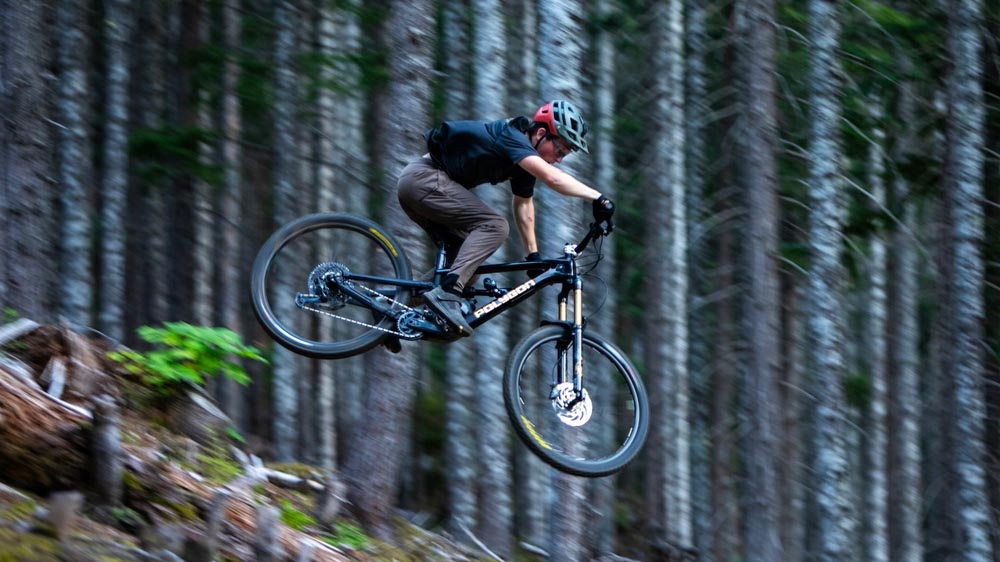 When your MTB hits a rock or root, the suspension goes through a controlled three-stage process: compression, damping, and rebound. This sequence happens in a split second, but each phase plays a critical role in how mountain bike suspension maintains control and traction.
The Suspension Starts Compressing
The moment the wheel strikes an obstacle, it is forced upward. The tire deforms first, acting as the first layer of cushioning. Immediately after, the suspension begins compressing.
At this stage, the spring, either air or coil, is squeezed. This compression stores the impact energy as potential energy rather than transferring it directly into your arms and the bike frame.
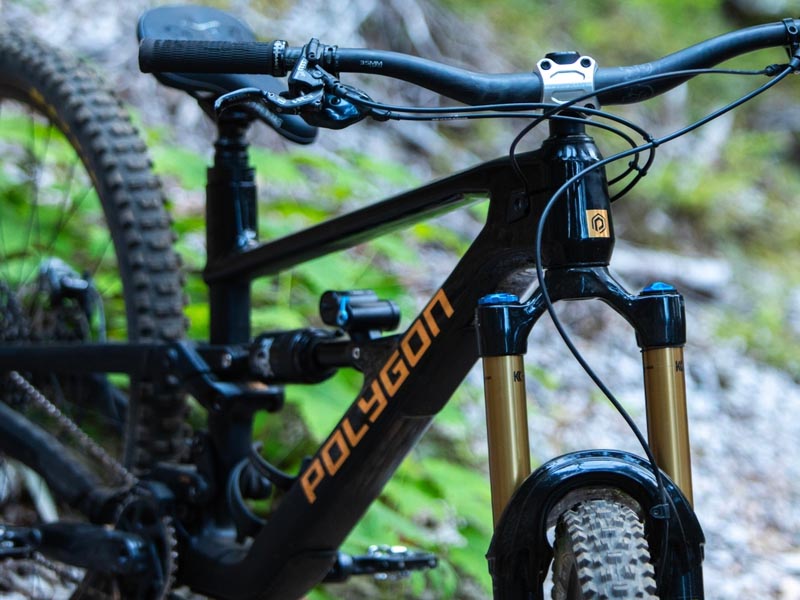
On a hardtail mountain bike, only the front fork compresses. On a full suspension mountain bike, both the fork and rear shock engage, distributing the force more evenly and keeping the bike balanced.
The Damper Controls the Oil Flow
As the spring compresses, a piston inside the fork or rear shock pushes oil through small internal ports and valves. This oil flow creates resistance.
That resistance is called damping. It slows down how quickly the suspension compresses, preventing harsh bottom-outs on bigger hits.
On small or gradual movements, oil flows smoothly through standard ports. On sharp, high-speed impacts, pressure builds and opens larger pathways or flexes shim stacks, allowing the suspension to absorb the hit without feeling abrupt.
This is where mountain bike suspension becomes controlled instead of chaotic. The damper converts impact energy into heat and regulates movement in real time.
Rebound
After the obstacle is cleared, the compressed spring wants to return to its original length. This is the rebound phase. Without damping, the spring would extend too quickly, causing the bike to bounce or feel unstable. The rebound circuit forces oil through a separate, more restrictive pathway to slow the return.
If rebound is too fast, the MTB feels bouncy and unpredictable. If it’s too slow, the suspension “packs down” and fails to reset before the next bump.
When properly adjusted, rebound allows the wheel to follow the terrain smoothly, keeping traction consistent and the ride stable.
In simple terms, the process looks like this:
Impact → Spring compresses and stores energy → Oil damping controls movement → Rebound returns the suspension smoothly
Instead of:
Impact → Force travels into your hands, arms, and body
This precise balance is what makes modern mountain bicycle suspension feel plush yet controlled at speed.
How Proper Mountain Bike Suspension Improves Your Overall Riding Experience?
Properly set up mountain bike suspension improves control, traction, and comfort. When your wheels stay planted, braking and cornering feel more stable, especially on rough or loose terrain.
A full suspension mountain bike offers added traction on technical trails, while a hardtail mountain bike delivers efficient power transfer on smoother surfaces.
Good MTB suspension also reduces rider fatigue by absorbing repeated impacts. Less vibration means longer, more comfortable rides. And surprisingly, it can make you faster. Stability allows you to maintain momentum through rough sections instead of slowing down for every obstacle.
From compression to rebound, the system keeps your tires grounded and your ride controlled. Whether you choose a hardtail mountain bike or a full suspension mountain bike, understanding how your MTB suspension works helps you ride with more confidence and efficiency on any terrain.
Read also: Choosing Your First MTB Guide