




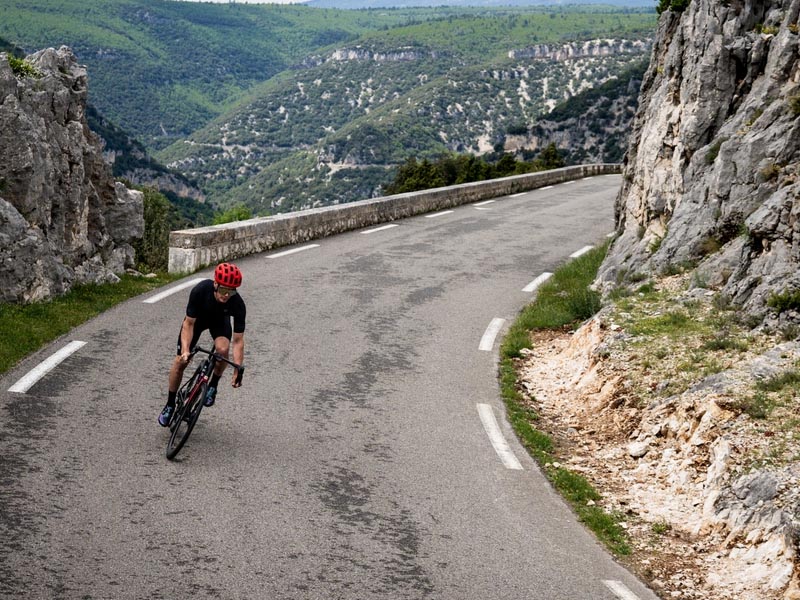
Descending on a road bicycle starts with the fundamentals: focus on stable body position, smooth braking before corners, and reading the road ahead.
These core techniques are essential for riders who spend time road biking on varied terrain, regardless of experience level. When practiced consistently, they help riders maintain control and confidence, qualities found not only in skilled riders but also in how the best road bikes are designed to handle real-world descents safely and predictably.
Adopt the Right Hand Position
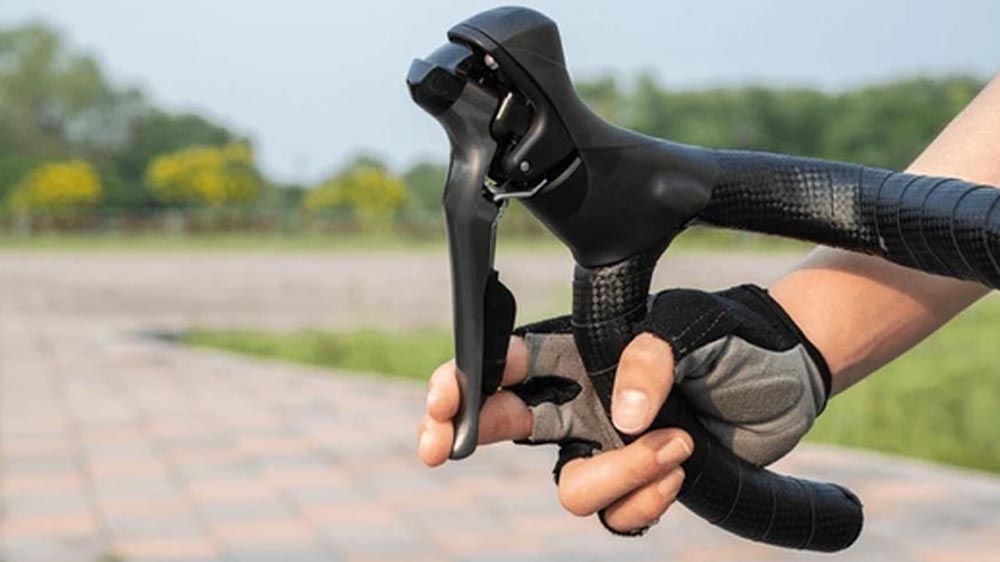
When speed increases, hand position matters more than most riders realize. The safest option when descending on a road bike is riding in the drops.
Why this works:
- Better access to the brakes with more leverage
- Lower center of gravity
- Improved control when the bike starts to move underneath you
Staying on the hood limits braking power and stability. Move into the drops before the descent begins, not halfway down.
Maintain Proper Body Position
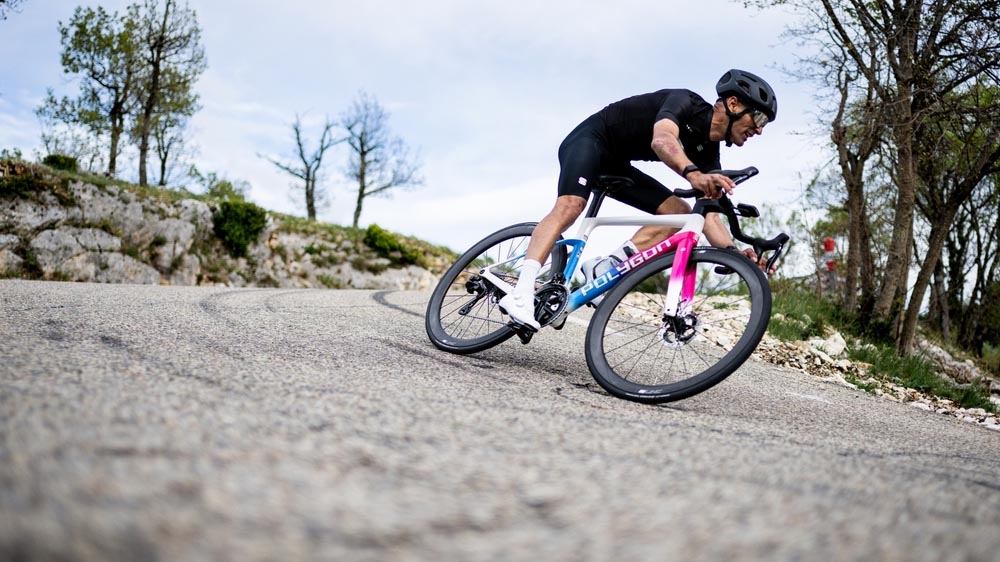 Your body is the biggest “suspension” on a road bicycle.
Key positioning cues:
- Lower your torso slightly
- Bend your elbows, but never lock them
- Keep your weight centered, not pushed heavily onto the bars
- Stay loose through your shoulders
When cornering, keep the outside pedal down and weighted. This increases grip and stability through the turn. A helpful mental cue is “heavy bike, light hands.”
Look Where You Want to Go
Your road bike follows your eyes.
Instead of staring at hazards, train yourself to:
- Look through the corner, toward the exit
- Scan far ahead for gravel, wet patches, or tightening turns
- Avoid “target fixation” on potholes or road debris
Good vision buys time, and time equals control.
Use Both Brakes Effectively — Early
 Braking technique is often what separates a smooth descent from a sketchy one. The golden rule is: Brake before the corner, not in it.
How to brake properly:
- Use both brakes together
- The front brake provides most stopping power
- The rear brake helps control speed and stability
- Feather the brakes, never grab
Hard braking mid-corner is one of the fastest ways to lose front-wheel grip.
Correct Tire Pressure = More Grip
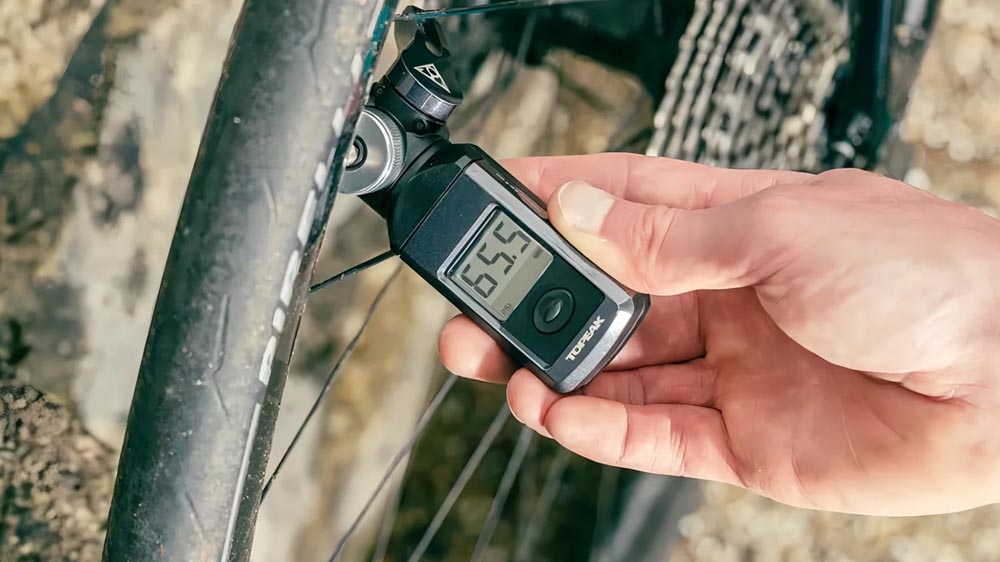 Tire pressure plays a major role in grip and control when descending on a road bicycle. Using the correct pressure allows the tire to conform better to the road surface, creating a larger contact patch and delivering noticeably more grip, especially during cornering and high-speed descents. This is why proper tire setup is a key part of confident road biking, even on the best road bikes.
Rather than relying on arbitrarily high PSI numbers, modern guidance recommends matching tire pressure to tire width and rider weight. This balance improves grip and comfort without sacrificing stability.
Below is a practical reference based on 28mm and 30mm tires, now common standards on many modern road bicycles. For a more detailed setup, including how pressure changes with rider weight and road conditions, go to the Road Bike Tire Pressure Guide to fine-tune your pressure for safer, more controlled descents.
Master Cornering Technique
Corners decide everything on a descent.
Basic cornering principles:
- Enter wide, aim for the apex, exit wide
- Lean the bike more than your body
- Keep movements smooth and deliberate
There’s no need to exaggerate body movements. Clean lines and calm inputs matter more than aggression.
Stay Relaxed
Tension makes a road bike unstable.
Signs you’re too tense:
- Death-gripping the bars
- Locked arms
- Shallow breathing
Instead, you can:
- Drop your shoulders
- Breathe steadily
- Let the bike move beneath you
If you feel stiff, you’re likely already near your limit.
Additional Safety Tips
Use Proper Protection Equipment
Small details make a real difference when riding a road bicycle, even on controlled descents found on the best road bikes.
- A properly fitted helmet is essential
- Gloves improve grip and reduce hand fatigue during longer road biking sessions
- Clear or low-light lenses improve visibility on shaded descents
- Always check brakes, quick releases or thru-axles, and headset play, especially on a carbon road bicycle
Practice in Shallower Descents
Descending is a skill developed through experience, not a natural talent. Riders improve control and confidence by:
- Repeating familiar descents
- Learning where to brake and where to release
- Building muscle memory gradually through consistent road biking
Confidence grows from repetition and control, not unnecessary risk, no matter what road bicycle you ride.
Conclusion
Descending on a road bike should feel controlled, not forced. Even the best road bikes perform at their best when paired with proper technique and rider awareness. Ride within your limits, brake early, stay relaxed, and let smooth control guide every descent.
Beyond descending, learn how to climb with ease on your road bike by exploring pro techniques used by experienced cyclists.