






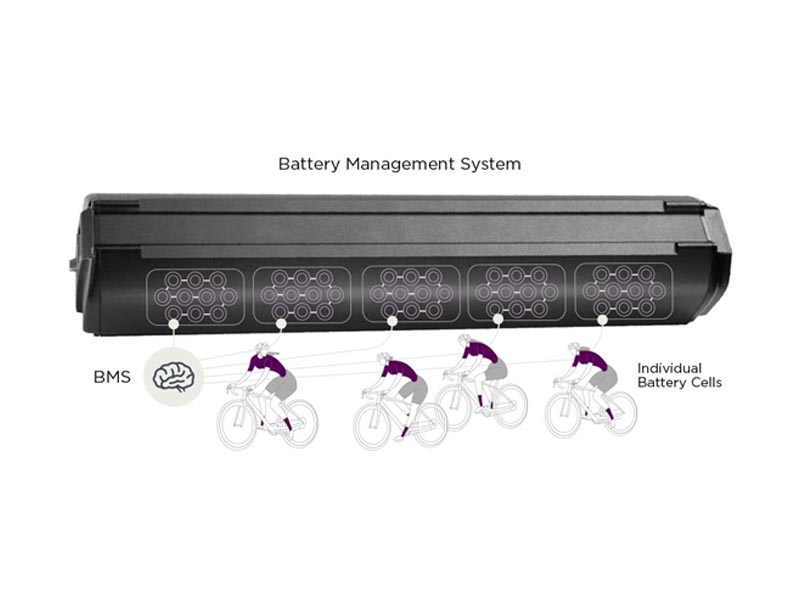
A Battery Management System (BMS) is an electronic control unit that monitors a rechargeable battery pack’s voltage, current, and temperature to ensure safe operation, stable performance, and longer battery life.
In an electric bike, this system works quietly in the background, controlling how the battery charges, discharges, and responds during riding conditions.
What Does a BMS Actually Do?
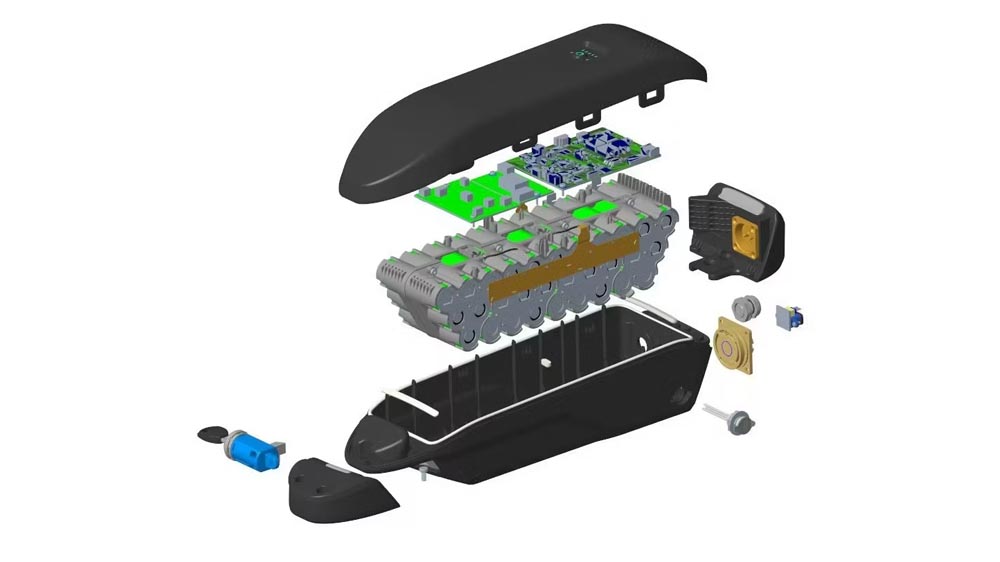 A battery inside an electric bicycle is not a single power block. It is made of many individual lithium cells connected to create the voltage and capacity needed for riding. Because those cells must work as one system, they need a controller that constantly checks their condition. That controller is the BMS.
Monitoring Battery Conditions Continuously
The first and most basic function of a BMS is monitoring. It constantly tracks several important parameters inside the battery pack, including:
- Total voltage
- Individual cell voltage
- Current flow
- Charging activity
- Discharging activity
- Battery temperature
This process happens continuously while the battery is charging, while the e-bike is being ridden, and even when the battery is idle. Monitoring individual cells matters because lithium cells rarely age at the same speed. One cell can become slightly weaker or charge differently compared with others. If that difference is not.
Protection Against Unsafe Conditions
The second major role of a BMS is protection. Lithium batteries are highly efficient, but they also require precise control because they react badly when pushed outside safe limits.
A BMS protects against several risks:
- Overcharging
- Over-discharging
- Overheating
- Short circuits
- Excessive current draw
Overcharging is especially important because too much voltage can permanently damage lithium cells. Over-discharging also matters because repeatedly draining cells too low shortens battery lifespan.
Temperature protection also matters because heat is one of the main causes of battery aging. When battery temperature rises too far, the BMS helps prevent further strain. In practical use, riders may never notice these small protective corrections, but they happen continuously to keep the electric bike’s battery operating safely.
Balancing Cells and Optimizing Performance
An electric bike’s battery pack may contain many cells, but those cells never behave perfectly equally over time. Some cells charge slightly faster, while others discharge a little more quickly.
The BMS solves this through cell balancing. Cell balancing ensures that all cells remain as equal as possible during charging and discharging cycles. This matters because one weak cell can affect the entire battery pack.
If balancing does not happen properly:
- Some cells wear out faster
- The available range decreases
- Charging becomes less efficient
- Battery aging accelerates
Balanced cells allow the battery to deliver a more stable output during riding. That stability becomes noticeable when an electric bicycle maintains smoother support while climbing, accelerating, or riding at a low battery percentage.
The BMS also helps optimize how power leaves the battery, so motor assistance feels controlled instead of inconsistent.
Why BMS Matters (Especially for E-Bikes)?
In reality, battery management strongly influences how reliable an electric bike feels over time.
1. Safer and Longer Battery Life
A well-designed BMS directly supports battery safety. Lithium battery systems require strict control because internal chemical reactions must remain stable.
The BMS reduces stress by keeping charging and discharging within safe limits. This helps the battery maintain healthy charge cycles for a longer period. For riders, this means the battery usually retains usable capacity longer before noticeable degradation appears.
That long-term effect matters because battery replacement is one of the biggest ownership costs in an e-bike.
2. Better Performance on Rides
Battery management also affects how the bike performs during real riding situations. When the battery output remains stable, the motor support feels smoother.
This becomes especially noticeable when:
- Riding uphill
- Starting from traffic stops
- Carrying an extra load
- Riding into headwinds
Without strong control, power delivery can feel uneven, especially when the battery percentage drops. A BMS helps reduce sudden power fluctuation by managing current delivery more precisely.
3. Accurate Battery Readings
The battery percentage shown on a display is calculated by the BMS, not by a simple voltage meter. It uses voltage behavior, current history, and cell data to estimate remaining capacity.
That is why battery readings become more reliable when the system is properly managed. Without accurate BMS calculation, riders may see misleading battery percentages that do not match the real remaining range.
Do We Have Electric Bikes With BMS?
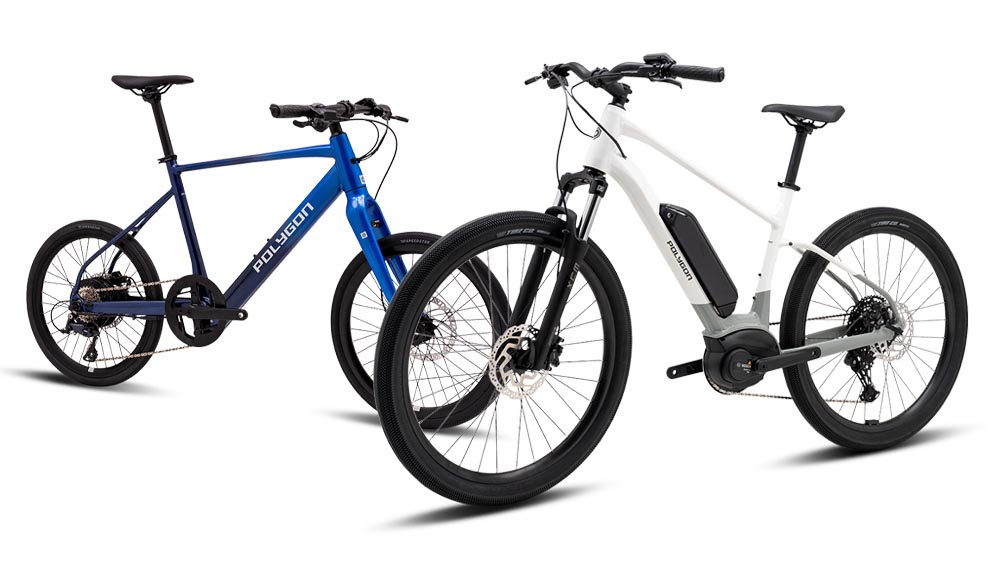 Yes, modern electric bike systems already use advanced battery control technology, including smart BMS integration. In our lineup, the Gili and Kalosi e-bike series use smart BMS systems designed to manage battery safety, monitor cell condition, and support stable power delivery.
A smart BMS improves battery reliability by actively balancing cells, regulating temperature, and automatically controlling charging behavior.
This helps riders experience more consistent battery performance across daily commuting, urban riding, and longer use cycles. Need a quick start about an electric bike? Read through our article “electric bike 101” to begin with!
Read also: