










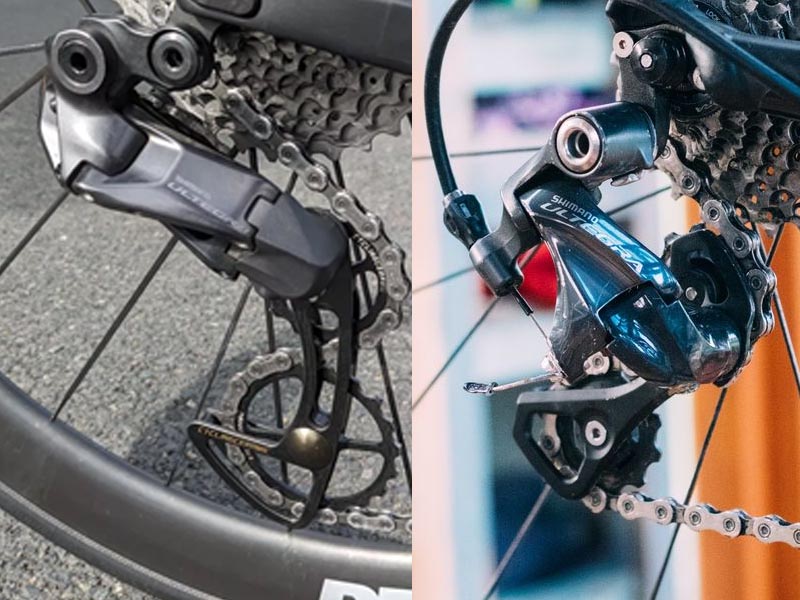
Electronic shifting offers superior speed, precision, and lower routine adjustment by using motors to change gears at the touch of a button. Mechanical shifting relies on cables, delivering a cheaper, easier-to-repair, and more tactile experience.
In short, electronic vs mechanical shifting comes down to performance and technology versus simplicity and affordability.
What Is Electronic Shifting?
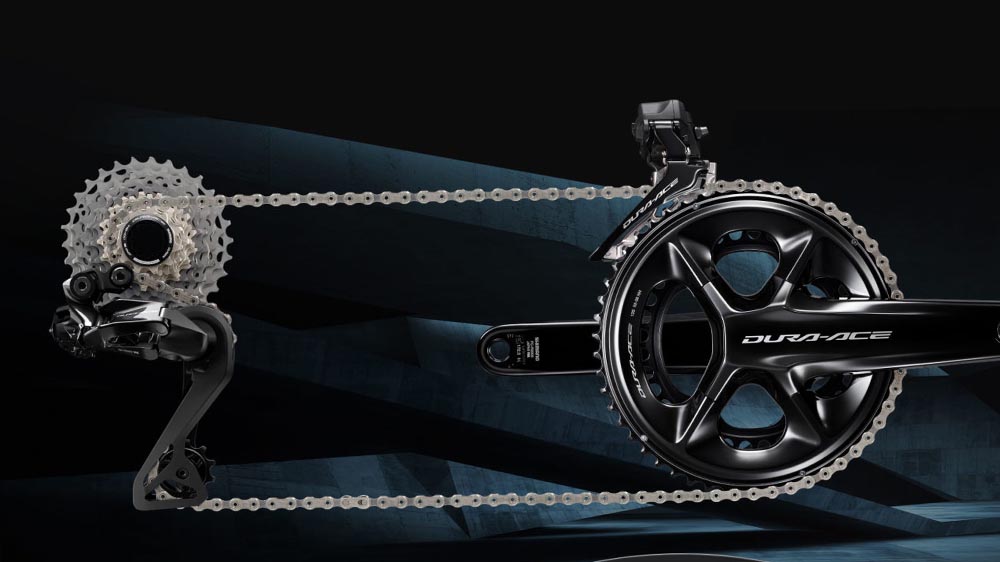 Electronic shifting replaces traditional cables with battery-powered motors and digital controls.
When you press a shift button, an electrical signal is sent to a small motor inside the derailleur. That motor moves the derailleur precisely into position. Instead of relying on cable tension, the system uses programmed indexing to ensure accurate gear alignment every time.
Most systems include:
- A rechargeable battery
- Micro-motors in the derailleurs
- Wiring or wireless communication between components
Because gear positions are digitally controlled, shifts remain consistent even after months of riding. Many electronic systems also allow features like multi-shift (holding the button to shift multiple gears) or synchronized shifting, where the system automatically manages front and rear derailleurs for optimal cadence.
In modern road bike and mountain bike setups, electronic shifting is increasingly common in performance-oriented models.
What Is Mechanical Shifting?
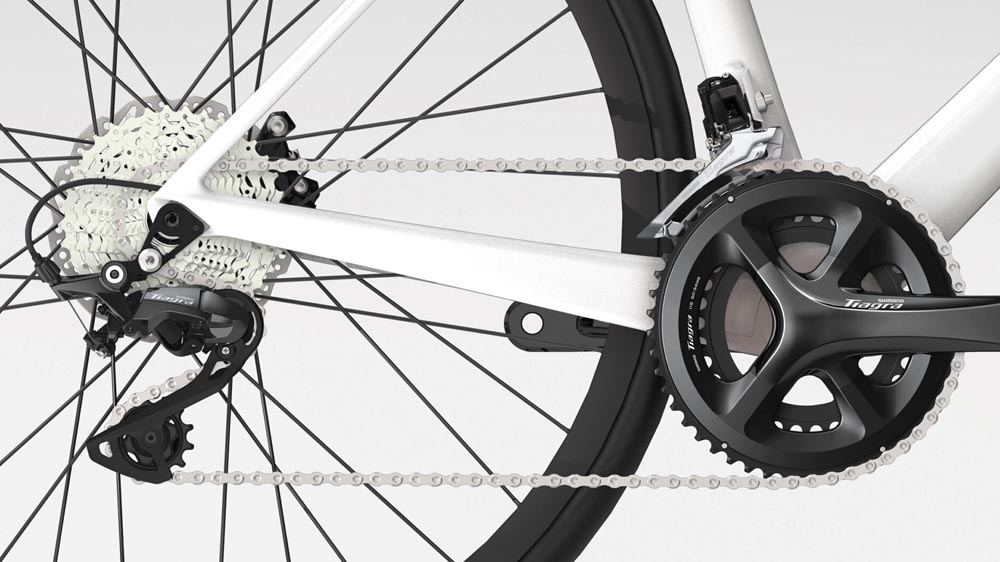 Mechanical shifting uses cables and housing to physically pull or release the derailleur.
When you press the shift lever, the cable tension changes. This tension moves the derailleur sideways, guiding the chain onto a different cog. Proper indexing ensures the chain lands cleanly on each gear.
Over time, cables stretch, and housing can accumulate dirt or friction. That’s why mechanical systems require periodic adjustment. However, the technology is simple, proven, and widely serviceable.
For many riders, mechanical shifting offers a satisfying, tactile feel. You can physically sense the cable tension change as you shift, a quality some cyclists still prefer.
Electronic Shifting Pros & Cons
Pros
- Fast and Precise Shifts: Electronic systems deliver quick, crisp shifts with minimal effort. Even under load, shifts remain smooth and accurate.
- Consistency Over Time: Because there are no cables to stretch, performance stays consistent with fewer frequent adjustments.
- Advanced Features: Many systems allow programmable buttons, multi-shift options, and drivetrain synchronization.
- Clean Cockpit Design: Wireless systems especially reduce cable clutter for a sleek look.
Cons
- Higher Cost: Electronic systems significantly increase the overall bike price.
- Battery Dependency: You must remember to charge the system, although most batteries last many rides.
- Specialized Repairs: Diagnostics and replacements may require specific parts or trained technicians.
Mechanical Shifting Pros & Cons
Pros
- More Affordable: Mechanical systems are budget-friendly and widely available.
- Easy to Repair: Most bike shops and even home mechanics can adjust or replace cables easily.
- No Charging Required: You never have to worry about battery levels.
- Lighter (Slightly): Without motors or batteries, the system can be marginally lighter.
Cons
- Cable Wear: Over time, cable stretch and dirt affect shift quality.
- More Frequent Adjustments: Regular tuning is part of ownership.
- Slightly Heavier Shift Feel: Compared to button-actuated systems, lever force is higher.
Road Bikes with Electronic Shifting
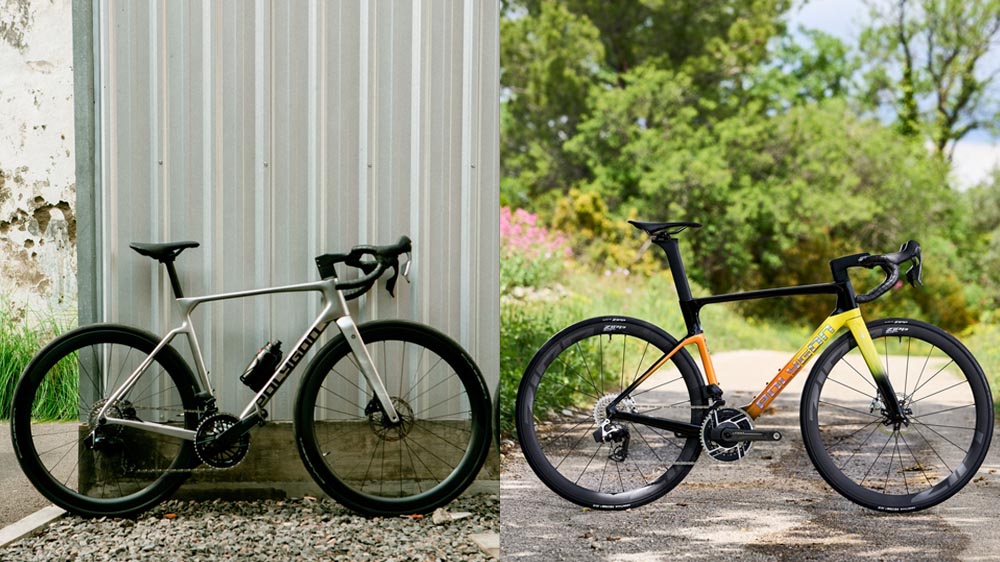 In the discussion of electronic vs mechanical shifting, Polygon offers strong road bike options with electronic drivetrains.
The Strattos C Series pairs endurance-focused geometry with Shimano Di2 or SRAM eTap AXS systems, delivering fast, precise shifts that stay consistent over long rides and varied terrain.
The New Helios A Series takes it further with an aerodynamic performance platform combined with electronic precision. Designed for riders who value speed and clean integration, the Helios benefits from crisp, programmable shifting that maintains accuracy even under high intensity.
On both platforms, electronic shifting enhances efficiency, control, and overall ride refinement compared to traditional cable systems.
Mountain Bikes with Electronic Shifting
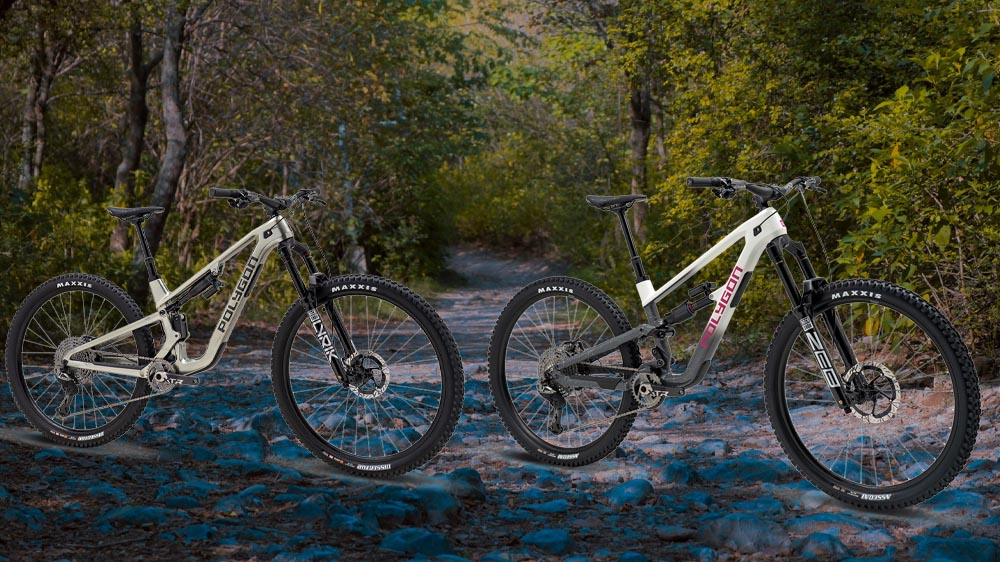 Electronic shifting is also transforming high-performance mountain bikes. The Collosus N9 Di2 and Collosus T9 Di2 are built with Shimano Di2 electronic drivetrains, delivering fast, precise, and consistent gear changes for trail and enduro riding.
On technical climbs or demanding descents, the instant response helps maintain momentum without worrying about missed shifts. Because there are no cables to stretch, performance stays accurate over time with fewer adjustments, a major advantage in tough off-road conditions.
If your priority is affordability, simplicity, and easy maintenance, mechanical shifting remains an excellent choice. If you value precision, speed, and advanced technology, electronic shifting delivers a premium experience.
The debate around electronic vs mechanical shifting isn’t about which is universally better. It’s about what suits your riding style, budget, and expectations. Both systems are capable, and your preference determines the winner.
Read also: