









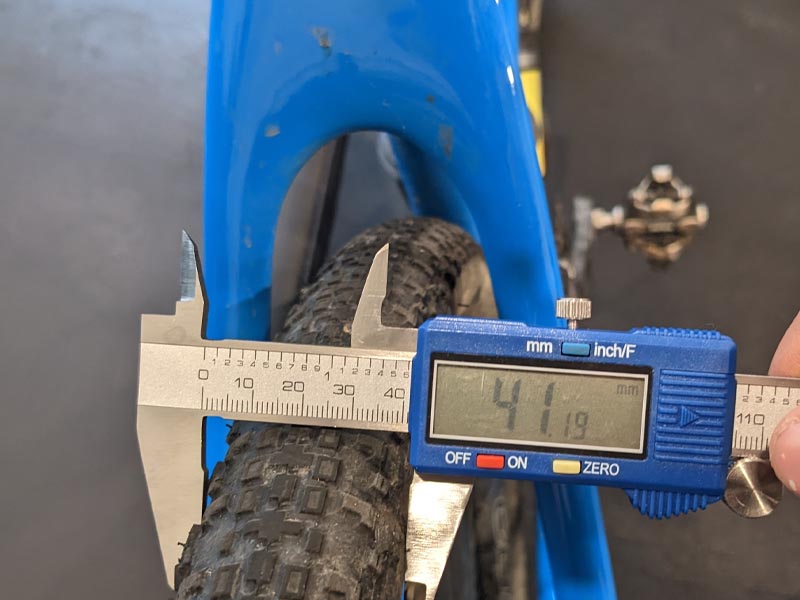
Gravel bike tire clearance defines the maximum tire width a frame and fork can accommodate, typically ranging from 35 mm to over 50 mm, with 40–45 mm considered the modern standard for versatility. This measurement determines how wide your tires can be while maintaining safe space for wheel flex, debris, and real-world riding conditions.
Why Does Gravel Bike Tire Clearance Matter?
Gravel riding places different demands on a bike compared to road cycling. Surfaces are inconsistent, traction constantly changes, and debris is part of the ride. Because of that, gravel bike tire clearance directly affects comfort, control, and long-term durability.
Here’s why it matters:
- It determines how much tire volume you can safely run. Wider tires allow lower pressure, which improves grip and absorbs vibration from rough gravel. This leads to better comfort and reduced fatigue over long distances.
- It prevents frame and tire contact under load. Wheels flex side to side during hard pedaling and cornering, and frames flex slightly as well. If the gravel bike tire clearance is too tight, the tire can rub against the chainstays or seat tube.
- It protects the frame from long-term damage. Repeated rubbing can wear down paint, expose carbon fibers, or gradually erode aluminum surfaces.
- It allows space for mud and debris. In wet or loose conditions, gravel and mud accumulate quickly. Limited clearance increases the risk of clogging, which slows the bike and adds mechanical stress.
For these reasons, gravel bike tire clearance must reflect real-world riding conditions, not just whether a tire can spin freely when the bike is stationary.
Frame vs Fork Clearance
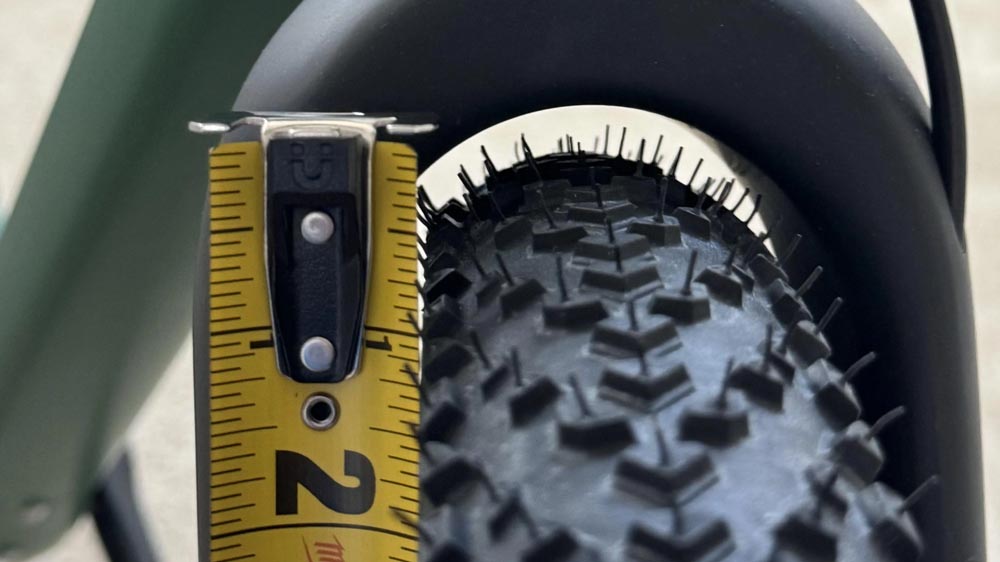 When evaluating gravel bike tire clearance, remember that frame and fork clearance are not always the same. The fork usually offers more space because the front wheel sits in a more open area.
The rear triangle, especially the chainstays and seat tube, is typically the tightest section and often becomes the limiting factor. That’s why a bike advertised with 45 mm clearance usually reflects the narrowest point of the frame, not the fork.
Since rim width can increase a tire’s actual measured size, the safest approach is to assess clearance at the tightest rear section rather than relying solely on published specs.
Terrain-Based Tire Width Selection
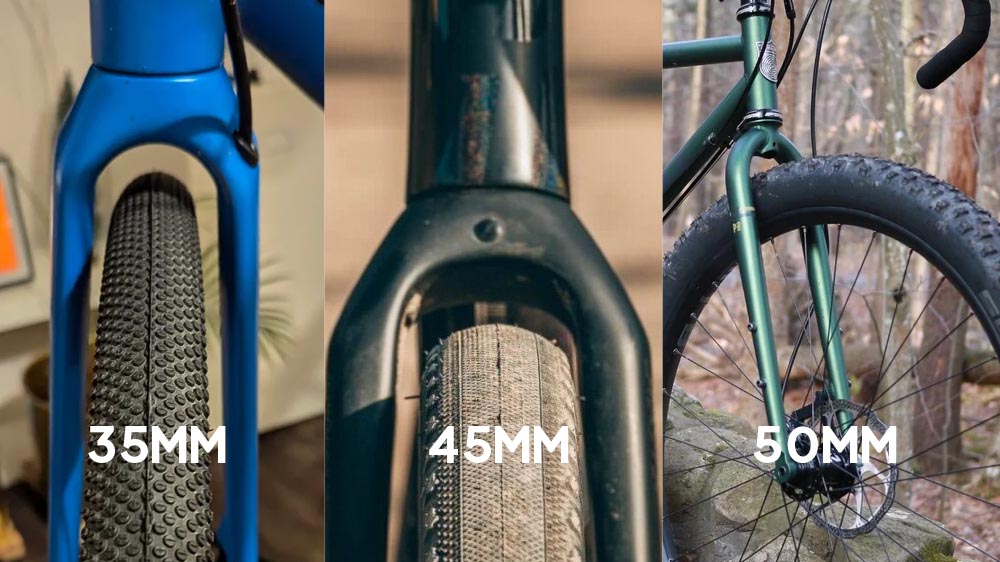 Choosing the right gravel bicycle tire width within your gravel bike tire clearance range depends on where and how you ride. Instead of simply installing the widest tire your frame allows, it’s better to match tire size to terrain demands.
32–35 mm: Pavement and fast mixed riding
Best suited for riders who spend most of their time on asphalt or smooth hardpack. Rolling resistance is lower, acceleration feels quicker, and handling stays responsive. Comfort is more limited, but efficiency on paved roads improves significantly.
38–42 mm: All-purpose gravel riding
This range is considered the modern sweet spot. It balances speed and comfort, offering enough tire volume for moderate gravel, broken pavement, and light off-road sections. Many gravel bikes are optimized around 40–42 mm because it delivers versatility without sacrificing efficiency.
45–50 mm: Technical terrain and bikepacking
Wider tires increase traction, improve shock absorption, and enhance control on loose or uneven surfaces. They are ideal for rough gravel, rocky routes, or loaded bikepacking setups. Before choosing this range, make sure your gravel bike tire clearance truly supports it, especially when factoring in rim width and muddy conditions.
Selecting tire width based on terrain ensures your available clearance is used wisely—not just maximized for the sake of it.
Beyond tire clearance, it’s also important to know how to choose the right gravel bike size, our gravel bike sizing guide can help.
Conclusion
Gravel bike tire clearance defines more than just the largest tire your bike can fit. It shapes ride quality, frame longevity, and terrain capability. While 40–45 mm remains the standard for versatile performance, the ideal width ultimately depends on riding style and real-world conditions.
Understanding your bike’s true clearance allows you to choose tires confidently and ride without compromise.
Read also: