



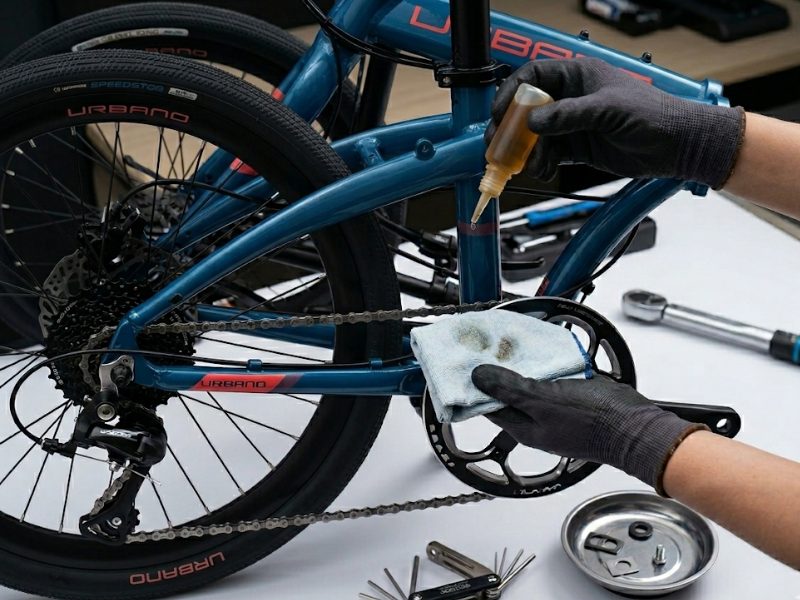
Maintaining the folding-bike hinge is the most critical part of folding-bike upkeep because this section absorbs repeated structural stress as the frame opens and closes and carries rider weight.
A hinge that feels gritty, loose, or inconsistent should never be ignored, because even a small issue in this area can affect safety, ride stability, and long-term frame durability on a folding bike used regularly for commuting.
Regular Cleaning Keeps the Hinge Smooth and Durable
The hinge area collects dust, road grit, and moisture faster than many riders expect, especially on an urban foldable bike that is opened and closed often during commuting. Dirt trapped inside the mechanism gradually acts as an abrasive, creating friction every time the hinge moves.
A simple wipe after wet or dusty rides already helps reduce buildup. For deeper cleaning, open the hinge fully so the inner surfaces and locking parts are visible, then use a clean cloth with mild degreaser to remove old lubricant, grime, and residue. A soft brush works well for narrow gaps where dirt tends to settle.
Once cleaned, the hinge should be dried completely. Moisture left inside can encourage corrosion, especially in humid climates where a folding bicycle is stored indoors without enough airflow.
Proper Lubrication for Smooth Hinge Movement
Lubrication keeps the hinge moving smoothly by reducing friction between contact surfaces. Once the hinge is clean and dry, apply a small amount of lubricant only where movement happens: pivot points, contact surfaces, and the locking lever if it has metal contact points.
For the main pivot, light bicycle grease often works well, while smaller moving parts can use wet chain lubricant. After applying it, open and close the hinge several times so the lubricant spreads evenly across the contact area.
Any excess should be wiped away immediately because extra lubricant tends to trap fresh dirt. Products such as general water-displacing sprays may help during cleaning, but they should not replace proper lubrication because protection disappears quickly after evaporation.
Correct Hinge Tension Adjustment
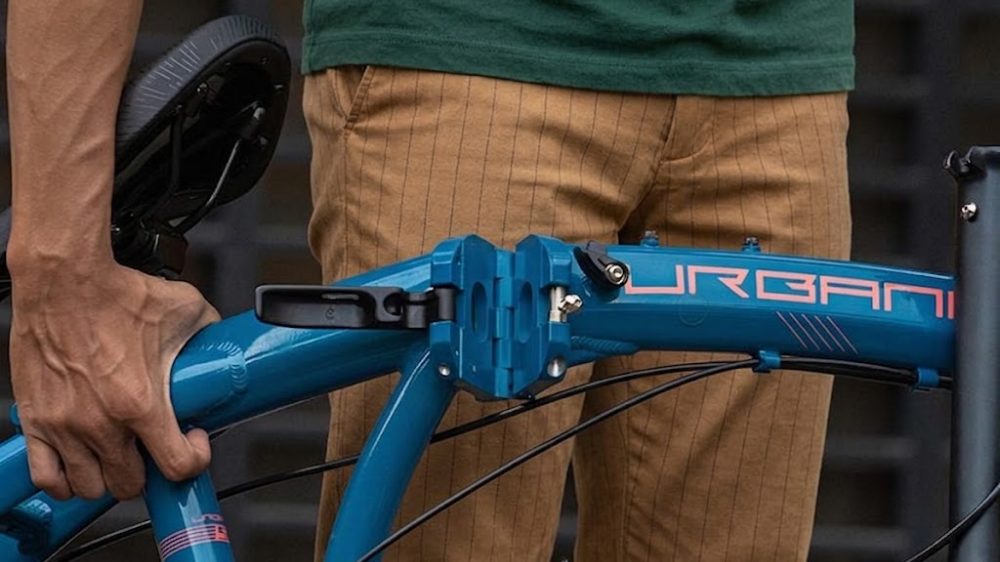
A properly adjusted hinge should close firmly without feeling extreme. If the lever shuts too easily, the clamping force may be too loose. If it becomes very difficult to close, tension may already be excessive.
Most folding-bike systems use an adjustment nut or bolt that controls how tightly the hinge clamps when locked. Small adjustments are safest, usually only one-eighth of a turn at a time.
Clockwise adjustment normally increases tension, while counter-clockwise reduces it. After each adjustment, close the hinge and check how it feels. The correct setting usually gives firm resistance without requiring excessive force.
This matters because too little tension can create movement while riding, while too much force may accelerate wear on the locking parts.
Inspecting the Hinge for Wear and Damage
Visual inspection helps detect early structural wear before it affects safety. Because the hinge absorbs repeated stress, small signs of fatigue can appear earlier than expected on frequently used bikes.
Look closely for hairline cracks near hinge plates, uneven gaps when closed, worn contact surfaces, and metal deformation around bolts. Even minor cracks should never be ignored because they can grow quickly once riding stress continues.
Ensuring the Locking Mechanism Works Securely
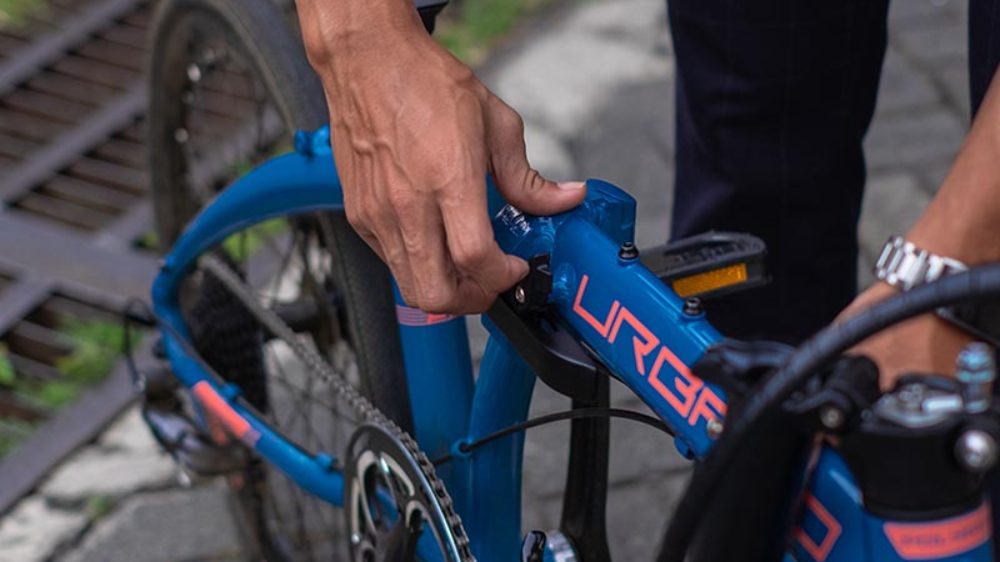
The locking mechanism must hold the frame firmly every time the bike is unfolded. A secure lock should close consistently and leave no frame play once engaged.
If the lock closes but still allows slight movement, the hinge may need cleaning or tension adjustment first. Secondary safety catches should also be checked because they provide backup security during riding.
Any cracked plastic safety latch or worn metal catch should be replaced immediately. On a folding bike, a weak locking mechanism affects safety directly.
Recognizing When the Hinge Needs Attention
The hinge often gives warning signs before a larger problem develops. Riders usually notice changes while pedaling, folding, or carrying the bike.
A hinge needs attention when:
- The frame starts clicking under load
- Folding feels rough or inconsistent
- Slight movement appears in the center frame
- The lever suddenly feels looser than usual
A quick check can confirm this by unfolding the bike fully, locking it, then gently rocking the frame while holding the handlebars and saddle area. Any noticeable movement around the hinge means inspection should happen immediately.
Why Hinge Maintenance Matters?
The folding bike hinge is different from most other bike parts because it directly affects frame stability. A neglected hinge often causes creaking, wobbles, an uneven folding feel, and long-term wear that becomes expensive to repair later.
For daily commuters, simple maintenance usually prevents larger issues. This routine helps a foldable bike stay smooth, secure, and dependable for years of repeated folding and riding.
Read also: