



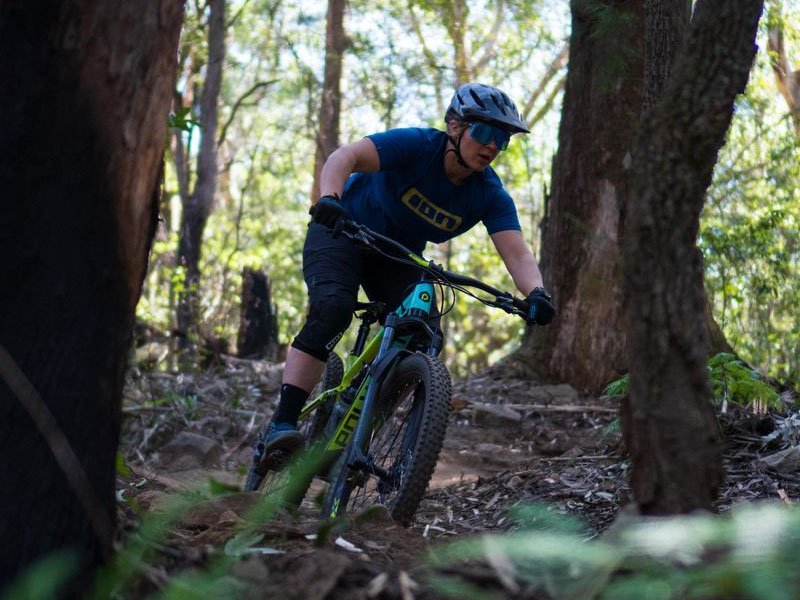
Every mountain biker, from weekend trail riders to World Cup racers, has stood at the top of a rocky descent, steep switchback, or exposed root section and thought: “I’m not sure I can do this.”
That feeling isn’t a sign you’re not cut out for technical riding. Overcoming fear on technical trails is something nearly every rider faces, regardless of experience level — and the good news is that confidence on these sections can absolutely be built with the right mindset and approach.
This article breaks down practical, rider-tested strategies — from mindset shifts to skill drills — to help you ride technical terrain with more confidence on your Polygon mountain bike.
1. Confidence Is Built in Layers, Not Leaps
One of the most important mindset shifts is understanding that progress is gradual. Tackling technical sections is a process of gradual progress. It’s easy to get frustrated when things don’t click immediately, but real improvement happens through small, consistent steps.
Try this: Instead of aiming to “clean” an entire technical section in one go, break it into smaller segments. Celebrate progress on each piece before linking them together.
2. The “Three-Try Rule”: Know When to Push and When to Pause
The “Three-Try Rule” in mountain biking is a progression guideline stating that if you fail a difficult or new feature (like a drop, jump, or rock garden) three times in a row, you should step away from it, walk your bike around it, and try it again on a future ride.
Repetition is one of the most powerful (and underrated) confidence-building tools. A useful approach is to attempt a challenging feature up to three times — if you can’t ride it successfully, it’s fine to move on with your ride rather than forcing it.
But repetition matters even after success. Once you’ve successfully ridden a section, going back to repeat it several more times helps solidify your confidence and reinforces your ability to execute that skill consistently.
Why does it work? Confidence isn’t built from a single lucky run — it’s built from proof that you can do it again.
3. Walk the Line Before You Ride It
Before committing to a technical feature, take a moment to read the trail on foot. Walking a section first is a great way to build confidence and visualize the line you’ll take before riding it.
This isn’t about overthinking, it’s about giving your brain a chance to map the terrain before your body has to react to it in real time.
4. Master the Fundamentals Off-Trail First
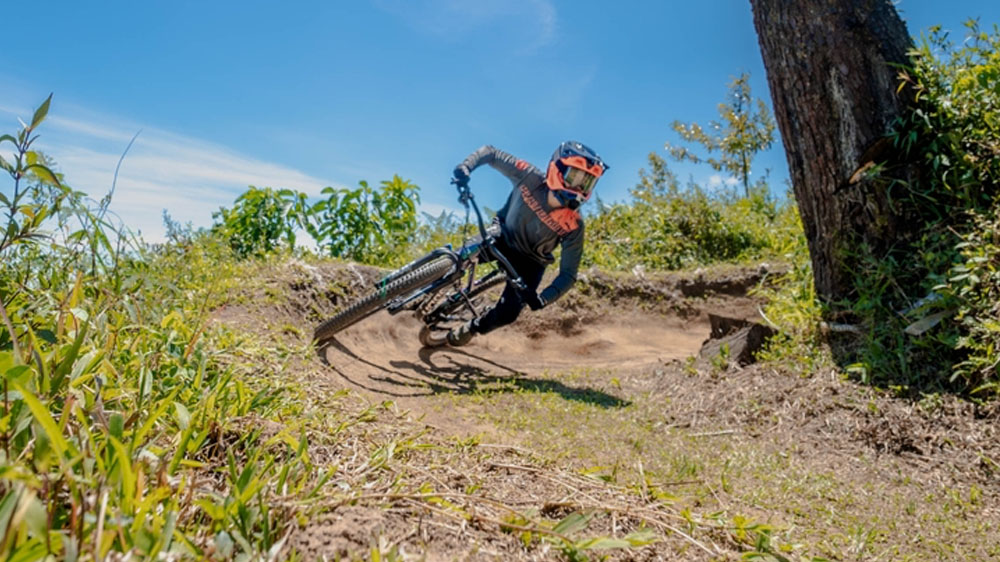
Confidence on technical terrain often comes down to having the right fundamentals dialed in before you need them. Practicing fundamental skills — like cornering drills and flat-ground turning practice — in a controlled environment makes those same skills far easier to apply when you’re in a more complex, high-pressure situation on the trail.
Some specific drills worth prioritizing:
- Cornering drills — focus on your approach, apex, and exit, lowering your center of gravity through the turn and looking ahead to where you want to go rather than at obstacles you want to avoid.
- Bike-body separation drills — practicing bunny hops over and onto objects helps build the foundation of technical skills without putting you in an uncomfortable trail situation.
- Track stands — learning to track stand builds confidence at low speeds, since you know you can pause briefly and recover if needed.
5. Trust Your Own Judgment — Not Just the Group’s
Riding with experienced friends can be motivating, but it shouldn’t replace your own read of the trail. While following others can help, ultimately you need to trust your own judgment about what’s rideable for you — and that’s not a weakness, it’s a skill in itself.
It’s also worth remembering that confidence isn’t a fixed setting. Some days you’ll feel like you can ride anything, and other days even small obstacles feel tough — and that’s completely normal.
6. Visualize the Run Before You Send It
It might sound unconventional, but visualization is a tool used by riders at every level. Picturing yourself riding a technical section successfully — navigating roots, rocks, or drops with control and confidence — before you actually ride it is a powerful way to prime your mind and body for the attempt.
Try this: Before dropping into a section that’s been giving you trouble, take 30 seconds to close your eyes and mentally “ride” it from start to finish.
7. Show Up Fit, Focused, and Present
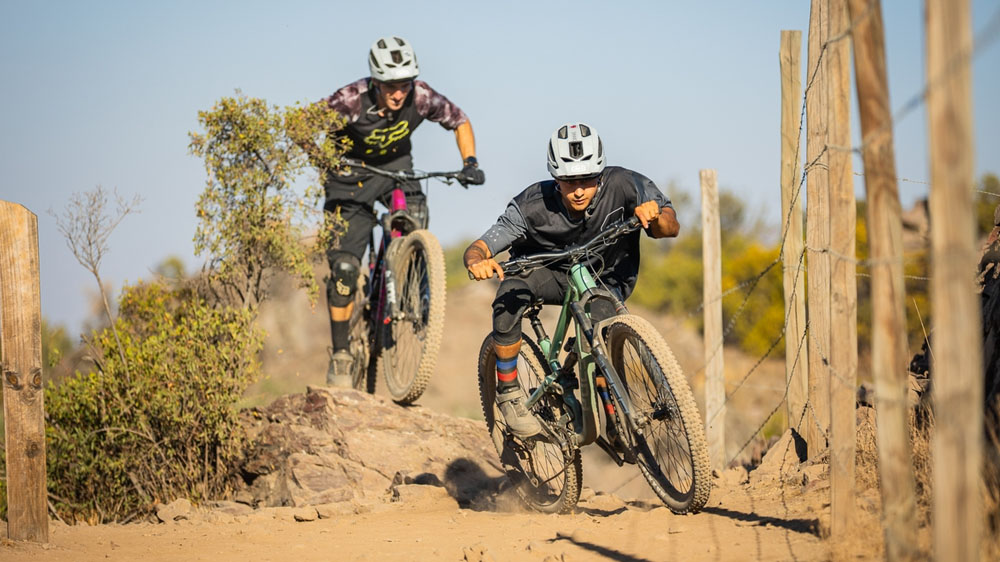
Physical preparation plays a bigger role in confidence than many riders realize. Being fit and mobile means you’re better prepared to take on challenging terrain — and feeling strong physically is directly tied to feeling more confident on the mountain bike.
Mental presence matters just as much. Staying focused and mentally present is critical on challenging terrain, since losing concentration during a steep descent or technical section can quickly become a problem.
8. Plan Ahead So Confidence Isn’t Hijacked by Surprises
Confidence on the trail starts before you even clip in. Reviewing the elevation profile and identifying steep climbs, technical sections, or tricky features in advance helps you prepare mentally and physically, and placing the hardest sections earlier in your ride, while you’re fresh, can make a real difference.
It’s also worth building in margin for the unexpected. Adding 15–20 minutes of buffer time around major climbs or highly technical sections helps you stay relaxed rather than rushed, which directly affects how confidently you ride.
Confidence Is a Skill, Not a Personality Trait
If there’s one thread connecting all of these strategies, it’s this: confidence on technical trails isn’t something you either have or don’t — it’s something you build, one rep, one line, one section at a time.
Your Polygon mountain bike is built to support that progression — whether you’re working through your first root garden on a Siskiu or pushing into steeper, looser terrain on a Collosus. The bike will keep up. The confidence comes from you, one trail at a time.
More about mountain bikes: