


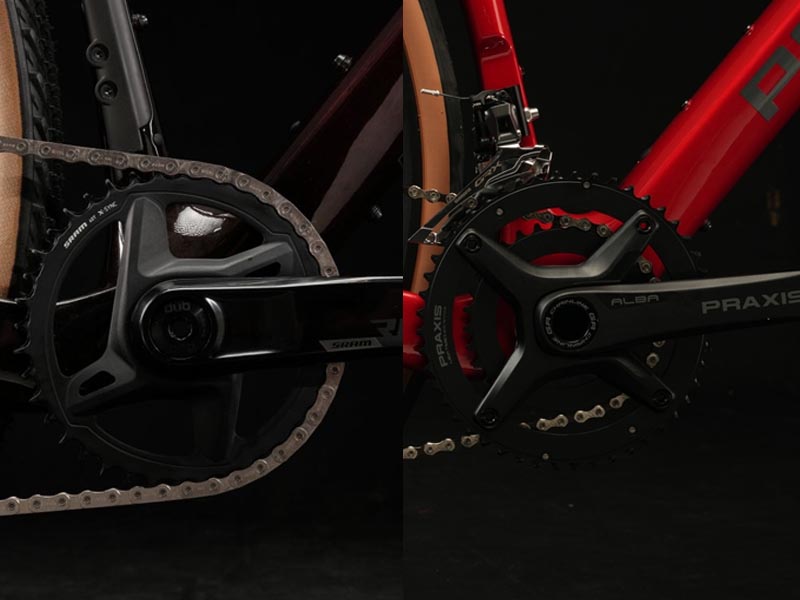
A 1x gravel bike drivetrain offers better chain retention, simpler maintenance, and a lighter overall setup, qualities many riders look for in a versatile gravel bicycle.
In contrast, a 2x gravel bike drivetrain delivers smoother gear transitions and better efficiency across long climbs and fast flats, making it popular on endurance-oriented gravel bikes.
Neither is objectively better; the right choice depends on how and where you ride your gravel bicycle, as well as what you value more: simplicity or precise gear control.
1x Gravel Bike Drivetrain
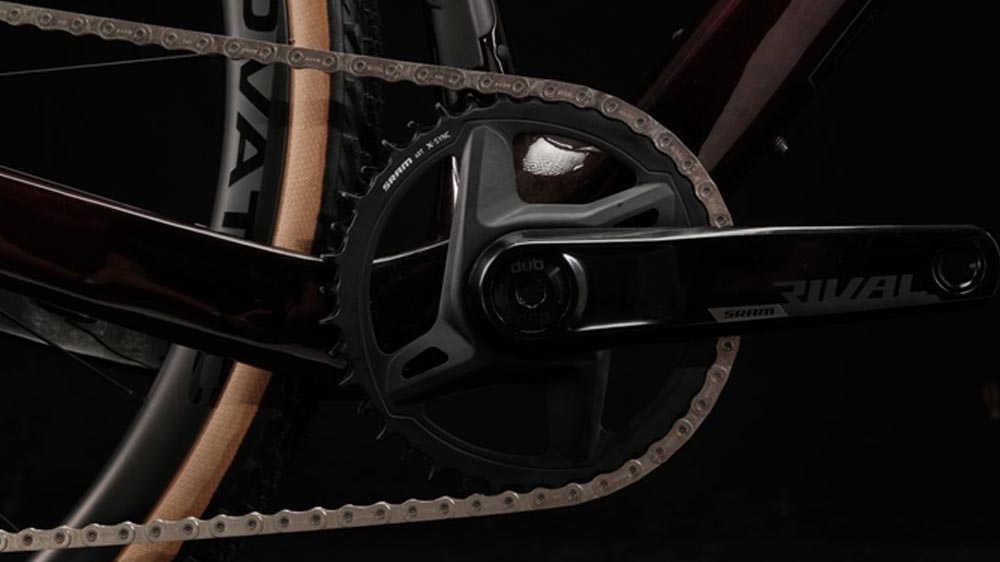 A 1x gravel bike drivetrain uses a single chainring at the front paired with a wide-range cassette at the rear. By removing the front derailleur entirely, the system becomes mechanically simpler and more resilient, an advantage for riders who push their gravel bikes into rougher conditions.
This setup is especially popular among gravel bicycle riders who frequently deal with loose surfaces, uneven terrain, or trail-like sections. With only one shifter to manage, gear changes feel more intuitive, allowing riders to focus on line choice and bike handling rather than gear combinations.
Chain retention is also improved, particularly when combined with a clutch rear derailleur, which helps keep the drivetrain quiet and secure on bumpy rides.
However, the simplicity of a 1x system comes with compromises. Because one chainring must cover a wide range of gears, the spacing between gears can feel more noticeable. On long flat roads or gradual climbs, riders on fast-rolling gravel bikes may need to adapt cadence slightly.
Pros & Cons of 1x Gravel Bike Drivetrain
| Pros | Cons |
| Simple shifting (rear only) | Larger gaps between gears |
| Better chain retention on rough gravel | Harder to fine-tune cadence |
| Lighter overall setup | Can spin out on fast descents |
| Less maintenance | Limited gear range for extreme climbs |
2x Gravel Bike Drivetrain
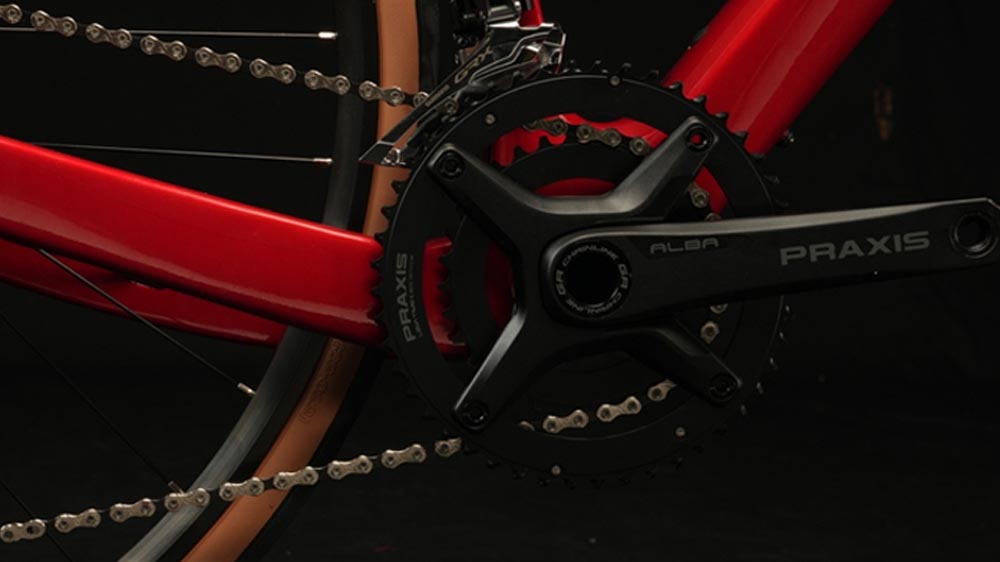 A 2x gravel bike drivetrain uses two chainrings at the front combined with a rear cassette, creating more total gear combinations. This design allows for smaller jumps between gears, making it easier to maintain a steady cadence across changing terrain.
For endurance-focused gravel rides, this smooth progression becomes a major benefit. Riders can stay efficient on extended flats, spin comfortably on long climbs, and still access a high top-end gear when speed matters. This is why 2x setups remain popular on performance-oriented gravel bicycles that frequently mix gravel routes with paved roads.
The trade-off is complexity. Adding a front derailleur increases the number of components that require adjustment and introduces another potential point for chain issues, especially in muddy or very rough conditions. While modern groupsets have improved reliability, 2x systems on gravel bikes still demand more attention than 1x setups.
Pros & Cons of 2x Gravel Bike Drivetrain
| Pros | Cons |
| Wider total gear range | More complex system |
| Smaller jumps between gears | Heavier than 1x |
| Better cadence control | Requires front derailleur tuning |
| More efficient on long climbs | Higher chance of chain drops |
| Higher top-end speed |
Practical Setup Tips That Actually Matter
If you’re leaning toward a 1x gravel bike drivetrain, pairing it with a wide-range cassette such as 10–42T or 10–50T helps preserve climbing ability without sacrificing versatility. This setup works especially well on gravel bikes used for mixed terrain and frequent surface changes.
For riders choosing a 2x gravel bike drivetrain, a compact chainring combination like 46/30T keeps gearing appropriate for gravel use. It offers low enough ratios for climbs while maintaining a high top-end gear, ideal for a gravel bicycle that regularly transitions between gravel and pavement.
Which Gravel Bike Drivetrain Should You Choose?
The right gravel bike drivetrain comes down to how you ride, not what’s currently popular among gravel bikes.
1x Drivetrain is best suited when:
- Technical gravel and loose surfaces dominate your rides
- Trail-like sections demand better chain security
- You prefer a simpler setup with fewer mechanical concerns
- Riding style leans toward playful, off-road exploration on your gravel bicycle
2x Drivetrain is best suited when:
- Routes include long climbs and extended flat sections
- Gravel frequently transitions into pavement
- Maintaining consistent cadence matters
- You want a wider, more precise gear range for efficiency on fast gravel bikes
There’s no universal winner in the 1x vs 2x debate. A 1x gravel bike drivetrain excels in simplicity and trail confidence, while a 2x gravel bike drivetrain rewards riders who prioritize efficiency and range. The best choice is the one that matches your terrain, riding style, and how you want your gravel bicycle to feel on every ride.
Read also: