


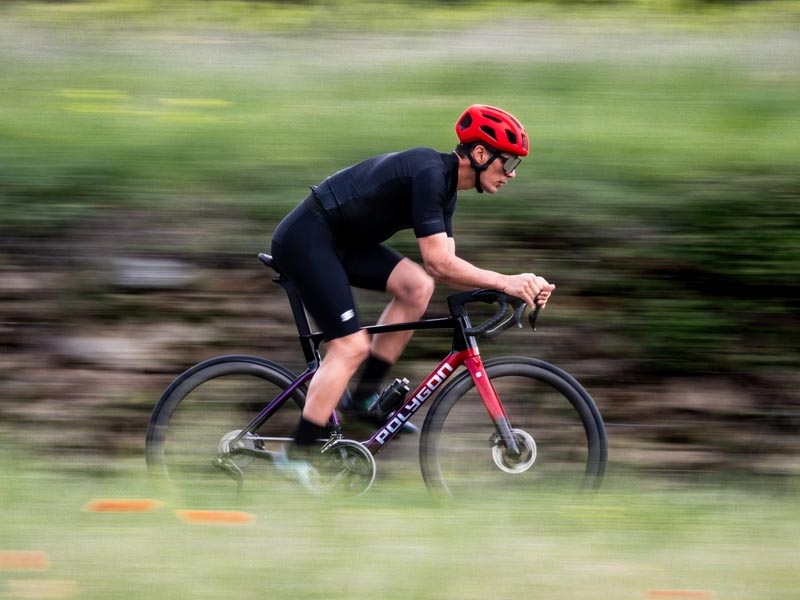
They improve speed by reducing aerodynamic drag, which becomes the main force slowing you down once you ride faster than around 25 km/h. On a modern road bicycle, aerodynamic efficiency plays a big role once speeds increase. This is why many of the best road bikes today focus on reducing drag, not just lowering weight.
At those speeds, air resistance accounts for most of the energy a rider expends. Aero road bike components are designed to smooth airflow around the bike and rider, reducing turbulence and wasted effort. The result is straightforward: maintain higher speeds with the same power, or ride just as fast while using less energy, especially on flat and rolling terrain.
How Do Aero Frames & Tubes Work?
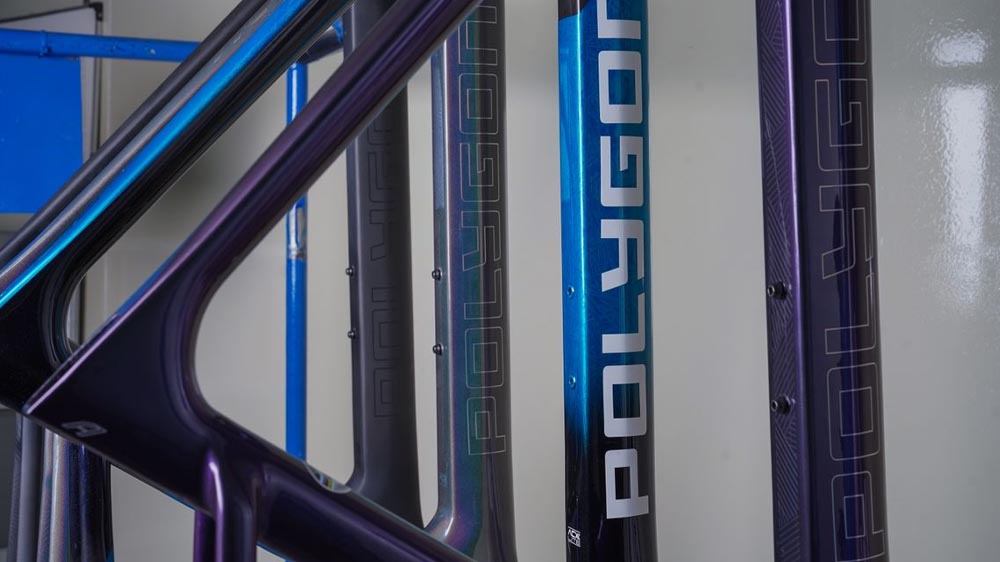 Aero road bike frames focus on controlling how air moves around the bike. Instead of round tubes, they use truncated airfoil (Kamm-tail) shapes, paired with narrower head tubes, refined fork crowns, and integrated seatposts.
These shapes allow airflow to stay attached longer as it passes over the frame, reducing turbulence and drag behind the bike. Internal cable routing and smooth junctions further limit disruption to airflow. At higher speeds, these refinements help ensure more of the rider’s power is converted into forward motion rather than lost to air resistance.
These small frame refinements are often what separate a standard road bicycle from the best road bikes built for sustained speed.
How Do Deep Section Wheels Reduce Drag?
Deep-section wheels are often the most noticeable aero upgrade on a road bicycle. Rims in the 40–60 mm range are shaped to manage airflow more efficiently as the wheel rotates.
Compared to shallow rims, deep-section wheels:
- Reduce pressure drag
- Maintain speed more easily once rolling
- Carry momentum better on flat and rolling roads
Modern wide rim profiles are also designed to remain stable in crosswinds, making deep wheels practical beyond racing. When riding at a steady speed, the energy savings become clearly noticeable.
Why Does an Aero Cockpit Matter?
The cockpit sits directly in the wind and plays a major role in overall aerodynamics. Aero handlebars and stems are shaped to reduce frontal area and minimize messy airflow at the front of the bike.
Key features include:
- Flatter or narrower bar profiles
- Internal cable routing
- Integrated stem–handlebar systems
Beyond component shape, an aero cockpit often encourages a lower and narrower riding position, which can save more energy than the component itself. Rider position and cockpit design work together as a system.
Aerodynamic Components That Add Up
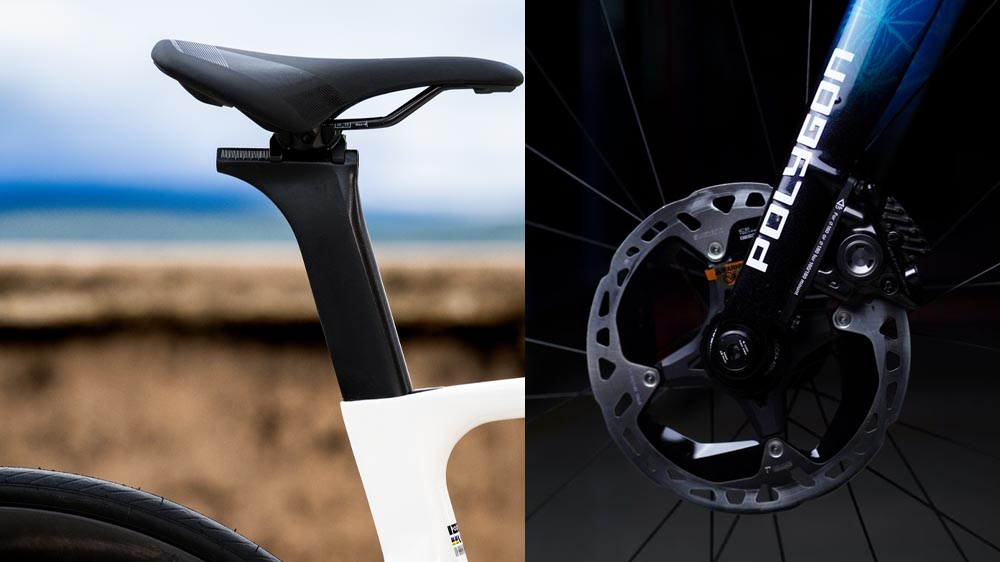 Aero gains don’t come from one single part. Multiple road bike components contribute small improvements that stack together.
- Seatposts use aero profiles to reduce airflow disruption behind the rider, especially where the seat tube meets the rear wheel.
- Saddles are shaped with shorter noses and smoother transitions to minimize wake without compromising comfort.
- Brakes, mounts, and clamps are often hidden or integrated into the frame and fork to remove drag hotspots created by exposed hardware.
Individually, these changes offer marginal gains. Together, they help create a road bike setup that is more aerodynamically efficient as a complete system, not just a collection of parts.
When Do Aero Components Work Best?
Aero components deliver the most noticeable benefits when riding conditions allow aerodynamic drag to dominate resistance. For flat and rolling terrain, an aero-focused road bicycle delivers the most noticeable real-world benefits.
They work best when:
- Speeds are consistently above 25–30 km/h
- Terrain is flat to rolling
- Effort is steady rather than stop-and-go
In these situations, aerodynamic drag can account for up to 70–90% of total resistance, making drag reduction more impactful than saving a few hundred grams of weight. This is why aero road bikes excel in fast group rides, long solo efforts, criteriums, and endurance events on flatter courses.
On steep climbs at low speeds, gravity becomes the limiting factor and weight matters more. But once the road levels out, reducing drag almost always delivers greater real-world speed gains. It’s also worth noting that aero components work best alongside a good bike fit. Since the rider’s body creates most of the drag, equipment upgrades are most effective when paired with an efficient, sustainable riding position.
But aside from gear, how to increase road bike speed with less effort? Read more in our article here!
Conclusion
Aero road bicycle components improve speed by reducing aerodynamic drag and helping riders use their energy more efficiently. Through refined frames, deep-section wheels, integrated cockpits, and carefully shaped details, these components allow riders to maintain momentum and higher cruising speeds with less effort.
For riders who spend most of their time on flat or rolling roads, understanding how each road bike component contributes to aerodynamics makes it easier to decide whether an aero-focused setup matches their riding style and performance goals.
Read also: Best Road Bike Gear for Long Rides