









To inflate a road bike tire, you only need to understand two things: the type of valve your tire uses and the pressure it requires. Once those are clear, inflating a road bike tire becomes a quick and straightforward routine that helps your road bicycle feel smoother, safer, and more efficient on every ride.
Presta vs Schrader Valve: What Should You Use?
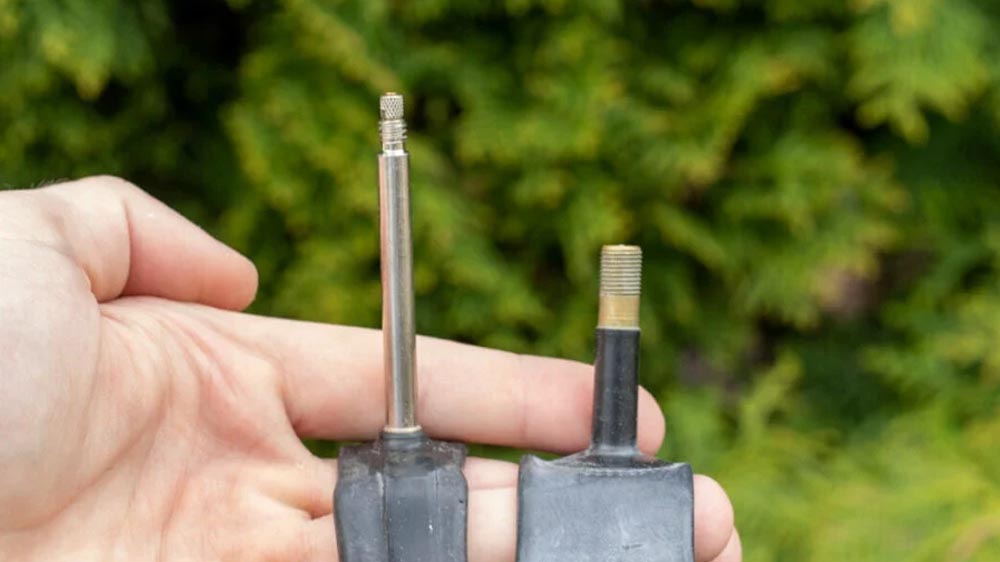 Most modern road bikes use Presta valves because they’re slim, lightweight, and designed to handle the higher pressures common in road bike tires. To inflate a Presta valve, simply unscrew the small tip at the top and press it briefly; if air escapes, the valve is open and ready.
Schrader valves are more commonly found on car tires and city bikes, which means many public pumps use this standard. If you only have access to a Schrader pump, the easiest solution is a Presta-to-Schrader adapter.
This small accessory screws onto a Presta valve and allows you to inflate a road bike tire using a Schrader pump, including gas station pumps. It’s inexpensive, easy to carry, and a smart addition to any road cyclist’s toolkit.
What If You Only Have a Schrader Pump?
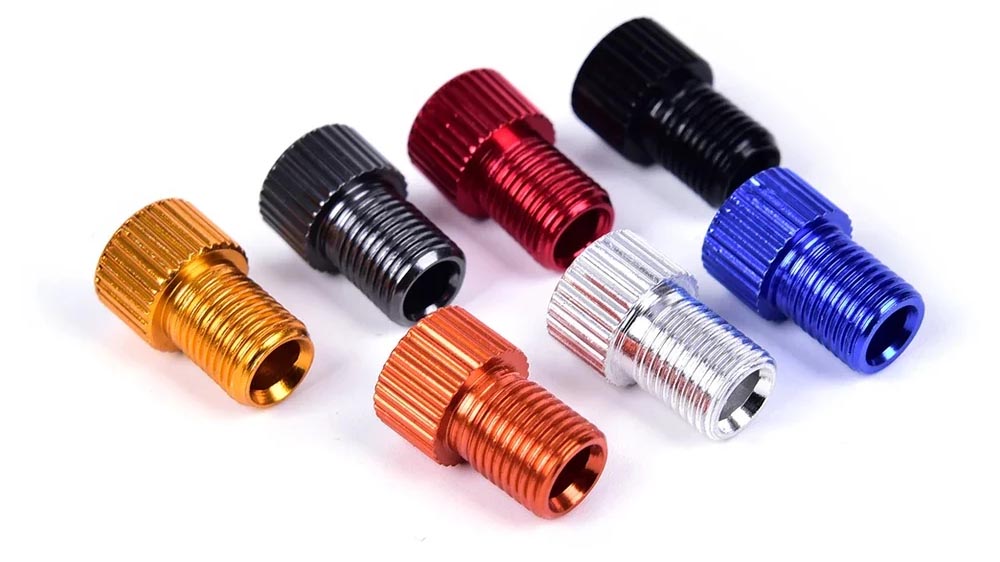 If your pump only supports Schrader valves, a Presta-to-Schrader adapter is the most practical solution. Screw the adapter onto the open Presta valve, inflate the tire as usual, then remove the adapter and close the valve afterward.
Avoid forcing a Schrader pump directly onto a Presta valve. This can damage the valve and cause ongoing air leaks. Using an adapter is safer, faster, and far less frustrating.
Step-by-Step: How to Inflate a Road Bike Tire
 Check the Recommended Tire Pressure
Start by checking the pressure range printed on the sidewall of your road bike tire. You’ll usually see a range expressed in PSI or bar. This gives you the safe operating window for that tire.
For more precise guidance, we recommend referring to the Road Bike Tire Pressure Guide, which takes into account tire width, rider weight, and riding conditions. Keep in mind that wider road bike tires often require lower pressure than narrower ones, even though that may seem counterintuitive.
Attach the Pump
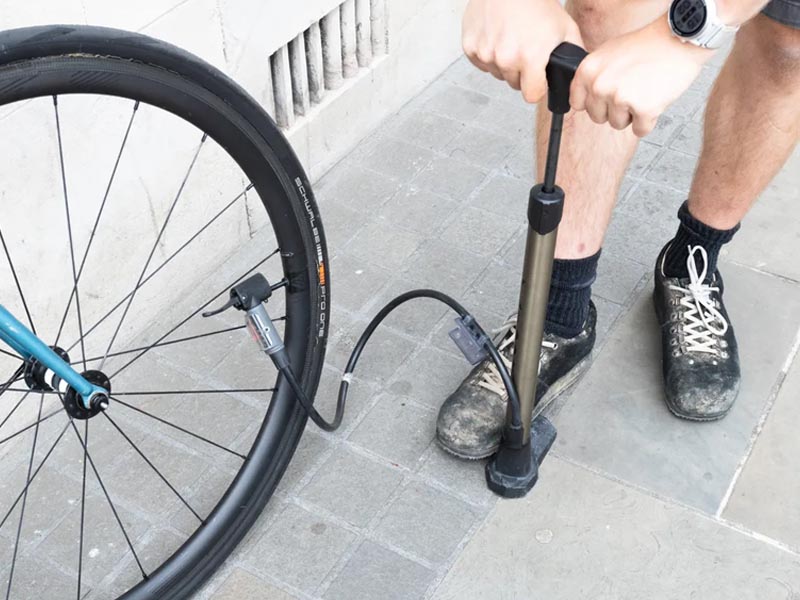
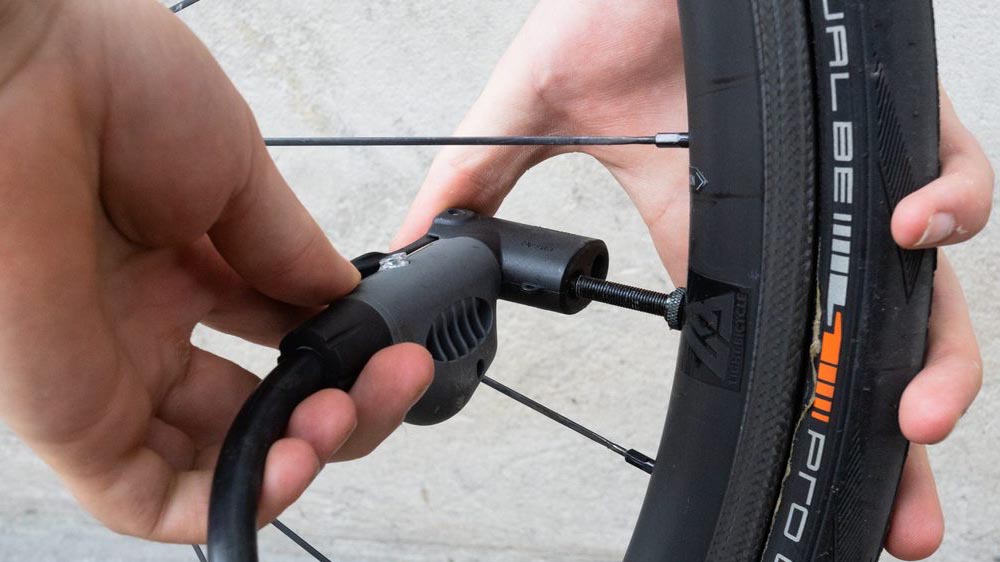
Once the valve is open, set your pump head to match the valve type. Push the pump head straight onto the valve and secure it using the locking lever if your pump has one. A proper seal ensures that air goes into the tire efficiently rather than leaking out around the valve.
Inflate the Tire
Pump steadily while watching the pressure gauge. Stop when you reach your target pressure rather than automatically inflating to the maximum number listed on the tire.
Higher pressure doesn’t always translate to better performance. On rough asphalt or longer rides, slightly lower pressure can improve comfort and grip. On smooth roads or during faster rides, slightly higher pressure may feel more responsive. The key is finding the balance that suits your road bike and riding style.
Remove the Pump and Close the Valve
When you’re done, unlock the pump head and remove it cleanly from the valve. A brief hiss of air is normal and won’t significantly affect pressure. Screw the Presta valve tip back down and replace the valve cap if you use one.
At this point, your road bike tire is ready to ride.
Inflating a road bike tire doesn’t need to be complicated. By understanding your valve type and using the correct pressure, you can keep your road bicycle rolling smoothly, comfortably, and efficiently. Make tire pressure checks part of your regular riding routine, and your road bike will reward you with better handling and a more confident ride every time.
Read also: How Do Road Bike Tires Affect Speed?