


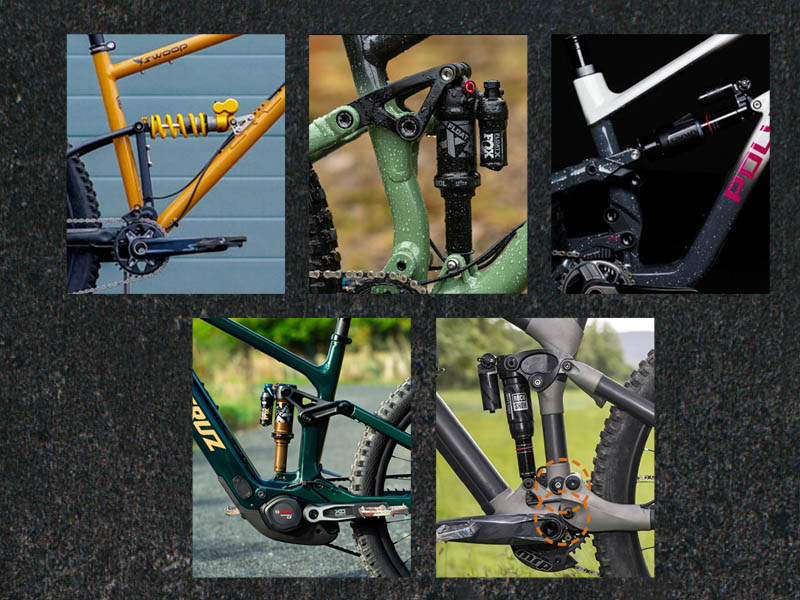
Mountain bike suspension may seem simple at first: hardtail or full suspension. But did you know that the rear suspension itself comes in several different designs? Look closer at a full-suspension MTB, and there is much more happening at the rear.
Different mountain bike rear suspension designs use different pivot and linkage layouts to control how the rear wheel and shock move.
From single pivot to dual link systems, understanding mountain bike rear suspension designs can help you recognize what is working beneath the frame.
Some Popular MTB Rear Suspension Designs
A rear suspension MTB is not defined by the shock alone. The placement of pivots and links determines the path of the rear axle and influences how the suspension behaves through its travel. Here are five common designs and the details that set them apart.
1. Single Pivot: Keeping It Simple
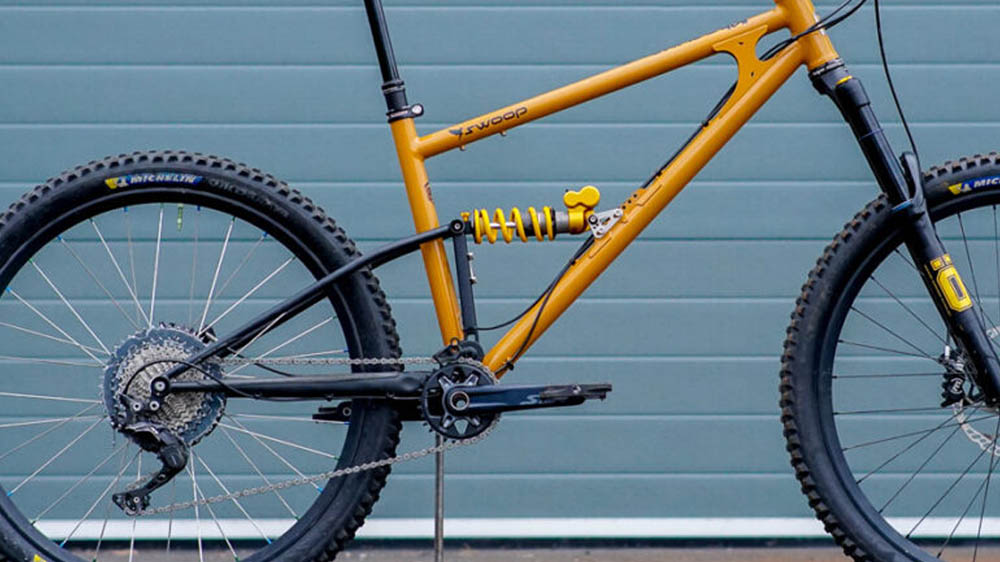
Single pivot is one of the simplest mountain bike rear suspension designs. The rear axle moves in a constant arc around one main pivot, typically positioned near the bottom bracket. On a true single pivot, the shock connects directly to the swingarm.
To recognize one, look for a single main pivot with no additional pivot between it and the rear axle. Fewer bearings make maintenance simpler, but the design offers limited control over the leverage curve and generally creates a more linear suspension response.
Pros: Simple layout, fewer bearings, easier maintenance, and consistent suspension action.
Cons: Limited leverage-curve control and can be too linear for coil shocks.
2. Linkage-Driven Single Pivot: More Room for Tuning
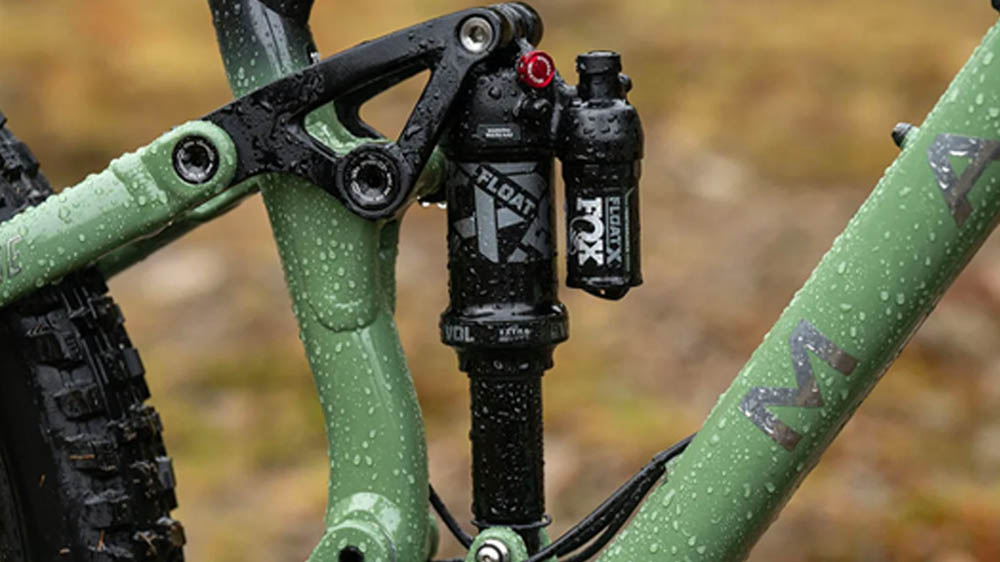
Despite the extra links, this is still technically a single-pivot system. The rear axle remains connected to the main frame through one main pivot, but one or more additional links drive the shock rather than connecting it directly to the swingarm.
These links give designers more control over the leverage curve and suspension progression. Look for an uninterrupted swingarm combined with a linkage around the shock. The extra hardware brings more tuning possibilities, but also adds moving parts to maintain.
Pros: Greater leverage-curve and progression tuning than a true single pivot.
Cons: More maintenance and limited tuning from its fixed instant centre.
3. Independent Floating Suspension: More Links, More Control
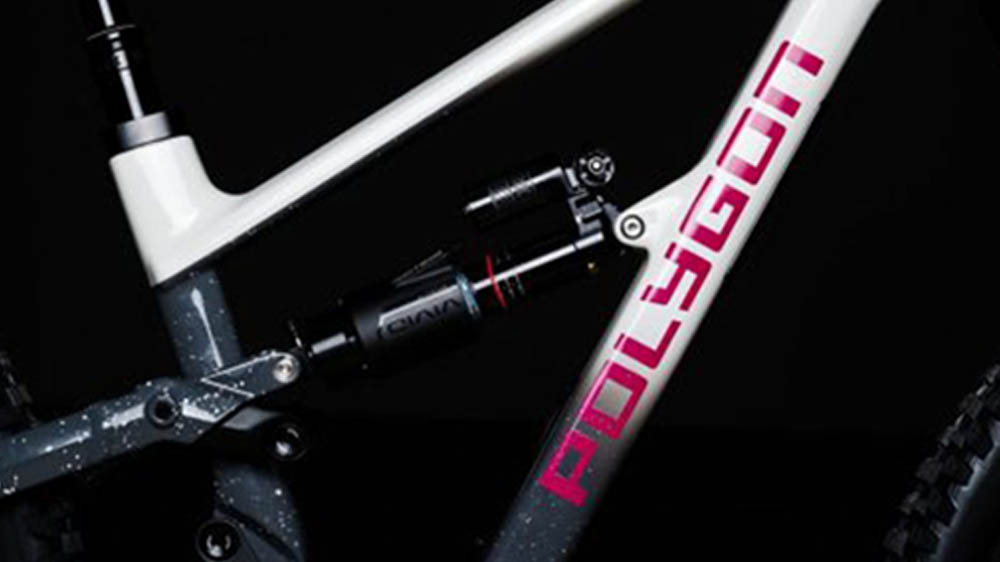
Independent floating suspension takes a more complex route, using a multi-bar layout, such as a six-bar system, or multiple rotating links. The shock is driven through these links rather than relying on a simple fixed pivot on the main frame.
You can recognize it by the interconnected links and pivots around the rear triangle and shock. This layout gives designers more freedom to tune suspension characteristics and the leverage curve. The trade-off is greater mechanical complexity and more components that require maintenance.
Pros: High suspension tunability and greater control over the leverage curve.
Cons: More complex construction and increased maintenance.
4. Horst Link: Look for the Chainstay Pivot
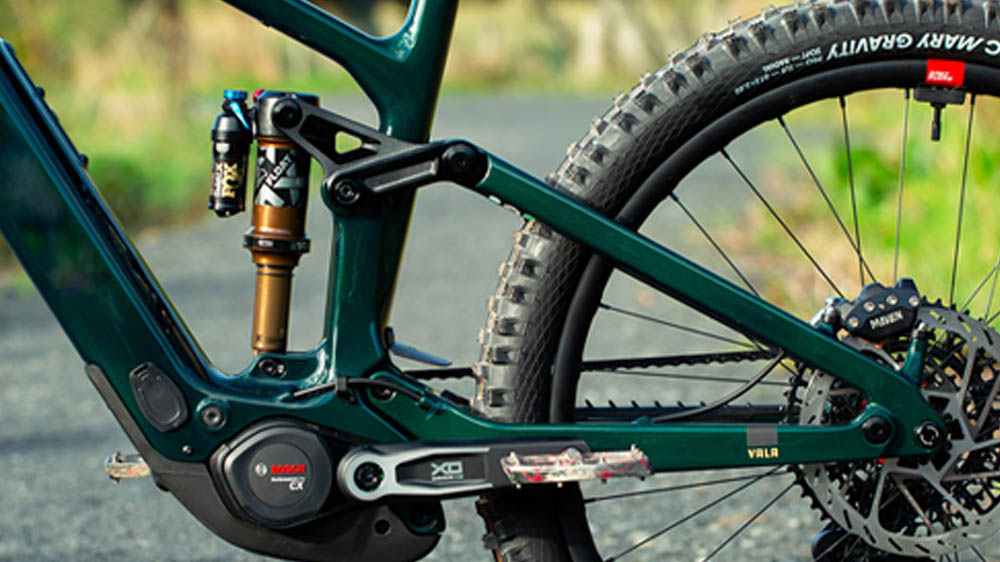
A Horst link is a four-bar mountain bike rear suspension design with a pivot on the chainstay, usually just below and in front of the rear axle. This placement is also the easiest way to distinguish it from a single-pivot design.
Because its instant centre can move as the suspension travels, designers have more freedom to tune characteristics such as anti-squat and braking behaviour. That versatility brings additional complexity, with more pivots and bearings to maintain.
Pros: High suspension tunability with predictable suspension curves.
Cons: More pivots to maintain than a single-pivot design.
5. Dual Link System: Two Short Links Make the Difference
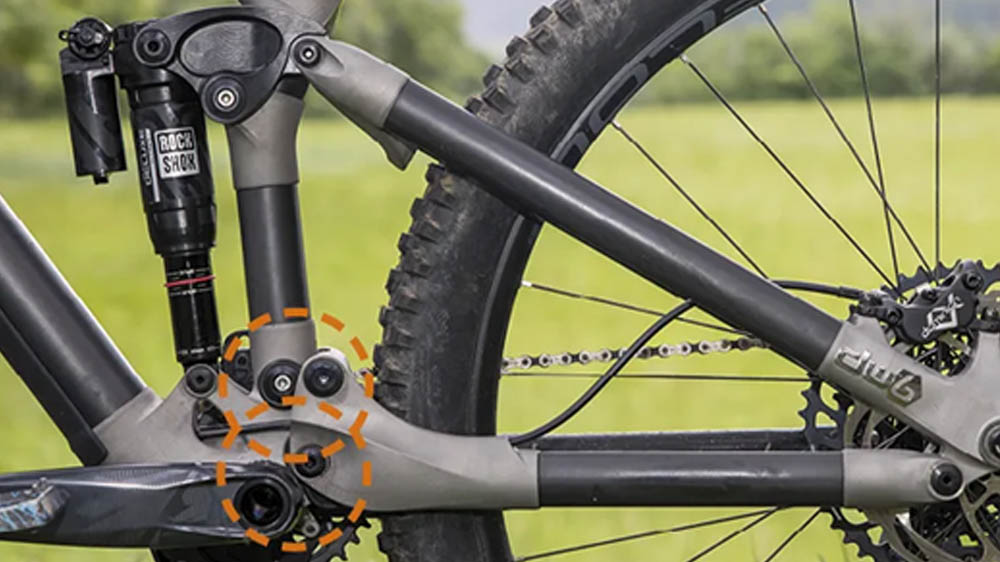
A dual link system uses a solid rear triangle connected to the front triangle by two short links. As those links rotate, the instant centre moves rather than remaining fixed as it does on a single pivot.
Look for a rigid rear triangle and two compact links connecting it to the main frame. Depending on the design, the links can rotate in the same or opposite directions. This gives designers considerable control over suspension characteristics, but with greater mechanical complexity.
Pros: High levels of tunability and predictable suspension curves.
Cons: Higher maintenance requirements and costs than a single-pivot system.
Read also:
Why Should You Know These MTB Rear Suspension Designs?
Rear suspension design is more than a detail hidden between the frame tubes. It helps explain why one full-suspension MTB may behave differently from another, even when both have similar suspension travel. Understanding the layout lets you look beyond the shock itself and consider axle path, leverage curve, braking influence, and maintenance requirements.
There is no single design that is automatically best. Each balances performance, tunability, complexity, and maintenance differently. Knowing how mountain bike rear suspension works makes it easier to understand what you are riding, or what to look for when choosing your next mountain bike.